Yesterday both my husband and I were quite sick. We had very different symptoms but my worst one was a fever which added additional pain to the usual autoimmune nonsense. Naturally I subjected myself to more pain by spending the day on the internet. There is a lot going on and my brain was foggy in the wilds of the open internet.
Thankfully my fixation on consumer packaged goods’ price risk coincide with the arrival of a fresh round of skincare as well as a number of grim stories on the K shaped economy. Southeast Asian is rationing fuel while in Harper’s Bazaar wanted me to know that K-Beauty was coming for my neck. .
I don’t write headlines but I thought it was a bit on the nose to suggest fashion magazines are vampires. I clicked though.
It turns out there is a lot you can do for your neck but be warned the skin is thinner so promote collagen growth and be aware fewer sebaceous glands means it is dryer and more prone to irritation when exposed to actives like retinol. Useful information reinforcing my recent experiment with using Medicube’s PDRN Pink Niacinamide Milky Toner on my neck.
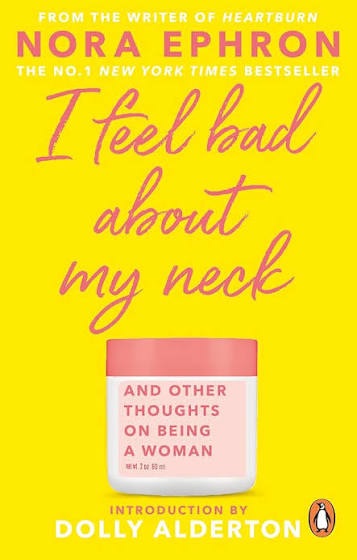
The beloved director of romantic comedies Nora Ephron m released a book in 2006 about the trials of womanhood. One essay was dedicated to how her neck was giving away her age. At the time I don’t even know one could be anxious about one’s neck but I filed it away as a to do in the endless list of feminine expectations.
“Short of surgery, there’s not a damn thing you can do about a neck. The neck is a dead giveaway. Our faces are lies and our necks are the truth. You have to cut open a redwood tree to see how old it is, but you wouldn’t have to if it had a neck.” – Nora Ephron’s “I Feel Bad About My Neck: And Other Thoughts on Being A Woman
Now maybe back in 2006 there wasn’t as much you could do about your neck when you’d smoked, tanned, and I will presume maybe occasionally enjoyed m drinking or other substances. But her Boomer fears encoding their neurosis into my generation was not in vein. I did none of those things.
Now that my fever has broken, I’ve been able to enjoy simple pleasures like the arrival of a box of skincare for myself (and also Alex because obviously I help him out) and ponder that I can feel anxiety about risk in the petroleum derivative markets like consumer packaged goods and also I can worry if my neck isn’t aging well.
I imagine I won’t get to enjoy that luxury forever. We have it very good in America with access to the best French pharmacies and South Korea plastic surgery clinics have have produced. I slathered on a milk toner and then topped it with hyaluronic acid water cream and a few drops of a Matrixyl peptide to boost collagen and elastin production.
The Internet as we know it is under new pressures from artificial intelligence as automation washes across digital spaces once populated by humans. The pressures in the market for technology private debt as it reconciles old Internet companies with cash flow against changing terrain.
It’s not just creative destruction in software businesses. Storied luxury families like the owners of Puig and Estee Lauder are discussing a merger. Price inputs are a killer when share prices are under pressure. Thats more of a geopolitical risk worsened by consumer struggles. The top 20% of the market does 80% of the spending is the new horror metrics.
So much for the lipstick indicator eh? Maybe I’ll look back and be glad I stocked up on serums, creams, drops, peptides and other petrochemical packed Swiss and Seoul laboratory style miracles. There is always shea butter and beeswax.