Categories
Finance Startups

Day 1996 and Criticality at Valar Atomics

I am going to be scattered and long winded so please excuse my exhaustion and joy, as I have used up all of my focus in the excitement of a truly incredible moment that represents years of work.

I watched “our” reactor go critical on a livestream with the Valar team. Yesterday midafternoon on mountain standard time (around 1:45am for me on GMT+3) in the beautiful desert of Orangeville Utah, Valar Atomics took its Ward 250 critical for the first time.

Mission Control at Valar Atomics

Moments ago, Valar Atomics took Ward 250 critical for the first time. This fulfills President Trump’s EO 14301, which called for 3 advanced reactors to go critical by July 4th.

This is our second criticality as a company, and an important step toward our goal of power by July 4.

This is a historic moment and the culmination of two years of work on the part of the Valar Atomics team. This is the most hardcore, intelligent, and driven people I’ve ever had the privilege of working with; which will be seen as we begin power ascension in the coming days.

Our mission at Valar Atomics is to make abundant energy for all mankind. The best way to make energy 10x cheaper today is to mass-scale nuclear fission. We began our mission by creating WardZero, our fully functional thermal prototype. Next, we took the NOVA core critical.

Today, we took the next step: criticality in the Ward 250 test reactor. Ward 250 is a TRISO-fueled High Temperature Gas Reactor (HTGR) designed for simplicity and scale, and is the first nuclear reactor ever air-lifted by a C-17.

We’ve been honored to be become part of the community in Orangeville, Utah, the home of Ward 250. Many thanks to all of our government partners who made this possible: hundreds of individuals across the Trump administration, the DOE, the DoW, and the government of Utah.

The list of individuals who have spent their time and energy and talents to accomplish this feat is too long to list in one post, but I am incredibly grateful to all of them.

Isaiah Taylor of Valar Atomics

I am one of those individuals who spent their time, energy, talents and capital to accomplish this incredible feat. Investing in Valar may well be the greatest accomplishment of my life.

You see I am Valar’s very first investor. Yes I mean I wrote the very first angel investment check from my small venture fund.

I know it’s a little crazy that a weirdo like me should be investing in small modular nuclear reactors built by brilliant young Zoomers and equally brilliant old timer experienced nuclear engineers, but weird is how I invest with chaotic.capital.

Crazy but possible makes complete sense to me. So I said he’s. And we chewed glass for a few years working towards the possible, while everyone told us it couldn’t be done.

Through the magic of Twitter DMs, I met Isaiah before he had even started Valar. He was working on another startup I didn’t love but I knew immediately that I loved him as a founder.

I was so impressed with his intelligence and his capacity to learn quickly. He had that ineffable “it” quality that all founders possess in some measure. He took feedback well but had a firm backbone. He listened to one piece of advice I gave him and based on that decision alone, I told him I’d back anything he did in the future and I meant it. I’ll admit I didn’t expect it to be “I’m building a nuclear reactor” but I am true to my word.

Fast forward several years and here we are. Just a few weeks ago I was racing through the desert to see the reactor our first check helped build the day before it was encased in shielding in preparation for criticality. It will be a memory I will treasure forever.

A few months ago this hanger didn’t exist

We’ve been there for every step of this amazing journey. It was an objectively insane thing to invest in. Yet the more time I spent with Isaiah the more convinced I was that he was a generational talent. The best part of being first is the opportunity to spend lots of time with a founder before anyone else learns of their genius. I learn as much from them as they do from me. And Isaiah is a quick study.

I wrote the check and went about the long grueling process of convincing others they should invest alongside me. It wasn’t easy. We got told no a lot. Failure lurked around every corner. People ranged from outright hostility to tempered skepticism. There were moments when defeat felt very close.

There were hard times. A lot of glass chewing. I never wavered in my belief that Isaiah would get it done. Alex and I were blessed with the opportunity to invest more and gladly wired in additional capital when others couldn’t see as far as we did. This may well be a career defining investment for me. I intend to keep putting in whatever Isaiah will allow us to invest.

Now three years into this journey, it’s clear to everyone that Isaiah is the talent I always knew him to be. I may have been first but I won’t be the last. This is the kind of company investors dream of finding early and Isaiah is a leader I am proud to follow. Valar is racing towards the kind of future I want to build for the next generation. Abundant cheap fuel can power a better cleaner world for all of us.

And to everyone who said it couldn’t be done, or that it was too early or too risky to invest in something as crazy as nuclear, please let me invite you to join us now. There is much more to be done. We will need all the talent and capital we can get to win this bright future for America and for humanity.

Categories
Finance Politics Startups

Day 1987 and You’ll Shoot Your Eye Out

As a school child, I was taught that the American constitution and our bill of rights protects our inalienable rights (given by God) from the government. The government doesn’t protect us. We wrote protections to guarantee our rights from the government m.

Yet you’d be hard pressed to find anyone pitching a government law these days that isn’t wrapped in logic about us needing protection from the world. Our laws now protect the American people from worldly fears.

Precious few of us discuss needing protection from the government in order to exercise our rights. The government protects us from the world’s many from dastardly threats. We don’t care so much about protecting our rights from the government anymore.

Protect the children, consumers, workers, businesses taxpayers we plead. Save us! And lawmakers respond in kind. It’s for your own good might as well be the nation state’s motto.

And what do we have to show for it? Are we freer? Do our financial systems enable life, liberty and the pursuit of happiness? It sure doesn’t seem like our recent track record is working well. Have the last two crashes and subsequent legislative responses led to a more productive prosperous economy?

Sarbanes-Oxley (and the enormous growth of private venture capital) mean companies don’t need to go public anymore, and prefer not to given the compliance cost.

Which of course means the small private investor has zero chance to grow assets like the already wealthy routinely do.

I scan 20 years of tech life, and can’t think of a single instance of regulation actually improving anything for the everyman user/investor

Antonio Garćia Martinéz on Twitter 6/9/26 regarding Databricks raising a series M at a reporter 165B valuation

You used to be able to buy an initial public offering for a startup and grow with it. Now most of the gains are in the private markets. So if you were a SpaceX private investor you might have a great summer but it’s hard to say if you will want to buy the IPO.

It all reminds me a little bit of my favorite Christmas movie A Christmas Story. The movie follows a young boy and his family’s misadventures during Christmastime in 1940. He wants a a Red Ryder Carbine Action 200-shot Range Model air rifle for Christmas. Everyone from his mother to the mall Santa Clause insists “you’ll shoot your eye out!”

Ralphie is disappointed by Santa Clause saying he’ll shoot his eye out if he gets a BB gun

Now I don’t want to spoil the movie but let’s just say that the kid doesn’t come to any harm despite getting his wish even if there are a few moments of fear and regret. Because ultimately he’s a responsible kid and it’s a BB gun.

I’d hope we continue to conclude that Americans are responsible people. Sure BB guns, frontier large language artificial intelligence models, and investments in the stock market all come with risk. But isn’t a life with Christmas magic, helpful compute and capital gains worth it?

Categories
Finance Politics Startups

Day 1983 and Socialism is Bad

There is a lot of chatter as to the eventual ownership makeup of the frontier artificial intelligence labs and their economic surplus. One question that came up this weekend is whether equity in the companies should be owned in some portion at the nation state level. I am opposed to this for a host of reasons that I’ll try to get down in whatever garbled form.

I do not own a stake in any of the frontier labs other than owning ETFs that own Magnificent 7 exposure who own portions of the labs. I do invest in compute, nuclear energy and cryptography. I believe AI will change a lot about how we do business, my revealed preferences show I live remotely in Montana, I have a tendency toward emergency planning and Plan B scenarios. As a disclosure of my priors.

There are lots of competing interests in this and the self interests from the labs does no any favors. Especially after months, nay years, of overwhelmingly hyperbole about changing labor dynamics, the potential for mass layoffs due to automation as well as obfuscation and excuses about the reason for layoffs in existing companies. And that’s before we get the singularity which is a religious orientation toward making super intelligence that is Godlike in its framing.

I hate this entire conversation on nationalization and socialism. Part of it is that state actors desiring ownership of private companies reeks of the “you didn’t build that” malapropisms from Barack Obama’s presidency in which he attempted to articulate that America’s enormous wealth is built on generational compacts that no one individual could ever own outright. It triggers socialists and capitalists both.

We all contributed in our own ways to the shared infrastructure, institutions, education, cultural norms and the pluralism embedded in our governance systems that enabled the American Dream.

Unless you are a deep partisan, you understand Obama was trying to articulate that none of us made America alone. But the framing from liberals (and populists of all stripes) automatically make this conversation concerning.

Economics is complicated, central planning has a hell of a body count and your average American can only gesture towards the invisible hand and the benefits of self interested commerce. It’s easy to sell us bad policy from envy and fear.

So I must ask why are we acting like we have suddenly won a national level economic boom with clear winners whose spoils must be distributed by the nation state before we’ve even managed to understand how it will be used, at what level an AI model is a commodity and where the benefits will accrue?

Self interested pluralism with a system of checks and balances at the national federal level coupled with states exercising their own interests has been the bedrock of our national success. Changing this has not gone well for us as a nation nor do we have better examples in other nations.

Sure America has had a few twists and turns. The last time we made an attempt at a New Deal post Great Depression worked only thanks to a global world war industrial mobilization in which we won the war and all our other competitors were decimated on bombed our continents across massive geographical boundaries.

And that boom has been largely spent by the children of the generation that fought this war and their children are looking at a pretty significant bill. So why do labs suddenly want to “compensate” Americans and our collective contributions to the models?

And why are politicians taking this bait when we have so little insight into whether we should funnel cash into them in order to own them in trust for some nebulous future?

I have a few reasons in no particular order that I put on Twitter as to why I am opposed to this format of American state equity being the means through which we compensate the people who theoretically trained these models with our output on the wider open web and its content.

1) We don’t know who the winners will be or where the benefits will diffuse (as in post liquidity the current winners might not be the eventual winners) so compensation for model training when the eventual benefits disperse elsewhere isn’t ideal. Why aren’t taxes at state & federal level aren’t adequate enough here should be answered before we make moves

2) Existing IP law doesn’t account well for culture which is a shared co-creative process (i recommend Susan Scafidi of fashion law institute “who owns culture” ) so compensation is already not easy to track back

3) A state entity w the monopoly on violence can do a lot of damage on the margin by not fully understanding who created what and where it is applied especially in non deterministic systems

4) Much of what the models were trained on was open source licensing including the company where my own family made money Stack Overflow. We got paid sure, but none of this would exist without the effort of its users who contributed on those open license terms. But clearly the final value of the content created & company’s value itself were harvested much further down the line in enterprise contracts for coding models. It was not in the management of an open source license community product created by users or managed by engineers, so who should have been paid? The users who wanted their content to be open sourced? The volunteer moderators? The full time employees? The shareholders of the company, the buyer of the company or the users of that data set at Claude or Cursor or OpenAI? Or is it Americans that never even heard of SO? Where does value accrue over time versus point in time? It’s not an easy question to answer is it?

Categories
Finance

Day 1944 and The Polymarket 1% Same As Any 1%

I am not a gambler. I don’t know how to play poker, or honestly any card game without a tutorial. I find the idea of playing the long odds where I have no advantage to be a bit crazy. Why would you involve yourself with a likely net negative outcome other than as entertainment?

People don’t do math though so I am sure I am overthinking the appeal. I am regularly amused by people who think that finance amounts to little more than legalized gambling

I chalk that attitude up to innumeracy and try to worry more about the challenges of introducing regular people to investing in assets where they can calculate the odds of a positive expected outcomes. People should be allowed to do as they please and I believe that self-interest has had positive outcomes here.

I am not for a nanny state. Quite the opposite. Regular people aren’t allowed to invest in private markets where I do most of my work and the accredited investor rules have significant downsides when companies stay private forever.

Companies used to be acquired or they would go public where anyone could invest in a new company they believed in. Thats how regular people like me would make money. Alas fewer companies make it to the IPO market (or are delaying the process) and have growth less in the public markets. So now I worry more about how anyone builds ownership in anything.

I myself am a boring public market investor. We can all work off the same numbers and animals spirits. Keep it simple with ETFs, some bonds and treasuries and the risky bits are contained to my specialities. It’s almost like I know the work is best done by professionals and computers.

Alas, finance and gambling both require having some grasp of the numbers. And this is getting to be a problem all around. I used to think well it’s not too hard to build a basic portfolio. There are books you can read.

Well, we’ve got a fun substitute for day trading now and it’s definitely more fun than owning some ETFs. Prediction markets have finally taken off. I hope for them to be liquid markets for information and exchange but it’s also fun for gamblers

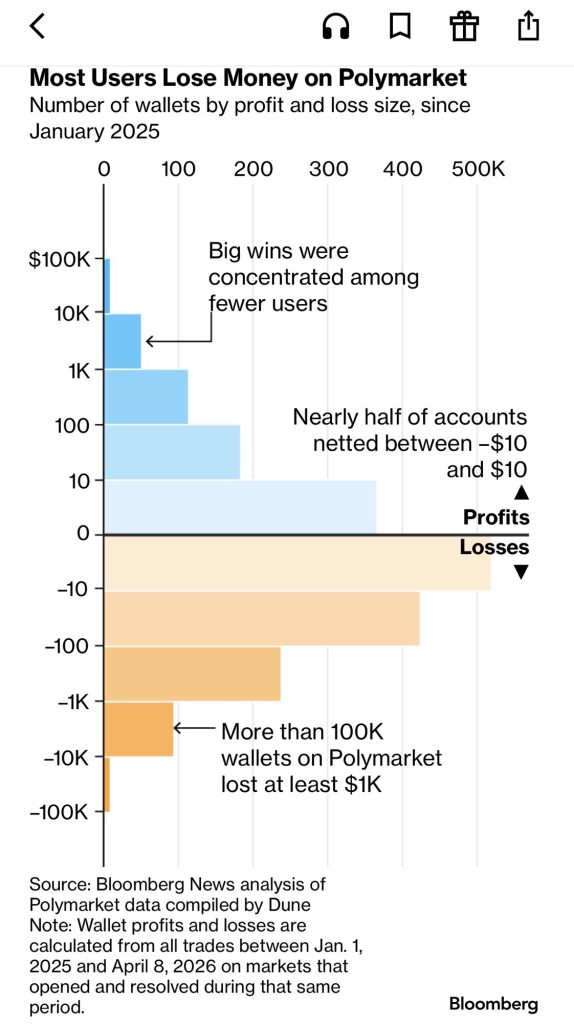
II don’t know enough about how to place a decent bet though so I don’t use them. I’d rather take risk where I have the edge. And the data seems to bear that strategy out. The people who make money in Polymarket are the top 1 percent who know what they are doing

Martineau recently co-authored a paper that found that since 2022 around 69% of traders on Polymarket lost money, while the top 1% captured three-quarters of the profit

This didn’t strike me as particularly surprising, as presumably the people who lose money in any kind of trading situation are the ones who don’t actually understand the odds that they’re working with and the information that they have.

If you buy a random stock on a hot tip, that’s not really going to get you much further than placing a random bet on polymarket. Of course, the people who are making real money are sophisticated.

Automation seems like exactly what you would want if you knew the parameters of the market and the likelihood of payout, which is incidentally also how every other corner of finance works. So unless you’re the kind of idiot who trades on information they have on special forces actions, say, maybe it’s best to leave some of these things to the professionals.

Categories
Finance Preparedness

Day 1923 and Petroleum Dependency Consumer Packaged Goods Risk Dashboard

A chunk of preppers and preparedness enthusiasts are just shopaholics. Shopping is common response to anxiety and depression. Doing something that you can control in a world you can’t control has logic to it.

Now experts in disaster response will tell you that preparedness is as much about skills and community as it is about “stuff” but it’s a lot harder to learn a new skill and nurture community than it is to buy something.

So if you aren’t up for getting first responder certified or spending time in your local library I’ve got just the thing to sooth your anxieties about the current situation in the straight of Hormuz.

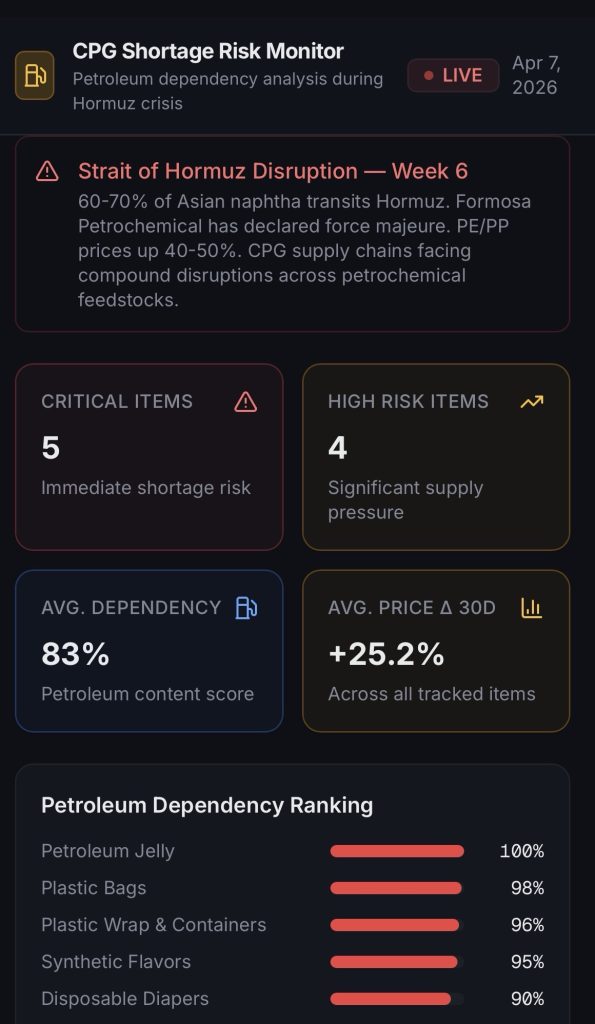
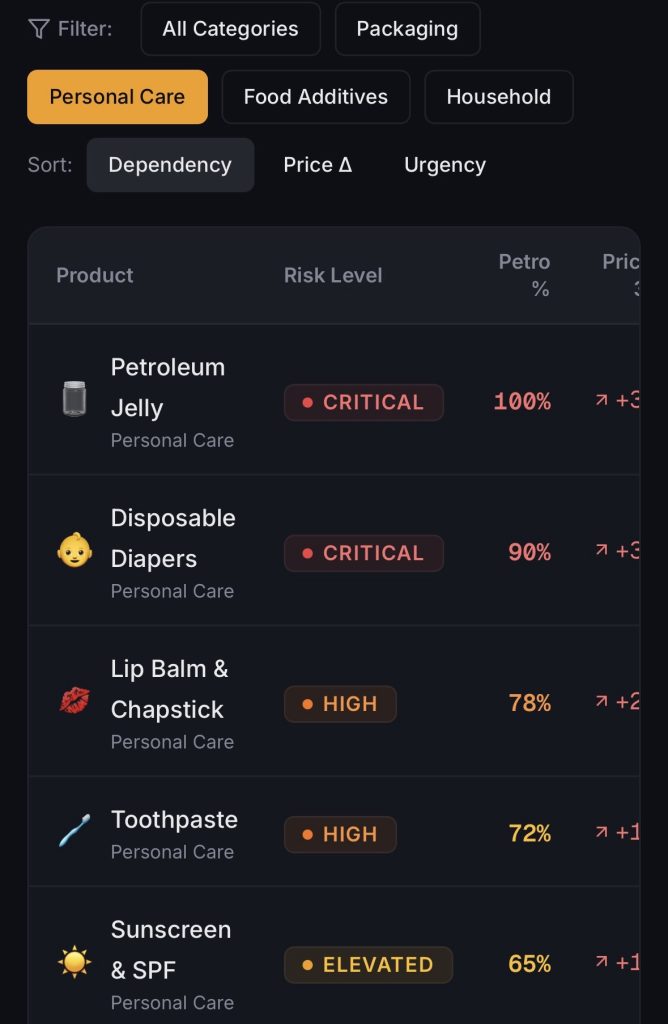
I vibe coded a dashboard of common household items with petroleum byproducts in them. It analyzes ingredients and wholesale pricing and assigns risk scores so you can make a shopping list of items most impacted by the ongoing supply chain crisis.

A screenshot of the dashboard I vibe coded today to soothe my anxiety about supply chain disruptions and get ahead of pricing hikes and potential shortages

From diapers to sunscreen, you’d be shocked at just how much our basic needs are downstream of petroleum byproducts. Now it’s just a silly little thing I used AI to put together, but petroleum dependency in consumer packaged is high.

From food products and personal care to drugs, you will find we that we rely on petrochemical feedstocks everywhere.

I’ll mess with it as I add in new data sources and get suggestions for categories I’ve missed. But I’d love for you to check it out even if I am not quite done improving upon the basic idea. You might learn something.

For instance, I didn’t know Kroger’s had a public pricing API till today so you live, you learn and then if you have a kid it’s time to buy Luvs. No really diapers are one of the most at risk products for shortages as the impacts of the war ripple out.

Even if the fighting ends today (as I write this a temporary two week cease fire has been agreed to), the damage to processing, production and manufacturing is already enormous.

Say you aren’t worried about price hikes but you are concerned with the environmental impact of your purchasing habits. I included alternatives in the dashboard if you’d like to make a switch.

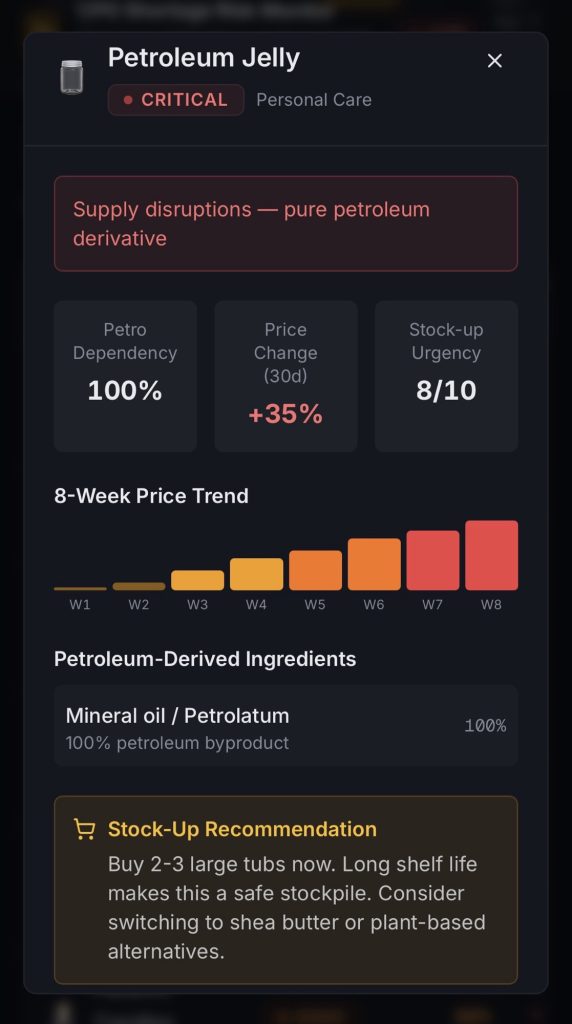
Time to buy Aquaphor and Vaseline

The data is compiled from DOE, S&P Global, Investing.com, Packaging Insights, VCCI trade reports. A petroleum dependency score is assigned based on estimates of ingredient analysis.

The prices reflect wholesale market trends so you can be prepared to get ahead before retail prices go up. I’ve even included a bit of context on what aspects of the product are petroleum derived ingredients just for fun.

Below is a screenshot for food preservatives. A type of dependency many of us would like less of in our consumption. Maybe the dashboard helps you improve your diet with a little knowledge. Who knows! Isn’t vibe coding fun?

On another note, I remain amazed at what we can do with artificial intelligence and natural language input. This took me very little time thanks to Claude Code, Perplexity Pro and Cloudflare. If you haven’t explored the wide world of vibe coding now is definitely the time.

Categories
Aesthetics Finance Internet Culture

Day 1880 and the Global Intelligence Crisis Kerfuffle

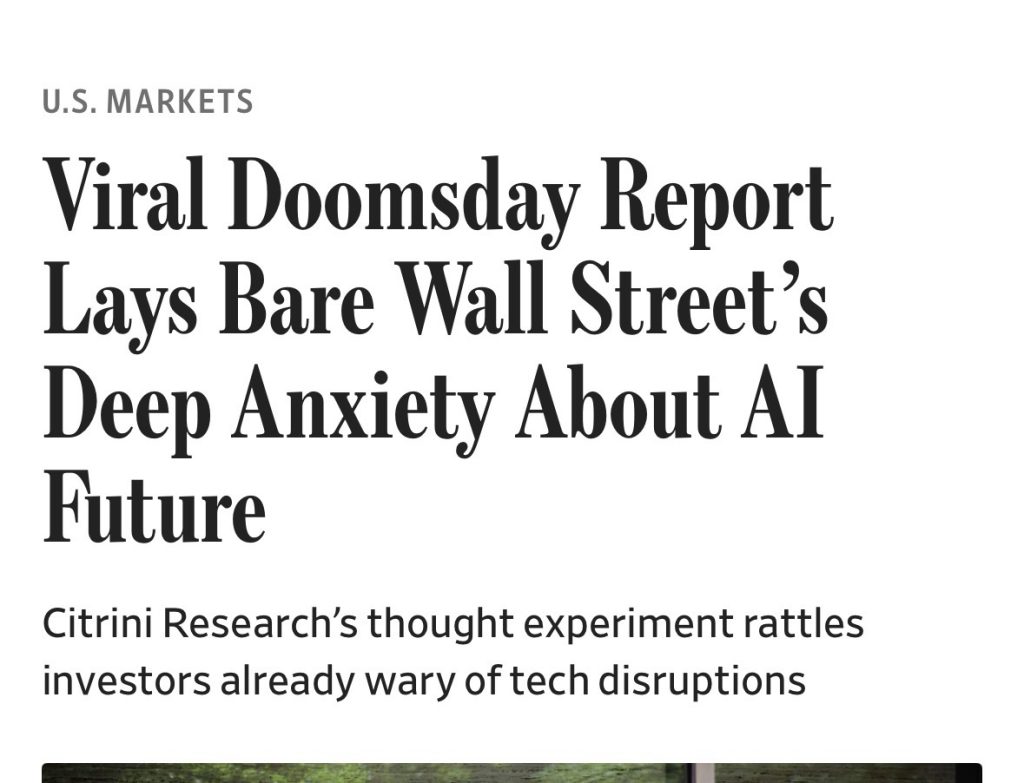
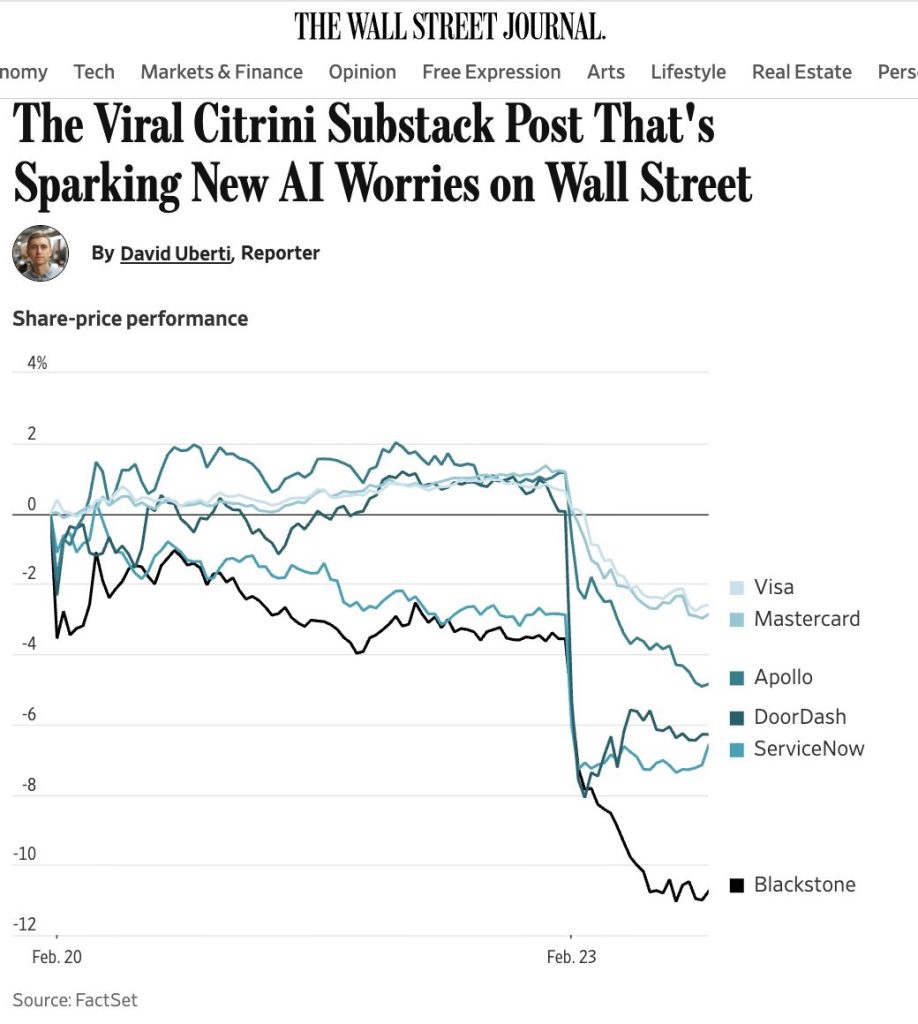
“It’s not a prediction” he said. It’s just a hypothetical possible reality. I believe we used to call that fiction. A science fiction short story wrapped in a macroeconomic essay written by Citrini Research hit the algorithms like a bomb Markets lapped it up like beasts who’d been lost in a barren desert for weeks. Liquidity!

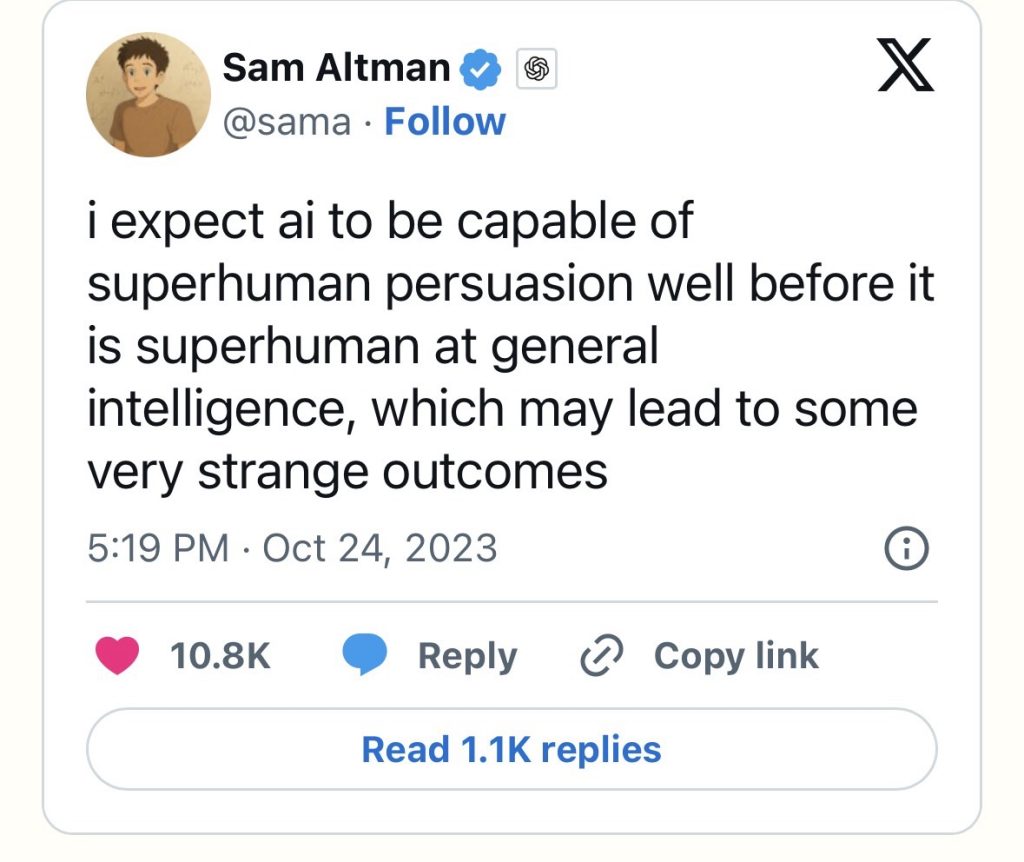
Remember in 2023 when when Sam Altman said that we’d have superhuman persuasion before we had artificial general intelligence?

Citrini is capable of super human persuasion before AI reached super human general intelligence and it has been strange.

As the market sell off was playing out, a flood of “Contra Citrini” essays emerged immediately from players as varied as Joe Wiesenthal John Loeber, Will Manidis, even proper economists like Alex Imas. The co-author Alap Shah went onto TBPN. Fun fact he was Sheel Mohnot’s roommate in college.

I am unclear if white collar workers are in a frenzy about are doing their existing jobs or if they have even noticed the danger. As a real time update from a fellow investor had us both laughing. An intern couldn’t manage a basic research task. The intern asked them how to get to the Founders Fund’s website.

We may need the bull case for AI, as the bear case for white collar workers acquiring any intelligence in their education process is rather unconvincing.

For some reason “how do I get to the founders fund website” started me singing an old tune sung by Dionne Warwick “Do you know the way to San Jose?”

Do you know the way to San Jose?
I’ve been away so long
I may go wrong and lose my way
Do you know the way to San Jose?
I’m going back to find some peace of mind in San Jose

LA is a great big freeway
Put a hundred down and buy a car
In a week, maybe two, they’ll make you a star


Weeks turn into years, how quick they pass
And all the stars that never were
Are parking cars and pumping gas

Do You Know The Way To San Jose?

The song was used in another completely different “science fiction story goes viral”context. Maybe it’s in my mind as automated virology lab unleashing apocalypse, is a AI doomer staple also recently in the discourse.

Do you know the way to San Jose? Or if Helix is available for download.

In an SyFy channel show from 2014 called Helix, which follows an Arctic research station where research on viruses goes horribly wrong. It used the Burt Bacharach & Hal David song “Do You Know the Way to San Jose” as an unsettling musical motif and clue to resolving the mystery. Unsettling California music has my ear this week.

In 1968 you could return to San Jose from Los Angeles and start a relatively normal life as one of the stars who never made it. Pumping gas and parking cars. If we get too close to the sun of artificial intelligence success we don’t have a San Jose to run to. You can’t get away there as it’s filled with just the part of technology folks peddling dreams as unrealistic as the ones down in Hollywood.

Categories
Finance Startups

Day 1858 and Parked Outside the Flow

The crazier the informational world gets, the more inclined I am to tune it all out. The flows of information are fun sure but it’s only useful to financiers, degenerates and the global management class. I really only rate into very bottom of one. No, not the degenerate class.

As 2026 has become the year of repositioning for “whatever is coming,” I am unsure of much I wish to return from the hinterlands into the flow. Being inside the flow looks enticing but it’s Thor the only way to do business.

The thing is that I began my own career by participating (in a small way) in what Will Manidis calls The Flow. Being inside has its perks and I saw a lot which enabled me to make some very good investments.

What is the flow? It’s a metaphor for a 24/7 club of information, a formal and informal circuit of social and business obligations, and series of social & professional inputs that sometimes generate spectacular output.

It’s no wonder people think investing looks like gambling when you put it that way. It takes a lot of shrewd social manners and access to resources to be inside the flow and those are distinct barriers for anyone outside the global ten percent.

So where to go if you are an American? Well, stay put somewhere you can be stable and secure. Sure the middle powers will tell you that they can save the liberal order but in reality it’s all state capitalism by strong man and technocrats. And I’m not either and I’d wager most truly new things that will matter won’t be easily secured by old mechanism of power.

What Manidis rightly points out in his Flow essay, is that you can build businesses and make good money for investors and limited partners outside of the flow. You can focus on your unique insights and build something great.

I hope I offer some proof of that myself. I flash the codes for my odd little node and traffic occasionally routes through me. I found crypto winners and the future of atomics outside the flow. And I think I’d rather like to spend my Sundays seeing what’s happening outside the nightclub of financial flows.

If you want to be outside you can be. I just might be already. You can find me in the proverbial parking lot of the Flow (the open internet) yapping, chilling, lighting and fighting with the cool kids. You will always know where to find me. I’ll be one DM away.

Categories
Finance Politics

Day 1857 and We’ve Got to Talk About Kevin

My husband was joking with me that he’d been arguing, in the way that men do, about what the state is or is not obliged (or allowed) to do about the movement of the capital class and where they keep their resources.

Capital flight and asset diversification are not just individual decisions but increasingly society ones as well. And it’s not just the wealthy who are worried.

This discourse emerged in the middle of the intense upswings in gold & silver prices subsequent profit taking and draw downs.

• Gold ran to roughly 5,600 USD/oz before sliding 7–10% in a day, still leaving it massively higher on the month.
• Silver briefly traded above 120 USD/oz, then fell 15–20% and is now back under the 100–110 area, which technically puts it in a short‑term bear move after a parabolic rise

These actions were stirred up by debate on Federal Reserve independence (ameliorated somewhat by the new chair Kevin Warsh over Kevin Hassett), China’s buying patterns (both official & wealthy retail) in precious metals and what these two interconnected news items might mean geopolitically for regular people. See this on buying in Australia and on China’s flows for more context.

From remittances to capital controls, the debate is particularly spicy as the dollar has been made to trade deliberately lower for the export agenda, rising remittance dollars (and debate on what’s missing in tracking them) has upset many Americans, and the money printing of the Biden years has raised awareness of inflation and national debt.

Obviously it has been a combustible mix. And thus we see renewed interest in decentralized assets and hard commodities. And then, of course, there has been the trial balloon floating in California of a wealth tax. What should we do about our most moneyed citizens and what do they owe. We tax income not wealth and that change is likely to have huge repercussions.

It seems perfectly sensible that anyone who has dollar denominated assets might be concerned about where that currency is headed, who is benefiting from the changes, and what on earth the Chinese are up to both as a people but also as a nation with unclear monetary goals and tensions between its leader and its military.

Ultimately though this is an incident about the dollar, its long term value, who will oversee it (and which Kevin was meant to have the gig) and where wealth can and cannot go to deploy itself in an era where the rules based order and Bretton Woods are no longer a given.

Categories
Finance Internet Culture Politics

Day 1807 and Set Hyperparameters to Dumb

As much as I’m trying to salvage the end of my year by taking it slow, I’m still keeping myself plugged in. There is no unplugging in our hyperreality.

I’ve accepted this is a part of being human for the time being. I don’t struggle with internet addiction even if understand how it can be for others.

So here I am keeping an eye on various market movers like central bank rate cuts and earnings calls. It’s a shame I didn’t go into banking as it’s a lovely hobby I just happen to enjoy it watching the data go by.

The intake of long insight and slow instincts interplays with short data and animal spirits if you can stomach it. For me at least I don’t make moves based on any given day.

I find impossible to make much sense of the here and now, so the best I we can do (at least those suitably complex situations) is make very long plays or extremely short ones. I wouldn’t want to plan for a middle distance. Pity the politicians operating on two year schedules.

I’m glad I make long plays if it’s a choice between long and short. I wouldn’t want to edge out small gains in the algorithms like my quant friends do. Too much is out of distribution and nothing is ever really priced in. Cliff Asness is right. Markets have become less informationally efficient. Information becoming free made insights almost impossibly expensive.

For me it’s silly to make grand claims of sensemaking as we bumble from “so over” to “so back” by the hour. I’ll never compete with that.

What do we need over the next decade? How about two or three? That’s my plan. Anything else risks tip toeing between hyper tulip mania and the deepest depths of the Great Recession trough. I’m amazed we’ve shaved off volatility as long as we have. Apres Boomers, le deluge? Reality feels like hyperparameters are deliberately set to dumb.

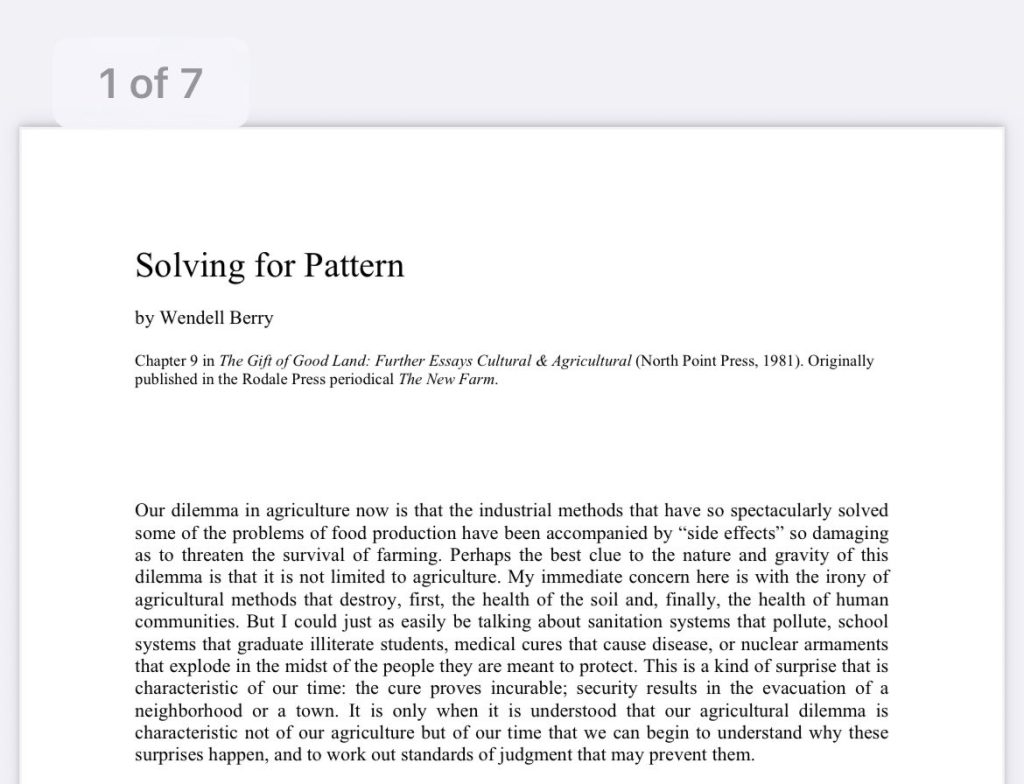
And so Wendell Berry is now percolating up not just through the permaculture hippies, Monsanto fighting eco-terrorists and nouveau TradCaths but in the feeds of my design hipsters too.

Williamsburg taste by way of pastor parents has found its way back to the Kentucky poet. Back to the land didn’t take for the Boomers but maybe this time it’s different. (Only if you are landed gentry).

The cure proves incurable.”

Categories
Finance Politics

Day 1799 and Thucydides Middle Income Local Maxima Traps

I have been catching up on Odd Lots which is the one podcast I listen to with any consistency. As all discussions about economics boil down to great power discussions as of late. The times they are indeed a-changing.

I noticed that both hosts brought up their collegiate studies of international relations across two back to back episodes. First on the Thanksgiving episode with Graham Allison of Thucydides trap fame.

I just caught up on it today and then the subsequent interview with Ray Dalio on his five forces episode. Joe and Tracy brought up international relations studies in both episodes as it does seem to be the current mood.

Dalio is always an enjoyable listen but I’m much more interested in Professor Allison as (to prove the joke Joe made) in the introduction that “a substantial portion of our listeners are really into ancient Greek history

And indeed Joe is right. I’m a huge Thucydides fan, I went on a Peloponnesian War tour and am a regular visitor of the Balkans and its ancient Mediterranean and Roman history.

So naturally I have followed Allison’s work on rising power and its threat to established ones.

The US and China are in a “Thucydides Trap,” whereby the risk of war is heightened when an established power is threatened by a rapidly rising power. This is the framework that’s been popularized by Graham Allison, the Douglas Dillon Professor of Government at Harvard University. Professor Allison has been writing about China and the US-China relationship for decades

I guess all millennials grew up thinking we’d study these historical concepts in an eternal Pax Americana only to find the end of history wasn’t here to stay and we might fall into the trap. It’s just hard to imagine America feeling threatening to anyone at the moment.

As I listened to the episode, I happened to be walking through a neighborhood on the outskirts of a city that is keen to tear down some of its older homes to make way for new roads and denser apartment buildings. Much of those changes were clearly already in motion, as I saw cranes and construction crews.

The older homes looked multi-generational, but not in that wealthy polished way, so much as the middle income stalled economy compromise.

And yes you see it even in first world nations. In America and Europe, many conditions would benefit from more of a longhouse “in it together” approach. As elders stretch on in years and millennials go into middle age with few markers of adulthood. You’d think we’d want more of these style of homes.

I wondered if a city carving out the old construction through imminent domain tactics and buyouts, would make this outskirts neighborhood more vibrant. It would certainly bring in new buyers of condominiums. Consumption must go up.

I wondered about the families inside of the homes that looked more like multi home construction. Gates and other obstructions made it hard to tell, but the impression I got was more middle income local maxima family compound trap.

China rising, while the first world learns it may be more second world than it realized, makes me wonder if we’ve got it all wrong. More of the planet is in the middle income trap than the World Bank realized.

What if there is no Thucydides trap to fear as other powers sputter and stall. We long for an artificial intelligence boom to launch the globe into a high earning high efficiency world.

Sociologist Salvatore Babones and political scientist Hartmut Elsenhans call the middle-income trap a “political trap” as economic methods to overcome it exist. However, few countries use them because of their political situation. They trace the causes of the trap to the structural problems and the inequalities generated in the early development process.

According to them, the wealthy elites then follow their interests by bargaining for a strong currency which shifts the economy’s structure towards the consumption of luxury goods and low-wage labor laws, which prevents the rise of mass consumption and mass income.  Via Wikipedia

That sure sounds like a lot of the problems we see in America and Europe. All we are doing is getting gummed up in Baumol’s Cost Disease as we try to reinvent new ways of living that consume what remains of the old without the new going as fast as is needed.

But old multi-generational homes blocking the expansion of a city won’t get anyone to mass affluence. So it’s time to bulldoze old neighborhoods and make luxury boxes in the sky.

Not sure that ended well for China either. They popped their real estate bubble. And they wisely tamp their currency to export all their consumer goods. They might be stuck in a local maxima middle income trap too. Maybe Thucydides isn’t the framework here. Or maybe war is the only reset humanity knows.

I myself am hoping we choose to go to space instead but the South China Sea sits waiting. The only currency that matters in this strange moment is GPUs and that’s a different trap entirely.