It’s just clear that some people are enabled to bigger, better and faster output thanks to rapidly advancing tools coming from the foundation model companies.
Will Manidis is on hot streak of essay writing (aided by artificial intelligence in the best way) and has produced thought provoking writing at a great clip. I love nothing more than seeing an exited founder feel free to express their views at their fullest. I’ve written about his essays in the past and suggest following him.
Today he wrote about visiting Oman and his reflections on its transition to a modern state by a singular leader choosing a third way way of building rather the binary choices other nations seem to have made between of annihilating the past for the future or total preservation of a way of life that no longer functions.
“I left with an unsettling feeling that I had seen a vision of the future that I wasn’t supposed to see. A country that had gotten extraordinarily wealthy but stayed coherent to its pre-industrial identity—a country that didn’t turn into a museum, didn’t paralyze itself in amber, but became a modern, functioning, wealthy nation that did not feel like it had been strip-mined of itself by the money.
In the West, we really have convinced ourselves there are only two options for our post-economic future. You can be Shenzhen or you can be Athens. … Shenzhen is the city that chose money over place so completely that it deleted itself.
…Athens is the opposite failure, and I say this as someone who is at least Greek enough that I feel like I won’t offend anyone. Athens chose place over money so totally that the city itself is a mausoleum”
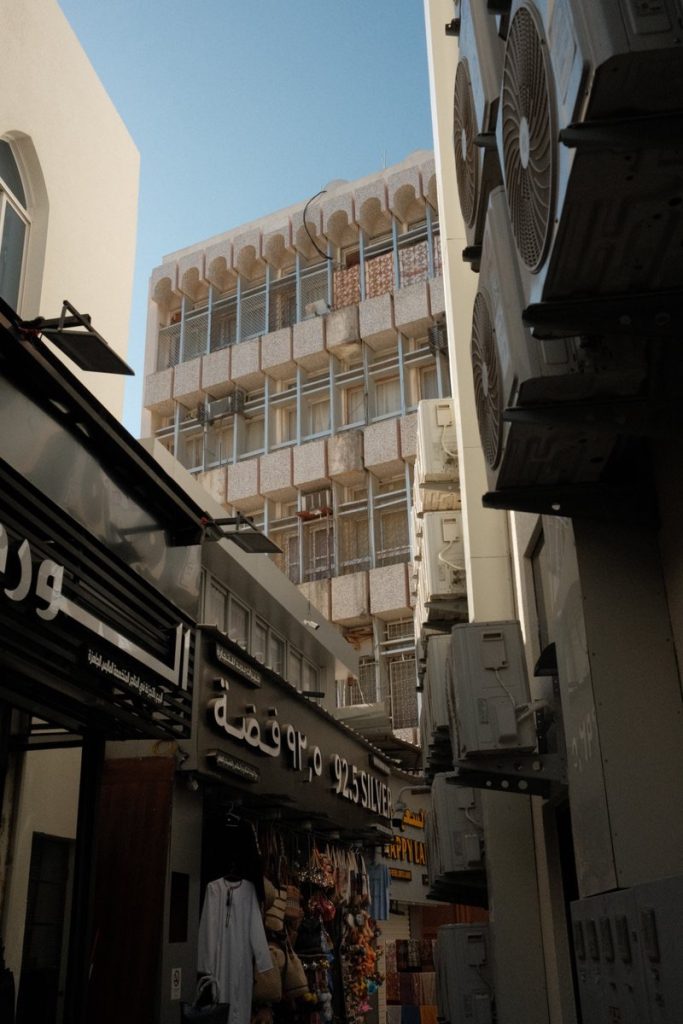
I don’t know much about Oman and I make no claims to understanding its politics or histories but I too think about what we lose without a sense of place but am also fascinated by the liminal zones of the hyper future set against a past we are actively forgetting. And no nation is immune from this process.
I do however have two books to recommend if the topic of place, continuity and the future interests you. One is a work of fiction and one a photography compendium whose forward was written by my favorite author.
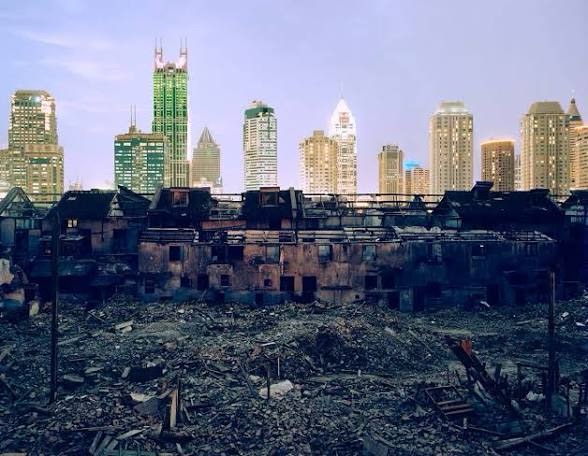
Photographer Greg Girard’s work documents Asian cities in transition, especially Shanghai and Kowloon, was closely associated with William Gibson, who wrote the foreword to Girard’s book Phantom Shanghai. Gibson is the father of cyperpunk. And I contend that his near future fiction gets quite a bit right about how close the dark past is to almost arrived future. These images were shot in 2007 and yet the outlines of the super cities was already energy
The other book is a work of alternative historical fiction in the vein of Philip K. Dick’s Man in the High Castle called American War by Omar El Ak. It is premised on an inverted or “reversed” 9/11/War‑on‑Terror in which American bombed a thriving Dubai.
The premise follows a protagonist’ traumatic life as a a radicalized agent of terror preyed on by different foreign influences living in a refuge camp in what was once Georgia.
It rhymes with both Will’s essay and with William Gibson for me. In a review of the book, they quote Faulkner “the past is never dead. It’s not even past.” And as these examples all show us, cyperpunk was born in Some Dark Holler