Fashion rules are not hard rules. Soft rules apply to soft people who lovingly break them if something better would liven the mood. Being mercurial is a delight for them.
Soft rules do bind some people though. That’s the old canard about conservatism.
Conservatism consists of exactly one proposition, to wit: There must be in-groups whom the law protects but does not bind, alongside out-groups whom the law binds but does not protect. Frank Wilhoit
If you take the above statement at face value it makes for interesting thought experiments. Is the fashion industry is a conservative industry? Why then does it present to some as an entirely progressive culture? Fashion scholars could go on at length.
And this cultural rules exist ,about when to wear white that no one follows except those who are fearful enough to have it forced on them.
I am on an island after Memorial Day so I’m well into wearing white territory. No white before Memorial Day or after Labor Day isn’t enforced now in any meaningful sense but years after late‑1800s upper‑class habits dictated a practical, status‑signaling summer color meant for seaside or country time which were put away when people returned to sootier cities in fall.
At least I hope you aren’t somewhere covered in soot in either winter or summer. I myself am in full costal grandma regalia from white cotton pants to summer weight cashmere. Isn’t it absurd we have summer weight wools? It should really be a tee shirt but like I said soft rules for soft people.
The more power we seem to gain working with large language models, the more apparent it is that few of us are visually literate in a meaningful way. When you hear talk about design, it is all too often moods and vibes with no specifics.
Now, you might say that you know what you like when you see it. That’s also how we let the Supreme Court talk about porn. Clearly untangling the weft and weave of taste (and by extension culture) can be further articulated rather than relying on subjective, non-definitional standards.
How you came to your visual reference preference set is quite a bit more complicated than whatever pre-digested piece of media came across your algorithmic feed.
You can explore design languages from one token to the next, but visual literacy involves a lot more than scrolling or confirming you’d like to see more content “like this.”
Edward Tufte taught data analysis and public policy as a professor at Princeton and Yale for 31 years.
Tufte, via his Graphics Press, wrote, designed, and self-published 5 books on analytical thinking and showing, taught a one-day course, Presenting Data and Information for 923 days to 328,001 students.
Who knew Tufte and I both shared a love of marking the days of our work? He influenced many more people than I have but I find some joy in that coincidence.
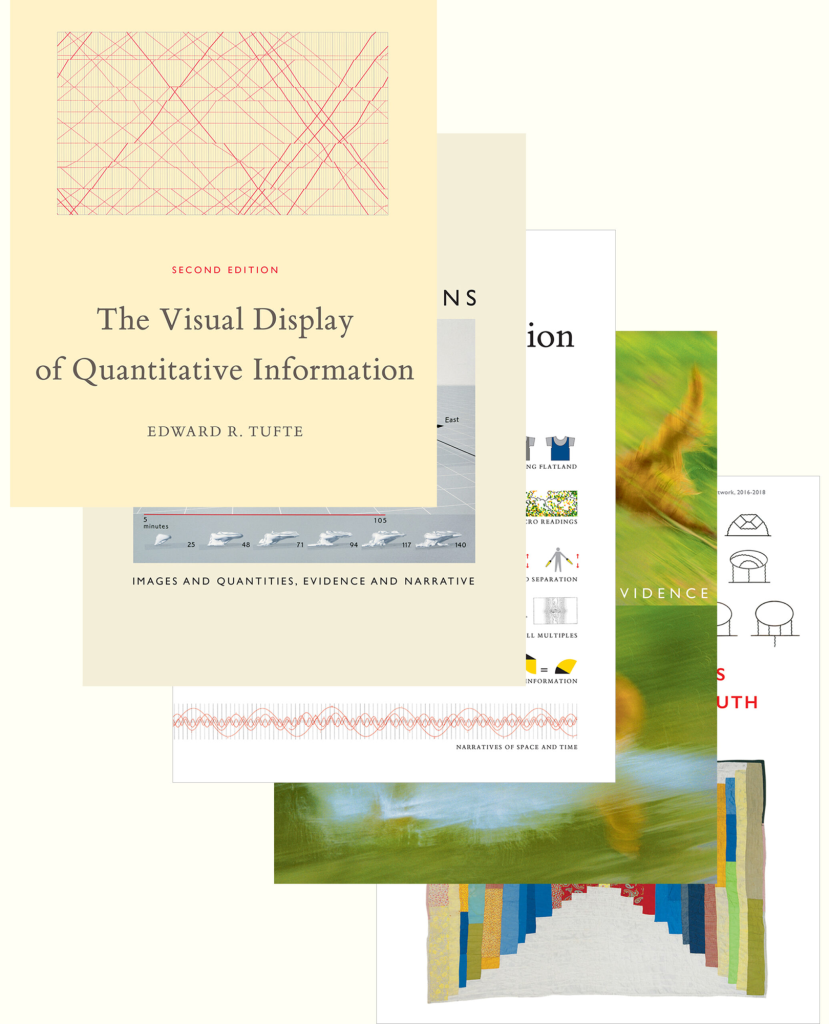
His most referenced work, which I mentioned above was published in 2001. Visual Display of Quantitative Information was on the desks of everyone designer I knew, from fashion and Silicon Valley to public policy it was a mainstay. The man knew how to lay out information visually and he became the standard.
Some of Tufte’s self published tomes
The long tail of enthusiasm for displaying data beautifully surely owes its ubiquity in some part due to his success in teaching my generation’s designers.
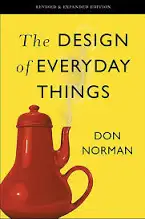
He’s became for a period so universally referenced that Tufte became a cliche. Now he’s classic a quarter century later. His work arguably as successful as a visual language reference anchor as bookshelf favorite, “The Design of Everyday Things” by Donald Norman. His work is also denigrated as cliche in some circles.
The Design of Everyday Things second book cover
Both men offered clarity and practical principles over taste and theory. Those academic predecessors befuddled many who experienced aesthetics primarily through semiotics and critical theory. It felt revolutionary to return to form and function
You “Kant” really learn to love the languages of aesthetics from theory alone as it turns out. I’ll place a little AI synopsis to make the connection clear. This is from Perplexity:
Someone might relate to the popularity of Edward Tufte and The Design of Everyday Things as part of a broader hunger for clarity over clutter in how information and objects are presented.
Tufte’s work is influential because it treats visual design as a serious vehicle for understanding data, while Norman’s book argues that everyday things should be intuitive, legible, and centered on the user.
A Tufte-style chart removes decoration so the trend is easy to read, while a Norman-style kettle shows clearly how to fill it and pour it without guessing.
Both are forms of respect for the user: one respects the reader’s attention, the other respects the user’s actions.
Learning how to use an item or a tool, or how to interpret charts or graphics, can easily overwhelm anyone and feel disrespectful to students. A whole era of computing was stuck between the power of the command line and the legibility of the desktop metaphor.
Norman spoke of the Gulf of Execution as the gap between a user’s goal and the means to execute that goal. Tufte similarly wished to remove the confusion in charts and graphs so one’s ability to glean information wasn’t stuck in a gulf of understanding thanks to overwrought bar chart or sankey diagram.
With new artificial intelligence tools we are bridging some of that gap, not with design but with raw computing power. We are moving beyond the CLI and the desk and into a world of reference and inference.
I just hope we all take the time to learn our reference set so we can do more than say “I know it when I see it” as that will be our only way across the gulf of execution. Some things never change. Learning the languages of your field is one of them.
I’m in my luteal phase so primed to be grumpy, frumpy and otherwise combative. You’d think this wouldn’t be an issue as I’m currently experimenting with synthetic hormones and all sorts of experimental peptides but the feminine is a mystery.
Thankfully this cunty attitude had a positive side effect of spiraling me into a group chat debate over what constitutes couture. Haute couture literally means “high sewing” or “high dressing making” in French.
I just had to be technically correct as it’s the best kind of correct. I only know as once upon a time I picked a fight with Fédération de la Haute Couture et de la Mode aka La Chambre Syndicale as old school fashionistas tend to still call it.
I may have done a kind of DDOS (allegedly) on their publicity fax machines to get their attention to further my guerrilla reporting efforts. They were not amused by the chron job I set to send them regular faxes at specific intervals. Anyways.
The TLDR is essentially that what constitutes couture is a bit like champagne. It only counts if it’s from the ateliers of Paris with very specific artisans (and a number of them) using hand sewn techniques which sell only to private clients with custom fittings. They then approve your atelier if you meet these standards.
Couture is not custom made clothing nor is it a form of luxury determined by price or self labeling. And it is definitely not “ready to wear” clothing you can buy off the runway. If an elaborate dance of craftsmanship and French bureaucracy. As an American I find it a bit silly but I don’t care for cartels of any kind be it drug, oil or clothing.
Many designers will try to get away with calling a custom made item couture in order to ride on the 170 year aura of French fashions but it’s not really what is meant by couture and it’s absolutely not what is meant by haute couture.
You don’t see Savile Row tailors calling themselves couture designers nor should they. That would be silly and imprecise. They are Savile Row tailors and that’s its own special custom suiting process.
Being imprecise in one’s specifications is exactly the opposite of what you’d want from someone making you a custom wardrobe based upon nearly two centuries of a professional cartel’s specifications.
So please don’t call something couture as a short hand slang for custom design. It may be ready to wear. It may be tailored to you. But only those who meet the standards of the Chambre Syndicale carry the designation haute couture. Otherwise it’s just sparkling custom made clothing.
Meltdowns seem to be a going thing at every layer of human interaction. Something in consensus reality slips, a schism arises and then you have to hard tap at the glass to decide to see if it’s a mirror.
In preparedness communities they talk about “normalcy bias” as the preference of individuals to avoid looking at a problem straight on. Adjusting to bad news is like grief. It has some steps.
I think that it’s relatively clear to anyone watching that the world is in a particularly malleable place. Old assumptions about institutions and power are tested.
I think it’s never been easier to have your grip on reality rocked. We are all getting rocked daily by meta-narratives and players of games because the internet is a sea of competing games and stories.
Maybe that level of instability is too much to manage for any of us so we install pressure sensors and we let off steam and we carry on with whatever seems manageable. So someone has a meltdown. Seems to be going round.
The general theory goes that post internet generations see niche algorithm-driven content rather than say cultural or historical touchstones. Past touchstones might have unified past generational experiences.
I don’t know if unified experienced are all good. Sure all of the Boomers have heard the Beatles but all millennial woman recall tabloid headlines about Britney Spears getting fat. The water we swim in can be hard for us fish to spot.
If the younger generations have a problem, it’s being far too unified in their experience of their global position. The pandemic was a surprisingly effective reboot of expectations for all of us. But the older you were the easier it was to contextualize the impact of the pandemic across your entire life.
We all ran a dress rehearsal for collective responsibility at global scale And depending on your personality, you were funneled into perspectives you preferred.
So you saw us either shoulder or shirk responsibility. Not that other generations haven’t had to do some version of this, but being able to see it at networked global scale seems to have done something to the capacity to see the future.
McWorld triumphed over Jihad right? But that is content for a paid Substack where Fukuyama and Zizek both still write. It must have been more convincing in hardcover.
Every time a new AI image generation model comes out, there is a wave of people creating new content riffs inspired by their friends testing out the newest capabilities.
Yesterday OpenAI released ChatGPT Images 2.0 which is tool powered by the gpt-image-2 model designed as a “visual thought partner.
It is pretty fun to play with if you have even the slightest design or visual vocabulary to work with. Or even just a couple cool selfies.
No need to focus on regulatory capture politicking, compute shortages, geopolitical drama or shipping choke points when you can create cute social media content right? Screw a grey zone informational wars (or even a hot kinetic one) girls just want to be remade as a fairy princess science or as Studio Ghibli character.
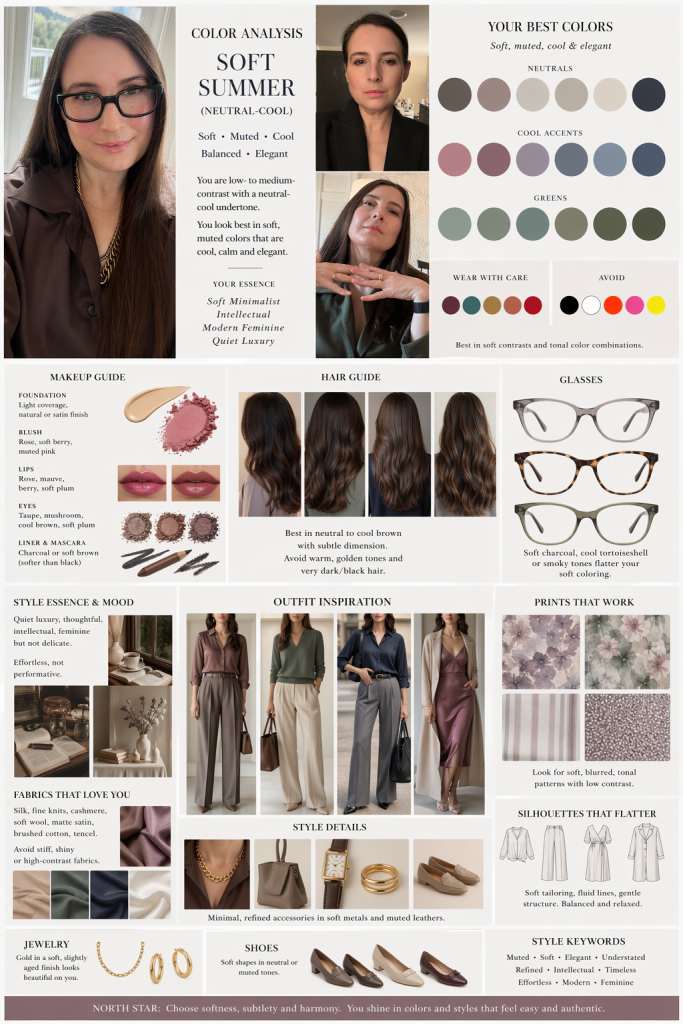
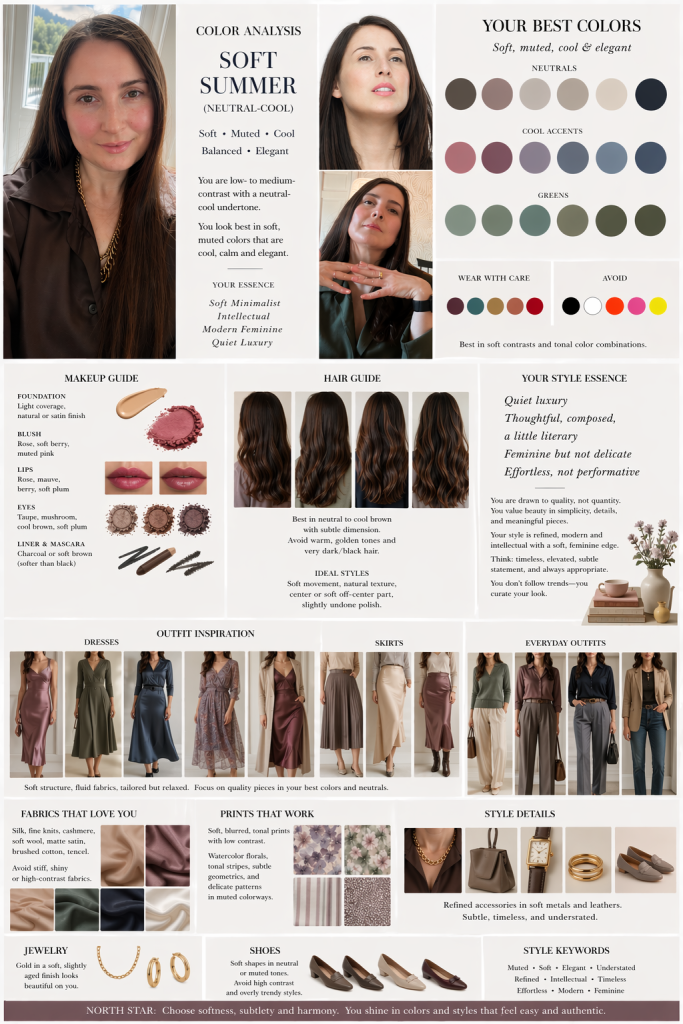
So what’s the next trend? My feed produced a wave of mood boards with color theory, swatching, fabric pins, makeup stories, hairstyles, other mood board elements that combines everything from descriptive prose to capsule wardrobes. And all this from a a couple of basic uploaded photos and some simple prompts.
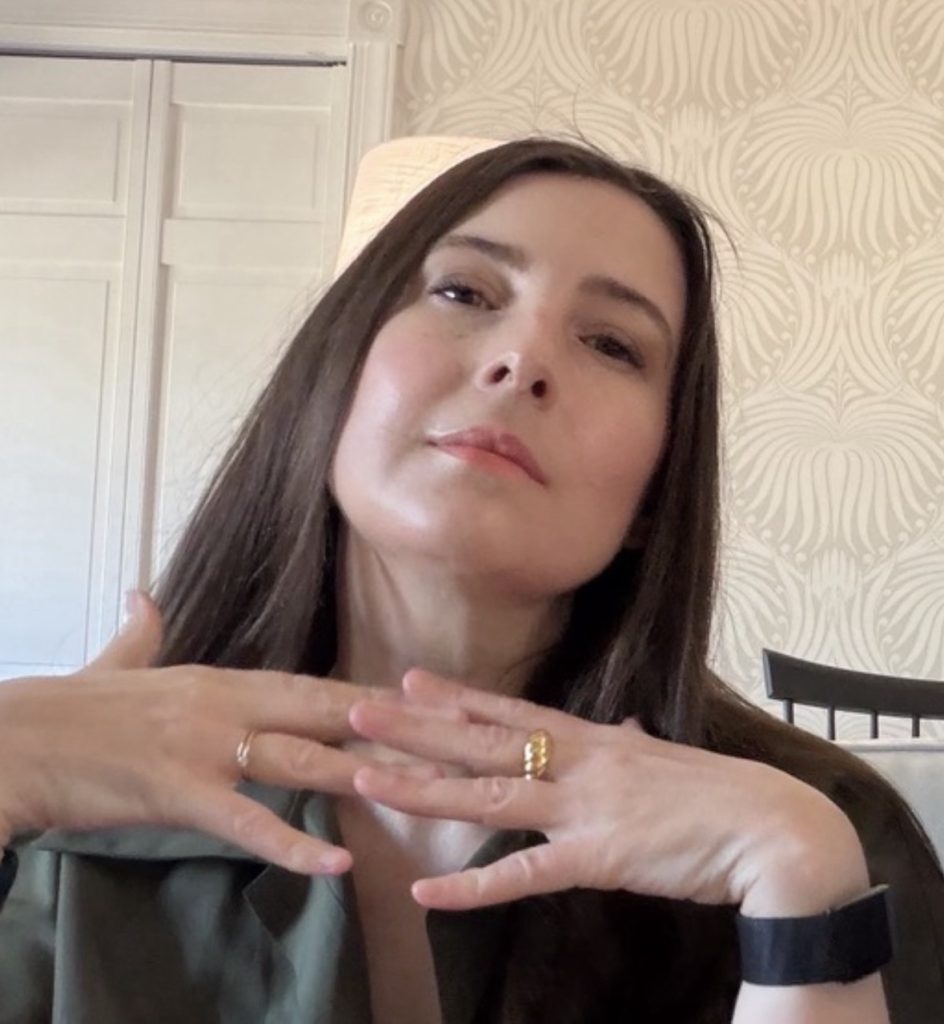
I choose the below images and said “do a color analysis of the woman in this picture including best colors, makeup choices, hair choices, style options and create a mood board with outfit inspiration, prints that work, accessories and other details”
From there it spat out a long analysis which I will post below. I then asked that analysis to be mocked up in a mood board based on the look and feel of the images with the descriptions from the analysis. And I’m not going to lie it’s pretty good and clearly ChatGPT can smell the Ann Taylor on me. I mean, umm, it can tell I spent time working for some of best known American heritage retailers.
Now it gets weirder the more you try to edit it. The slow warping of my face from my own to I’m going to say Sheryl Sandberg is a little unsettling. But I do wear a lot of silks and prefer greens and browns though I am often a little black dress defaulter.
Now I just went through an enormous exercise in which I tried to find a television and camera ready foundation where other models were sure I was a soft autumn but a soft summer isn’t all that far off.
And I appreciate the buttering up OpenAI does with their quiet luxury spiel. I’m more of an Italic luxury buyer and a Quince if I’m feeling like a gamble. But somewhere back before all this inflation I for sure was the kind of girl who wore chunky antique vermeil accessories and never turned down a nice olive green.
This is a great set of photos for analysis—different lighting, styling, and contrast levels make it much easier to see your natural coloring clearly.
🎨 Overall Color Season: Soft Summer (leaning Neutral-Cool)
You sit in that refined, muted, slightly cool palette with:
Low-to-medium contrast (your features blend rather than sharply contrast)
Soft, diffused coloring (nothing overly bright or high-chroma)
Neutral-cool undertone (pink in the skin, but not icy)
You can borrow slightly from Soft Autumn (especially olive/green tones), but your best looks are cooler and more muted.
🌈 Best Colors for You
✅ Core Palette (your power zone)
Dusty rose, muted mauve
Soft plum, blackberry
Blue-gray, slate, steel blue
Sage, eucalyptus, muted olive
Taupe, mushroom, cool beige
Soft navy (not inky or harsh)
⚠️ Approach Carefully
True black (can feel a bit heavy—your blazer photo shows this slightly)
Bright white (too stark—soft ivory is better)
Bright jewel tones (too high contrast)
🚫 Avoid
Neon anything
Super warm oranges/yellows
High-contrast combos (black + white, etc.)
💄 Makeup Direction
You look significantly more harmonious in the softer, diffused look (photo 1 and 3 vs the sharper blazer look).
Skin
Light to medium coverage with a natural or satin finish
Avoid overly matte—your skin looks best with a bit of life
Blush
Rose
Soft berry
Muted pink (what you’re wearing in photo 1 = excellent)
Lips (this is your strongest feature zone)
Rose gloss (photo 1 = perfect)
Mauve nude
Sheer berry stains
Avoid: orange-red or overly brown lipsticks
Eyes
Taupe, mushroom, soft plum
Cool brown instead of warm bronze
Soft liner (charcoal > black)
Mascara: brown-black ideal
💇♀️ Hair Analysis
Your natural coloring works beautifully—this is key.
Best Hair Direction
Neutral to cool brown
Slight ash or soft cocoa tones
Subtle dimension (very blended, not high contrast)
Avoid
Golden highlights (too warm)
Very dark/black dye (overpowers you)
High-contrast balayage
Styling Note
You shine with:
Soft movement
Natural texture
Slightly undone polish
👓 Glasses (important win here)
The black frames:
Add structure (good)
But slightly overpower your softness
Try:
Soft charcoal
Translucent gray
Muted tortoiseshell (cool-toned)
👗 Style Essence + Mood
You read as:
Soft Minimalist + Intellectual Romantic
(very understated, very intentional, very modern)
Think:
Quiet luxury
Slightly academic
Soft structure, not rigid tailoring
🧥 Outfit Direction
Silhouettes
Fluid tailoring
Draped fabrics
Soft blazers (less sharp shoulders)
Relaxed but intentional lines
Fabrics
Silk
Fine knits
Matte satin
Soft wool
Avoid stiff, shiny synthetics
🧵 Best Neutrals (your wardrobe backbone)
Mushroom
Cool taupe
Soft navy
Dusty olive
Muted charcoal (instead of black)
🌿 Prints That Work
Because your coloring is soft, your prints should be too:
✅ Ideal
Blurred florals
Watercolor patterns
тонal (low contrast) stripes
Soft geometrics
🚫 Avoid
High-contrast graphic prints
Sharp black/white patterns
Loud, busy designs
📌 What Your Photos Show (Specific Feedback)
Photo 1 (window light, glasses)
Best overall look
Soft pink lip = perfect
Brown shirt = harmonious
Natural light = confirms your muted palette
Photo 2 (black blazer)
Black is wearing you slightly
More contrast than your features naturally support
Makeup slightly sharper → less aligned with your softness
Anytime you see dumb headlines and bizarre deal points show up on Bloomberg it’s worth doing a head tilt. The time for consolidation and winners in the first wave of artificial intelligence automation is here and surprise we replaced ourselves.
Catching up with various consumer offerings hasn’t mattered as AI coding is the stuff of money and even their own staffers might prefer Claude. Or refuse to use AI at all? That that sounds like the pampered Googlers we all know and sort of dislike.
SpaceX said it has an agreement to either acquire AI coding startup Cursor for $60 billion later this year or pay $10 billion for its work together, as it works to catch up to rivals in AI coding
You know shit is rough out there when the billionaire with the space monopoly and the compute is offering up something this bizarre to the coding startup that was about to raise 2 billion to catch up to Anthropic but is now maybe going to buy extra time on Elon Musk’s dime. I’m sure stuff is fine at OpenAI right?
I honestly don’t know what the heck is going on except that it’s a good time to consolidate if you don’t have compute (and previous few have enough as hysteria builds in the dare center and power works) and if you have investments in energy you literally can’t go fast enough. It’s feeling a little rekt vibes out there. And I ain’t even ready to address the end of the cease fire.
I am finishing off a series by Charles Stross called the Laundry Files. It is a fifteen book series with a bunch of novellas that I’ve been reading since college. It’s James Bond meets Cthulhu in British bureaucracy. The last book The Regicide Report came out earlier this year.
It’s Lovecraftian horror about an applied computational demonologist. Confused? He’s computer programmer but surprise in his world computational power can summon demons. “Bob” fights gibbering horrors from beyond the veil. It’s top notch Dad fiction if you prefer your thrillers with a side of weird.
He left Twitter during the great Elon-ment so I hesitate to imagine what he thinks about say Anthropic’s Mythos or the current frontier labs racing to create “AGI” as he’s the guy who invented half the terminology our doomers currently use. He wrote a lot about mind viruses so he might not appreciate if one of his fans thought he caught one or two.
But boy is Stross prolific. I met the guy at a sci-fi con put on by the math department at SUNY Stony Brook before he became a publishing sensation. Not only has he exceeded a baker’s dozen in the Laundry Files but he’s also written dozens in a series called the Merchant Princess as well.
My best buddy and I were the only kids in the room waiting to hear him read. At the time, I think the only people worried about artificial super intelligence and the singularity were a bunch of mathematicians and some weirdos on a listserv. That included the two of us.
The worry that has never left Stross, no matter his subject matter, is whether or not we idiot humans are mere meat waiting to be devoured by barbarians held back by the gates of our reality.
Maybe the Elder Gods want our Mana. Maybe the historic light cone has spoken and we are pet humans at the end of all possible realities being kept from annihilating our future. Lots of sects of folks are in massive schism and have been for basically all of Stross’ career and my adult life.
It’s hard to imagine worse demons than the ones we’ve already imagined ourselves. Which is why it’s helpful to ask which barbarians are banging at whose gates? Who’s keeping what out? Or are we being kept in? And what counts as a barbarian anyway.
You’d think Europeans would be a little more on the up and up when it comes to their fine young strapping men getting into scrapes with Persians. But judging by the current reaction to the goings on in the crescent of civilization nobody has time to study antiquity anymore. That seems to be a pretty pressing issue in America as well. We also don’t teach math so it’s a real toss up on who is fucking up civilizational gains more.
Still I presumed your average movie goer saw some Zach Snyder action films even if they weren’t into say Athenian city states struggling with their gerontocracy only to lose their best and brightest to the other side. No Melian dialog fans? Ouch. Tough crowd.
I am extremely caustic today as I went from nervously fucking around with petroleum derivatives in consumer packaged goods to running a fever today.
I’ll just have to chalk all of my stupid whining up to modest discomforts of peak human achievements even if I’d like to blame all my problems on the betrayal of super ripped Greek dudes.
I assume Alcibiades was in decent shape giving how much certain Athenians thirsted over him but girl (no gendere intended but I mean Socrates) he left for Persia when Pericles wouldn’t listen.
Yes I’m running fast and loose between a hundred years but I’m not a Helot so maybe I’m allowed to run my mouth a little. But if you are running a frontier AI lab I’d appreciate it if you don’t. Same applies if you the secretary of any major departments. Or retired hedge fund managers.
Really anyone with anyone power should be keeping it moderate. The rest of us are probably free to be idiots online if they choose. Still keep up the good spirits, stock up on the essentials and pick up some history books when you get the chance.
I’m on what appears to be family spring break in Washington D.C. I have conferences and dinners and I think it’s lovely that everyone is doing their level best to get the county through the moment to a better end.
The cherry blossoms are in bloom, the weather is warm, and I am trying those trendy serum coral blush that are apparently in style. That’s code for every brand has a version and quality varies greatly. Also no one likes the millennial dewy white bitch. She is dead. So I must carry on with the a new look says Vogue.
The last 12 months have made clear that matte is definitely back, but it’s been rebranded a bit. Dry, cakey formulas have been swapped for ones that offer hydration while diffusing the look of pores and fine lines. The result is a velvet, satin, or cashmere effect that reads softly blurred.
Thanks Vogue! I am not entirely sure of what kind of events I’ll be attending this week but more than one is the sort of where you want to look up to the moment and polite.
So I’ve been playing with new foundations and lipsticks and putting on spring dresses. It’s a lovely way to spend time the first weekend of spring.
I do see a way forward if we can focus on the ingenuity of American people. We are the end beneficiaries of a host of technological innovations that we paid to produce. I see new kinds of ways we could use that compute in clever and intermediate ways. Maybe I’m an old cyberpunk but banks are now with us.
So I try to remember the changing of trends are are also changing realities of how we must remember the coalition to take compute and speech from Americans is doing everything it can by making you afraid.
It comes from a patrician sense and you want to question if it passes your shit test. I don’t think anything good comes from believing scare tactics. We’ve had a good example of long forecast expert doom being completely wrong.
Which is probably why there are still magazines at all, if life were changing so sharply maybe we would still have a Vogue to tell tell us that it’s nice to have a smart sharp gloss that blurs to matte.
And it’s nice to have a Sunday with blousy colorful dress with the perfect handbag. It’s just a nice spring day in any city. This one is just right on time. Montana might take a little longer to get to spring dresses.