Categories
Aesthetics Politics

Day 1852 and The Nothing

I did not have a good weekend. I feel the emotions of humanity’s current transitional phase too keenly. There are the wondrous upswings of hope and deep darkness that consumes anyone who bears witness.

I feel compelled to bear witness. Even though I know it harms me. Even when I know I am staring into a war, purpose designed to push me into or out of the myriad conflicting agendas of state, corporate, faith and cultural powers. A thousand agendas who wish us submit to their will.

I wish I had the guidance of the generation who led the world through modernity’s war torn emergence into our current networked age. Without knowing our future, would they be able to use their past to help us see through the fog that clouds our present?

I find solace in the children’s literature made by artists who lived through brutal dehumanizing totalitarian regimes. They told stories with truths so clear a child could grasp them.

I return to the works of Tove Jansson and Michael Ende again and again as I try to make sense of what it means to be human. Ironic that I should find human truths in authors who wrote of fantastical worlds filled with whimsical trolls and flying luck dragons.

And yet truths that seem crystalline in fiction distort when I apply the lens of my present. I recall Corinthian’s 1 “Through A Glass, Darkly” and know I am not the first to have such troubles. I will not be the last.

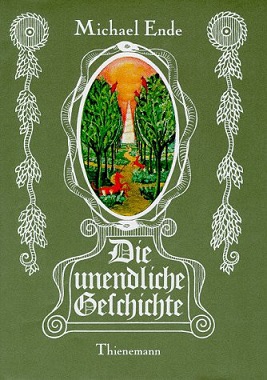
Ende wrote a fictional formless entity called “The Nothing” in The Neverending Story. The people of the realm Fantastica voluntarily leap into The Nothing. It has an irresistible pull.

Worse still, the destructive phenomenon changes the Fantasticans who become lies in the human world. Fantasticans who are destroyed by entering “The Nothing,” don’t just vanish. They reappear in our human world as false beliefs, deceptions, and propaganda that people mistake for reality. The symbolism is clear.

When we suppresses imagination and our inner life, our “lost” fantasies don’t disappear. As in shadow theory, they return as toxic narratives, distortions, and myths that make people “blind” to the difference between reality and illusion.

I do not wish for any of us to kill who we are. We walk into The Nothing and whatever version of ourselves comes out the other side is not the truth. I can only pray that I am not willingly walking into The Nothing as I bear witness.
Categories
Aesthetics Culture

Day 1742 and Ensorcelled

My mother’s great passion is children’s literature. She is a Waldorf teacher & minor luminary in the world who started several schools.

She believed that there were texts which are “medicine for the soul” which teach children through the enchantment of stories.

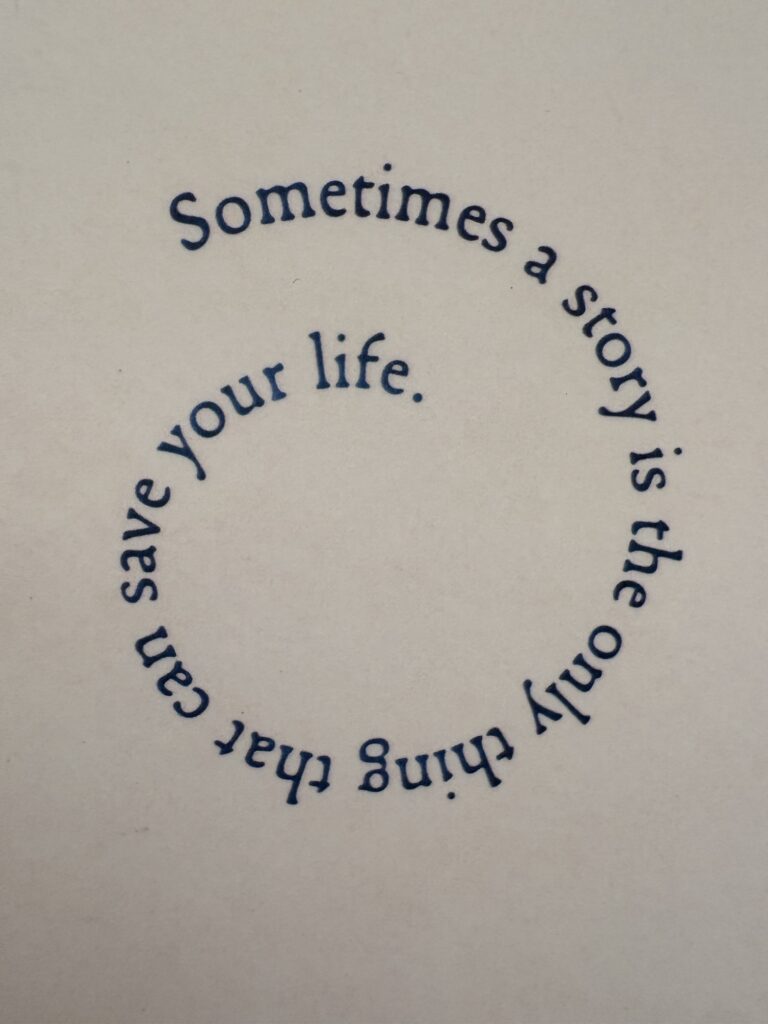
Sometimes a story is the only thing that can save your life – back cover of Ensorcelled by Eliot Peper

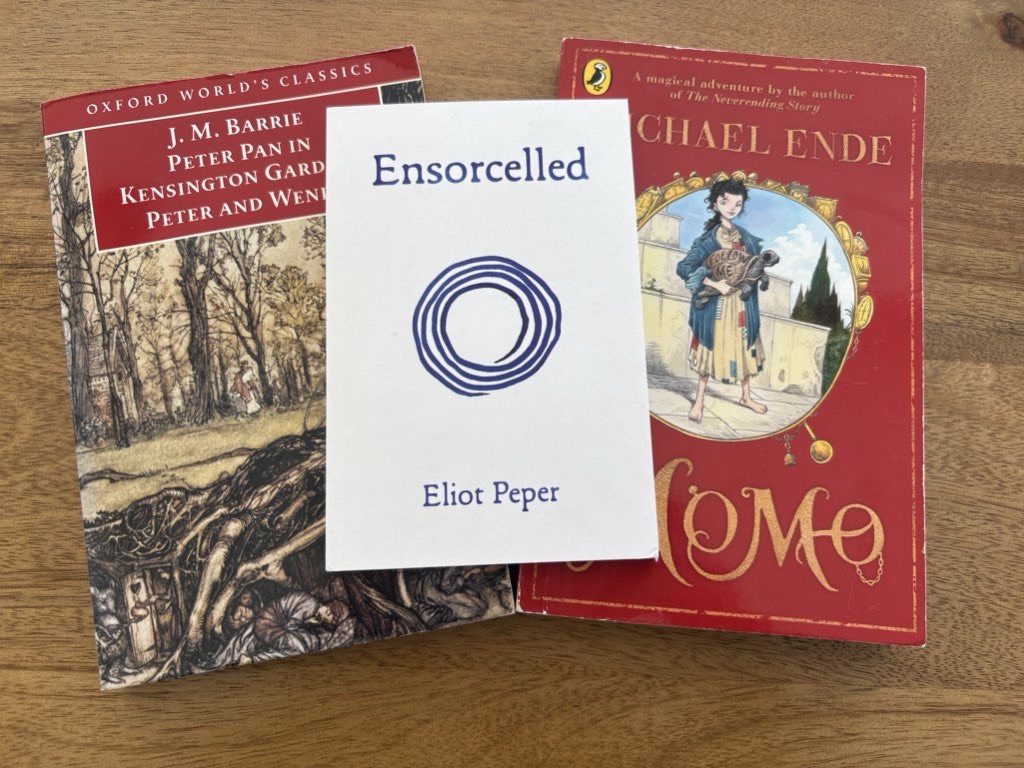
She raised me with many amazing stories from Grimm’s fairytales to Madeleine L’Engle. Michael Ende and J M Barre were the storytellers which taught me to love reading and left in my heart the joys of literature through stories of adventure & growth.

J.M Barre’s Peter Pan in Kensington Garden and Peter Pang and Wendy. Michel Ende’s Momo and Eliot Pepe’s Ensorcelled

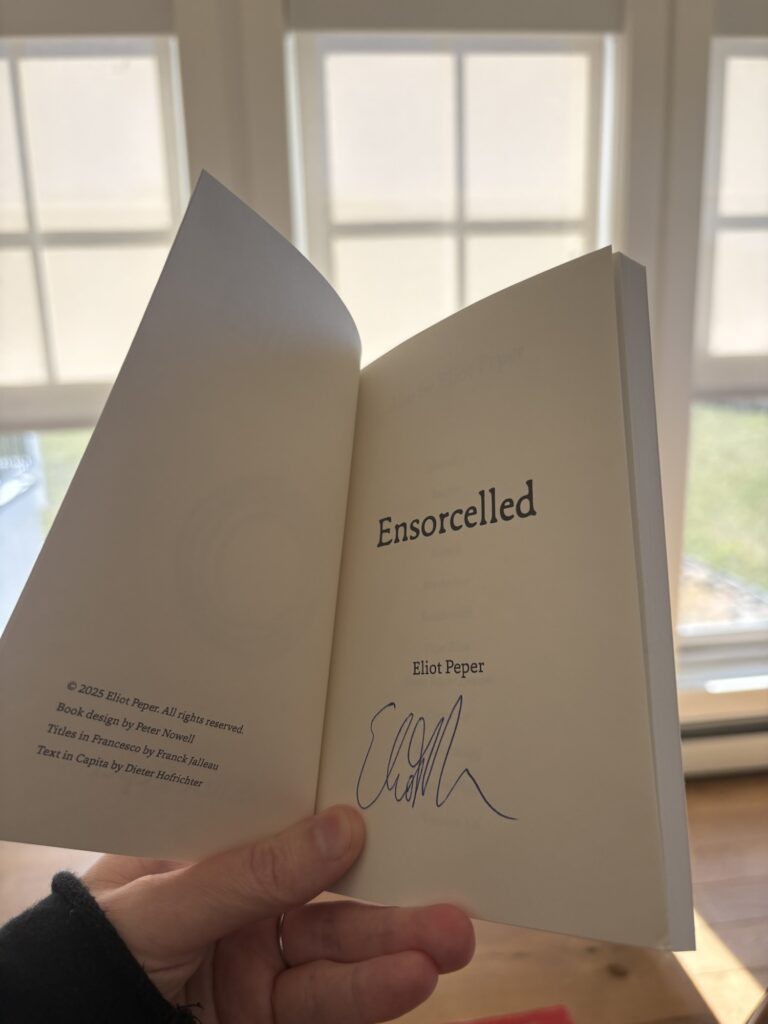
It is with great pleasure I read Eliot Peper’s enchanting novella Ensorcelled. It’s part coming of age story meetings great adventure in the wilds and a delight for young at heart & young readers of literature.

I don’t know if he meant it as a story to be enjoyed by children, as it was such a delight for me as an adult that I went through it in one sitting. Though I do think it would be wonderful reading for young people.

It’s a beautiful printing so you might be inclined to want to keep it pristine but it’s perfect for an afternoon outside. Maybe go touch grass with it in hand. Find the enchantment for yourself.

I’ve been a fan of Peper’s science fiction so it was a real change of pace to see his range. I felt lucky to have an early copy and I genuinely enjoyed its spirit. I went I was going to read a near future thriller and got joy & delight. Which I very much needed.

Categories
Aesthetics Reading

Day 1718 and The Abyss Stares Back

The glory of the first few weeks of fall in Montana, indeed most of the mountain west, is under appreciated.

We advertise the powdery snow & bright sunshine of our winters and the long temperate days of our summer for tourism, but I love the precious few middle days of transition as we approach Michaelmas season.

The harvest wraps, the fall begins in earnest with frost ever ready, and we prepare ourselves for darker days ahead.

I personally try to be outside as much as possible in this transitional period. Throwing on sneakers and a vest is much easier than snow boots and a parka.

Rambling across county pastures, over makeshift bridges across streams and across neighboring fields in the morning sets the tone for a positive day.

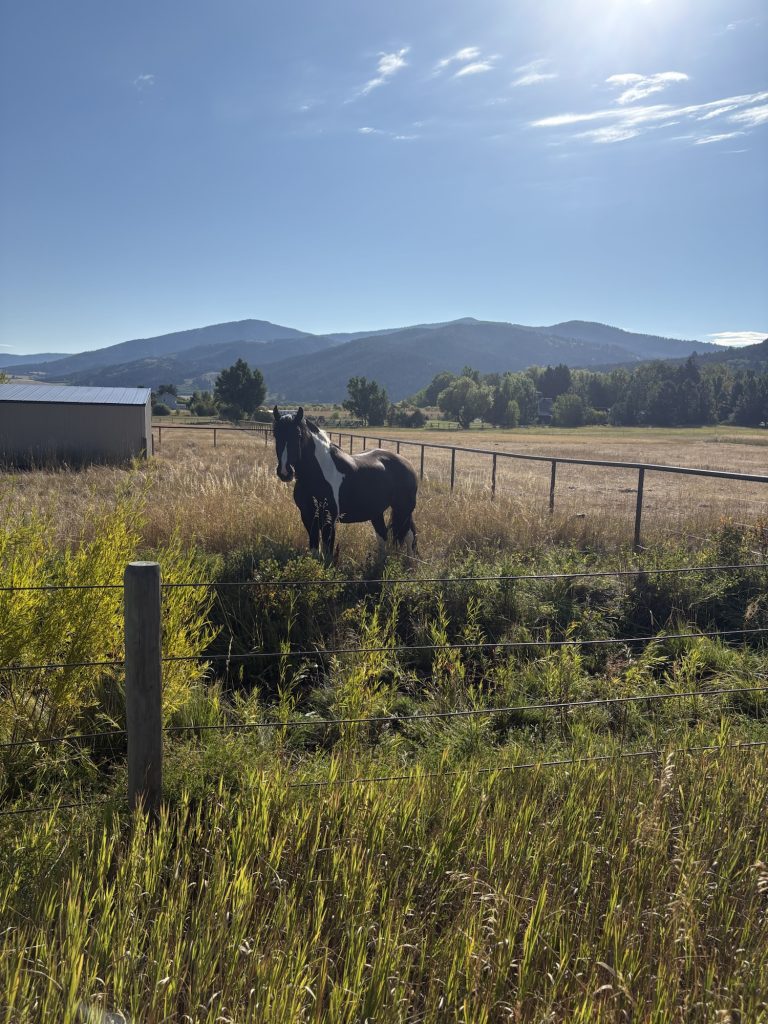
Someone acquired a new piebald

Once I’d returned home, the abyss of the open internet was there to stare back at me as I looked too hard upon it.

The prayers I had uttered in thanks for the glory of our mountains, the brightness of the sun, and the mercy granted to the living was pushed back by the darkness of greyzone algorithmic memetic warfare.

I am still recovering from travel so weak enough that I have little desire to self censor. The ebbs and flows of conflicting constructed realities are fighting for purchase on the American mind and it’s not pretty. God given inalienable rights are not on anyone’s mind when there are others to blame.

I hardly knew if I should pick up Heidegger, Nietzsche or (shuddering at the thought) Schmitt to make sense of apoplectic displays of poorly harnessed power being thrown about by competing and angry egregores.

What could I possibly do or say or read to make sense of anything? I suppose that’s how the abyss gets you. The Nothing only needs you to stand idly by as you are absorbed into the abyss. Michael Ende and Madeleine L’Engle may be better places to go to understand the abyss than Nietzsche. Lest we lose our sense of wonder in the horror.

Die unendliche Geschichte – 1979 Michael Ende