Categories
Politics Preparedness

Day 313 and American Grocery

I drove into Denver today for a doctors appointment. On the way back my husband Alex and I decide to stop at Costco. It’s not that far out of town but it’s still easier mentally to make the trip out to a box store when it’s on the way from somewhere. As someone who identifies as a prepper Costco is one of my favorite places.

I didn’t have anything specific in mind that I wanted (other than a few winter preparedness items), Alex and I just like walking the aisles of Costco. I worked in retail for many years so I enjoy seeing what brands have convinced the king of American retailing to stock their products. Because of their unique stocking and sales methodology it’s almost always an adventure.But it’s also a fairly good indication of where taste is at in America.

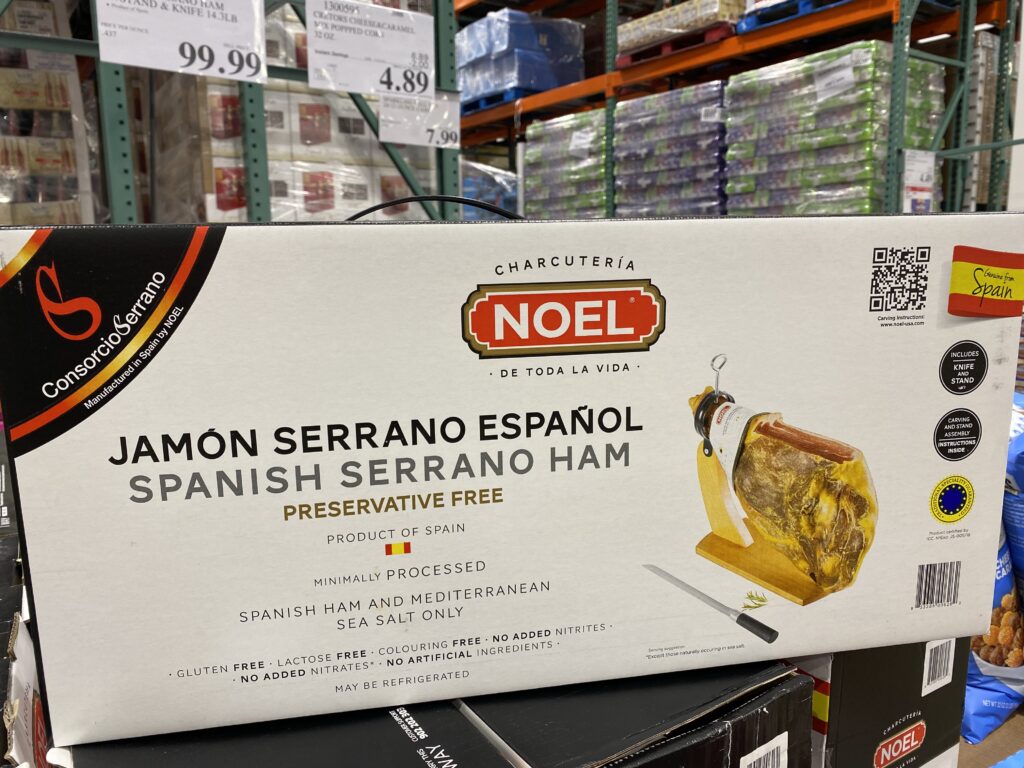
America is ready for the holidays if Costco is any indication. Despite it being the second week of November it was decked out in full holiday season merchandising. And not just peppermint bark (which I bought) and colored lights. Costco thinks we want a gourmet Christmas. We saw an entire truffle packaged with a grater. We saw entire cured Spanish hams. We saw tins of caviar stocked in the cheese aisle for $50.

An entire Spanish Serrano ham for $99 at Costco

I always wondered if the story of Khrushchev knowing the Soviets has been beaten when he toured a grocery was apocryphal. Apparently no one knows for sure if the visit happened. But it is true that supermarkets only exist in their modern form because America subsidized the farming and agriculture system as part of a farm arms race against the Soviets.

As amazing as a supermarket is it can be a bit horrifying to visit an American grocery store. Fresh markets that focus on meats, dairy and vegetables always feel like a race against time. Using traditional retailing methods of completely filled aisles bursting with perfect merchandise shouldn’t work when the product was once a living thing. And yet that’s exactly what we have. It’s astonishing the variety of items we stock in an American grocery. That we subsidize and allow for food waste when we still have hunger seems a grave injustice. We have food deserts. And yet our grocery stores are full.

Costco only sells in bulk so it’s mostly given over to packaged foods and dry goods. If you want fresh food you better be prepared to buy several pounds of it. I bought 2 lbs of blueberries. It’s going to be a challenge to eat it all before it goes bad.

Given that most of the news has been focused on the current supply chain crisis it felt odd to stand in a store surrounded by incredible luxury. Maybe it was the calm before the store. I did go on a Tuesday so maybe it has just been restocked after a busy weekend. Maybe folks just aren’t ready to buy their gourmet foods for the holidays yet.

Categories
Startups

Day 144 and Scars

I have significant e-commerce, direct to consumer and retail business experience. I’ve managed multi-million dollar P&Ls, worked on iconic billion dollar brands and started my own direct to consumer cosmetics line. You’d think with that experience I would be deeply bullish on my ability to pick up and coming startups in the space. But I don’t particularly want to invest in digital brands or online retail. And I think it’s scar tissue.

I’m not saying flat out“no” I won’t ever invest in a DTC business or an e-commerce startup (I have and I will again) but a little bit of knowledge can make it hard to preserve creativity and imagination. Many founders can come out of a space where they have dedicated years of their lives and simply want space away from their expertise. They know too much. They’ve seen things. The scar tissue that forms to keep you working during the long dark soul of startup pain is still tender.

When I mentioned this lingering pain others pointed me to other areas they struggled to hear pitches or invest because of experience. Rental businesses and neobanks from Maia Bittner, certain e-commerce verticals from Lee Edwards, fitness from Jason Jacobs. It’s a common phenomenon among founders.

I’ve got lots of opinions why certain kinds of businesses won’t thrive or have business models that won’t make the kind of return my own personal investing thesis demands. But the truth is that I now have enough expertise to simply know more than is good for me. Ironically this means I should spend more time as an advisor or consultant on certain kinds of businesses but it takes a special founder to coax it out of me. Because I do have valuable insights and I want to share them.

But the last thing I want to do is pass on the trauma of my own experiences. Founders deserve to have their psychological safety preserved so they can build the company of their dreams. Some painful insights from a founder that came before them might help them avoid some pitfalls, but if they take our traumas too seriously they may never find their own path. And that kind of backward looking “it will never work” or “trust me kid I’ve been around the block” attitude can really bring creativity down. So I will always share my honest experience with anyone who asks but I’m hesitant to ever let anyone take my lessons to close to heart. You very well may be the one that breaks through where no one has before.

So when someone pitches me their new retail startup or DTC brand or cosmetics concept I try to be honest that I may nit be the best fit. I’ve got scar tissue. And if a founder insists that I can help I will try. But remember not all skepticism, fear, distrust or dislike is about you. Sometimes it’s all about the trauma of having lived it before. Asking someone to live it again is the ultimate act of trust. And maybe just maybe we get to firm new scar tissue together.