Categories
Community Culture Finance Travel

Day 2012 and World Maps and Network Nodes

A long block of travel to sync in person with diverse nodes in my network has been invigorating but also exhausting. I’m sure some of the travel looks quite glamorous, but it is always in service of furthering my longterm goals.

Venkatesh Rao published an essay today suggesting that the dark forest theory of the Internet is over. Our digital public commons has been in retreat

For a decade, we have explained the retreat from the public internet using Yancey Strickler’s Dark Forest Theory. People withdrew into smaller, quieter spaces because speaking in public became dangerous…

The resulting cozyweb—private group chats, Discords, Slacks, newsletters, encrypted messaging groups, invite-only communities—was understood as a strategic adaptation. The public remained a single connected univers

Dead Forest Theory

The ecosystem of private spaces were connected, but as they accreted power these cozy web communities saw their gravity increase. Eventually some collapsed in on themselves. And thus we have black holes of public collapse in the dark forest; out of which none of us are able to escape.

What Rao calls “inaccessible interiority” traps some of us. We may have visibility to other communities through the byproducts of our niches but that does not mean a shared reality where we can reach consensus with others outside of our space.

My strong fear is that without a possible consensus reality for larger groups like nation states citizens, we lose the basic capacity for productive interactions that move us forward. Only inside a community that has swallowed us whole can we progress. And if we find something novel inside those gravity sinks we have no way of sharing it. Only some of us enjoy progress.

Which might be fine for those who wish to live lives quietly out of sight. But it isn’t a world that enables strangers coming together through public global communication in a shared commons.

And this has serious consequences for investing, and especially so in venture capital where a diversity of worldviews is precisely what allows for uncorrelated returns.

Novel worldviews emerge from genuinely new observations of reality. If we all live in disconnected realities of collapsed worldviews what happens?

This is why, as an industry, venture capital is uniquely vulnerable to the seductive coherence of simple ideas, rather than complex truths. That’s unfortunate, because venture capital is also uniquely dependent on intellectual diversity, as evident in the damage done by group-think versus the extreme profitability of contrarianism

This stacks on existing research which illustrates how social media creates echo chambers that amplify consensus ideas while filtering out unconventional or contrarian views — which in turn builds on existing theory that describes how individuals self-censor opinions when they suspect they are in the minority.

Dan Grey “The Venture Capitalist Worldview” in Odin Times

When the dark forest was scary but still possible to traverse, we still had a chance to explore and find reality, even if we lived in a consensus bubble most of the times. Dead forest theory means we are past the event horizon, from which we cannot escape. We are locked in whatever consensus reality emerged inside the event horizon.
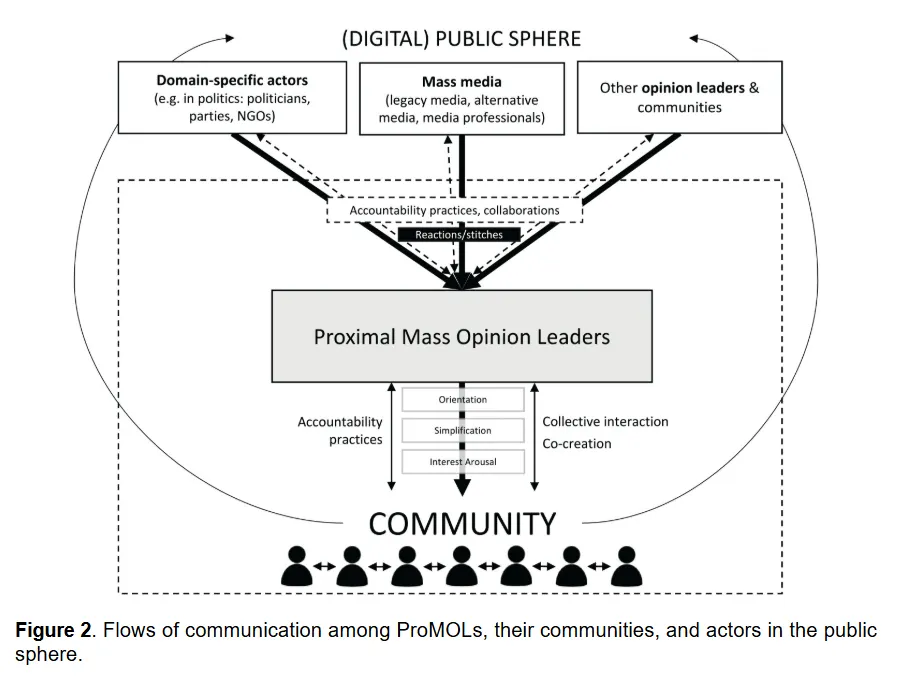
Digital Public Sphere and the gravity of mass opinion leaders from Odin Times

And so despite its expense, its troubles and its costs, I still push my work into the public commons with the hope that I’ll circle the accretion disks but can fight against falling into one forever with a steady acceleration to preserve a visible orbit.

What both Venkatesh Rao and Dan Grey posit in different ways, is that it is worth understanding where we might be cut off from reality.

Further, who knows what new kinds of horrors we will endure as we lead separate lives online without any contact with real life and real people. We crave community with those whom we can maintain consistent context and contact. That’s why I still get on the airplane, or get in the car, or hop on the bus and show up. I want us to share reality.

Categories
Aesthetics Culture

Day 1951 and Melt Downs

Meltdowns seem to be a going thing at every layer of human interaction. Something in consensus reality slips, a schism arises and then you have to hard tap at the glass to decide to see if it’s a mirror.

In preparedness communities they talk about “normalcy bias” as the preference of individuals to avoid looking at a problem straight on. Adjusting to bad news is like grief. It has some steps.

I think that it’s relatively clear to anyone watching that the world is in a particularly malleable place. Old assumptions about institutions and power are tested.

I think it’s never been easier to have your grip on reality rocked. We are all getting rocked daily by meta-narratives and players of games because the internet is a sea of competing games and stories.

Maybe that level of instability is too much to manage for any of us so we install pressure sensors and we let off steam and we carry on with whatever seems manageable. So someone has a meltdown. Seems to be going round.

Categories
Uncategorized

Day 1942 and Deep Sleep Sunday

Yesterday I was firing off zingers left and right like some kind of Internet Yosemite Sam hollering like cartoon frontier gunslinger.

Hair trigger with a side of facial hair

I am displeased with how silly things have become as I ponder the downsides of things falling apart and the upside of accelerating into the turn. That darn rabbit though right?

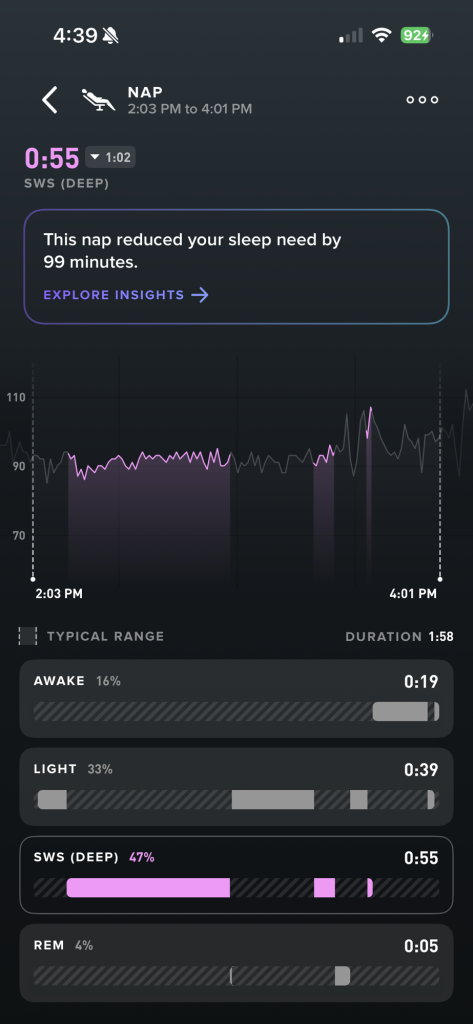
So this afternoon with some intentions of productivity on my mind, it only makes sense that I passed out sometime after lunch. I got an hour of deep sleep in the mid afternoon. Which is upsettingly more than I got the entire night before.

Don’t mind the alarmingly high heart rate

My heart rate was racing but my body did not care. I’d been exposed to too much autonomic stress the past couple of days and it was just done with letting that happen.

They say Sunday is a day of rest but that is because we are meant to use our response to consider the things that matter most in life. Family, faith and in some cases football. But I spent it passed out in a dark room without a thought in my mind. I hope it helped.

Categories
Internet Culture Travel

Day 1860 and Some Technical Difficulties On The ISP Side Perhaps

I’m not anywhere particularly unusual (a European capital) but all of my end to end encryption applications, most crucially Signal and Twitter are not working.

Nothing will send and I’m not receiving messages now either. Why? Well, I’ve got conspiracy theories but I doubt it’s sinister and I’ll boot up a VPN in the meantime if it persists.

I am nearby several embassies (of the regions you might expect to be dicey including my own) and just uphill of city’s international school so maybe one of them is being a dick.

Or perhaps the Airbnb I am using has an ISP provider that is throttling end to end encryption for some reason. For what reason I couldn’t fathom but I am annoyed. YouTube is streaming in full glory on an enormous television but I can’t text in peace to my loved ones.

So this blog post will have to serve a test post to let folks know that I am fine and anyone who needs to know where I am does which is to be fair a pretty darn small list. I’ll move if the issue persists. I’m a mere 7 kilometers away from the center of the city where the internet was working fine earlier today so I’ve got no idea why I’m having issues now. If I’d known I’d have done my writing earlier. A part of me wonders and worries about what might eventually stop my writing experiment being a communication blackout. Though I never thought I’d have a problem in Europe. That is the stuff of authoritarians right?

I have got unpleasant notions about why a European city and its nearby embassies wouldn’t wish to let people communicate freely and privately on websites with end to end encryption. It’s just amusing they are happy to let me watch Netflix and Youtube. The New York Times has no problem getting through nor my other media applications on my phone.

Having been behind America’s first freedom to compute act, I suppose I’ll let my emotions run a bit wild here as a treat. It seems especially concerning that this sort of informational throttle by big European ISPs seems possible and even likely. That embassies might want to extend a little protection beyond their very high walls seems even more probable. Which is not very nice of them.

It makes my mind go straight to propaganda campaigns and not technical difficulties. In this day and age, we should never take for granted our right to express ourselves via compute freely and privately. Stay frosty and I hope this post makes it to you.

Categories
Internet Culture

Day 717 and Walled Garden

The walled garden debate is back in Silicon Valley. What is a walled garden you ask? It’s a closed ecosystem in which your entry, exit and experience in the garden are controlled by a central entity. While modern social media has very centralized ownership structures, we’ve basically aligned on allowing sharing of content and interactions across and between platforms. We’ve homestead the modern social internet by tilling our profiles and tending our communities.

But people are straining at the compromises we’ve made over the years. Elon Musk is attempting a rather heavy handed walled garden strategy on Twitter by banning linking and promotion of competing websites.

It’s unclear if it will last at the moment as within hours Elon apologized for making a massive change without a vote. Whatever that means. It’s been six hours of chaos as people reactively extremely negative to being told you cannot link to your Instagram or Facebook accounts. A few dickriders attempted to defend it by saying it was freeloading but it isn’t really tragedy of the commons that Twitter can’t make money off my hard work.

I’m old enough to remember the sheer indignation of Linux dorks had for the all encompassing closed systems that is Apple. Jailbreaking was a pastime for a whole generation of nerds. Sure the money folks kept trying to contain their ecosystems giving us nonsense like America Online, but information wanted to be free right? Well Stewart Brand fans know that isn’t the whole quote

Information Wants To Be Free. Information also wants to be expensive. Information wants to be free because it has become so cheap to distribute, copy, and recombine—too cheap to meter. It wants to be expensive because it can be immeasurably valuable to the recipient. That tension will not go away. It leads to endless wrenching debate about price, copyright, ‘intellectual property’, the moral rightness of casual distribution, because each round of new devices makes the tension worse, not better.

Stewart Brand Whole Earth Catalog

Whatever is going on inside Twitter and Elon Musk’s mind is unclear. But the basic tension of the internet has not changed. We built tools to network together whole worlds and that has been fucking with ideas of ownership and who gets paid since day one. Capitalism usually finds a way to ride on top of these issues of ownership and value but the technological progress came out space old norms quite quickly.

And we are in a moment where skepticism of these norms is being challenged. Why shouldn’t we get to chose how we engage with our own property online? Maybe we don’t own the land but we definitely homestead our little plots of internet land.

Because the nature of the internet is wild and untamed. It takes work to make it usable. And most of us don’t mind paying a fee to keep the grass trimmed. A few of us might even prefer a country club experience. But the trouble with any commons starts when enclosure starts.

And Elon seems to be going for something that’s more heavy handed HOA than parcel of land outside of county lines. And like your average president of the homeowners association, he seems to be taking concerns and criticisms quite personally.