One of my most disappointing life lessons remains the value of gatekeeping. Sometimes the fences do indeed make good neighbors and Chesterton may have had a point.
My ambition coming out of school was to be in media, more specifically I wanted to be a fashion editor. A job a million girls would kill for right? No, I am not falling for the nostalgia dross of the Devil Wears Prada sequel.
A not uncommon response to growing up in a mountain town or remote place, is the desire to is escape to bigger places. Media used to be the portal to the stories about the wider world. You found new worlds in books, magazines, movies, television and eventually the internet. Many of us want to reach broader culture of the world.
Alas I was immediately confronted with the reality that those jobs were glamorous and thus badly paid. I couldn’t afford a job at Vogue nor did they want me so I made websites instead. I became a fashion editor after my own fashion.
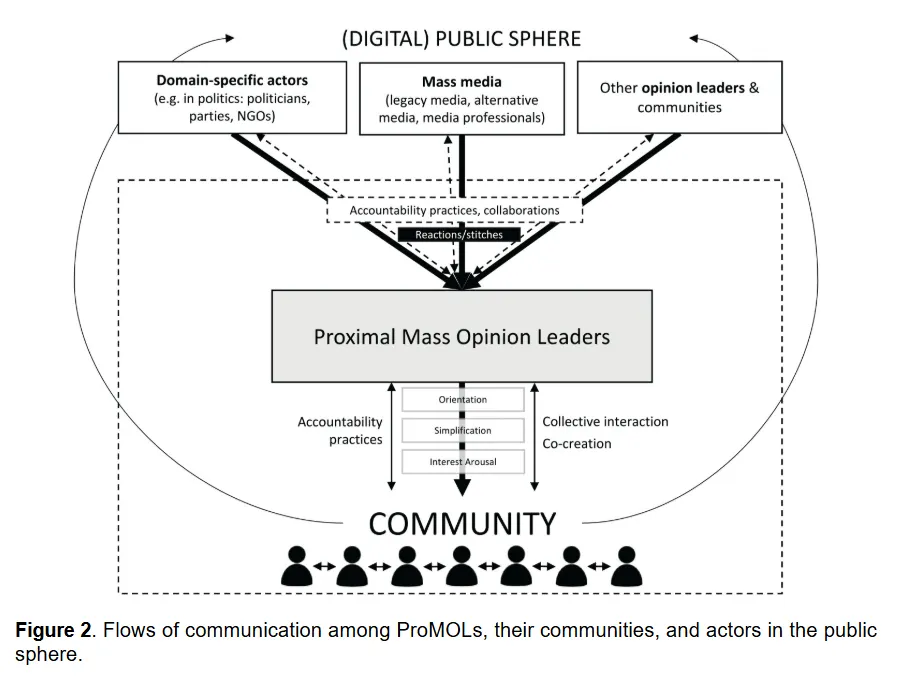
Like so many millennials, I had naive expectation that if we could simply open up the gates keeping regular people out of these rarified closed worlds we’d not only bring more beauty to regular people but the beauty of regular people would also improve culture.
Yeah, that’s not how social media turned out is it? I still feel some guilt over how much the “here comes everybody” age of social media degraded many of the spaces I aspired to be inside.
And I am witnessing a new wave of closed spaces and gatekeeping emerge in order to nourish the cultivation of culture that gets crushed under the weight of algorithmic speed and microsecond trend cycles.
The rise of the group chat is an immune response to a world without any sort of borders or checkpoints for quality control except the pricing mechanism. Why cultivate taste if we can cultivate cost? If we haven’t figured out a taste barrier a price one will have to do.
I am personally opposed to price being the barrier function to culture, but if no one is willing to enforce standards in any other manner I am not shocked that we will go further inside perceived safe spaces in order to avoid the harsh glare & garish expectations of mass market access at all hours to all people.
I am trying to remain committed to being accessible to others by remaining online but even I gate-keep myself now with little litmus tests and hurdles to keep from being flooded by asks and audiences. The private world of access cycles will come and go and for now the fences have gone back up.
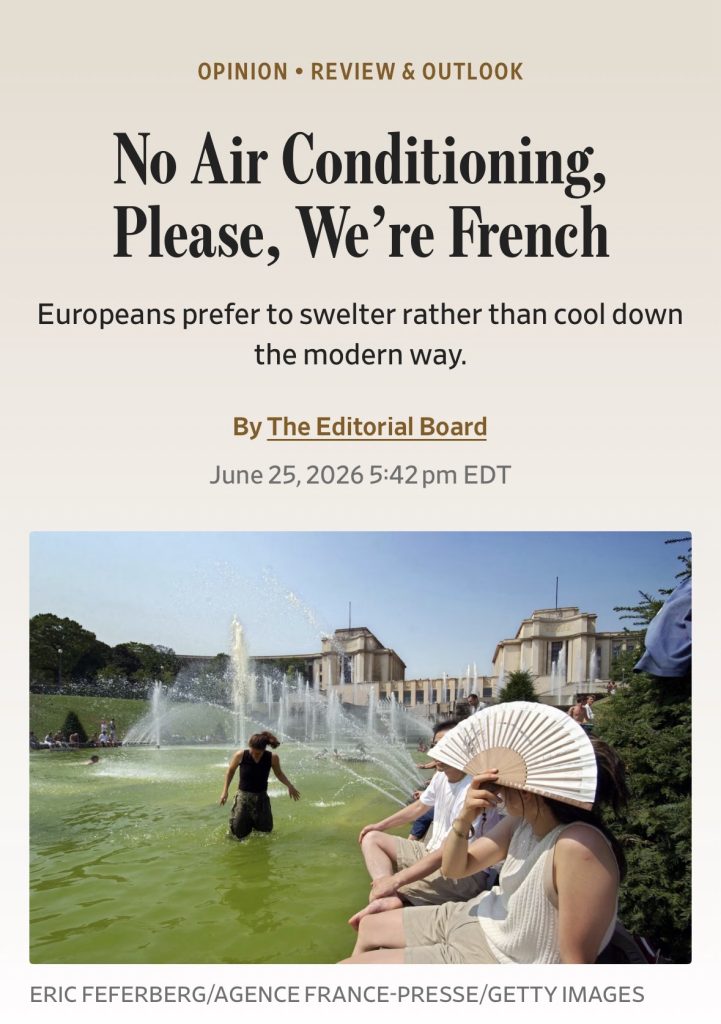
Fashion rules are not hard rules. Soft rules apply to soft people who lovingly break them if something better would liven the mood. Being mercurial is a delight for them.
Soft rules do bind some people though. That’s the old canard about conservatism.
Conservatism consists of exactly one proposition, to wit: There must be in-groups whom the law protects but does not bind, alongside out-groups whom the law binds but does not protect. Frank Wilhoit
If you take the above statement at face value it makes for interesting thought experiments. Is the fashion industry is a conservative industry? Why then does it present to some as an entirely progressive culture? Fashion scholars could go on at length.
And this cultural rules exist ,about when to wear white that no one follows except those who are fearful enough to have it forced on them.
I am on an island after Memorial Day so I’m well into wearing white territory. No white before Memorial Day or after Labor Day isn’t enforced now in any meaningful sense but years after late‑1800s upper‑class habits dictated a practical, status‑signaling summer color meant for seaside or country time which were put away when people returned to sootier cities in fall.
At least I hope you aren’t somewhere covered in soot in either winter or summer. I myself am in full costal grandma regalia from white cotton pants to summer weight cashmere. Isn’t it absurd we have summer weight wools? It should really be a tee shirt but like I said soft rules for soft people.
My father loved gadgets. He was always tinkering with something and was always upgrading his electronics to some new specification.
Is it any wonder that I married such a handy husband? Men love futzing around with stuff. Sometimes they have daughters and then you’ve got women like to mess around with projects too.
I am sure we will have endless rounds of nostalgia for the eighties and nineties era gadget, electronics and novelty shops. You could get lots of mileage out of building your own computer.
But even setting up something silly from Skymall or Sharper Image captured some of the joy. The novelty of a new invention was visceral. I wouldn’t say no to a Hammacher Schlemmer renaissance myself.
I didn’t love it when we remade that style of retail into quirk chungus millennial fandom but I didn’t hate getting Star Trek tchotchkes either. And now I dearly love websites that my friends have built like WireCutter.
My husband was humming the tune to a piece of YouTube esoterica that is a deep cut to the original editor of that bastion of shopping guides. Choire Sicha launched the WireCutter but it’s in some ways the least soulful of his franchises. A Mike Albo shopping column already nailed thebit we’ve just been redeeming it since then.
Choire gave us Gawker 2.0 before his his incredible era of independent publishing streak making properties like the Awl and the Hairpin.
In a world with more shops and essayists than good shoppers or readers, Choire found the good ones and shared. And one of his discoveries was Nina Katchadourian’s work.
I’m sure we will enter an exciting new era of curating down the perfect piece of cultural detritus with artificial intelligence. But I will always be grateful to electronics dads and savvy buying guides for teaching me to enjoy the joy in making something. Even if it is profoundly uncool. I’m still team Barbara Kruger though. Don’t believe the hypebeasts.
Meltdowns seem to be a going thing at every layer of human interaction. Something in consensus reality slips, a schism arises and then you have to hard tap at the glass to decide to see if it’s a mirror.
In preparedness communities they talk about “normalcy bias” as the preference of individuals to avoid looking at a problem straight on. Adjusting to bad news is like grief. It has some steps.
I think that it’s relatively clear to anyone watching that the world is in a particularly malleable place. Old assumptions about institutions and power are tested.
I think it’s never been easier to have your grip on reality rocked. We are all getting rocked daily by meta-narratives and players of games because the internet is a sea of competing games and stories.
Maybe that level of instability is too much to manage for any of us so we install pressure sensors and we let off steam and we carry on with whatever seems manageable. So someone has a meltdown. Seems to be going round.
The general theory goes that post internet generations see niche algorithm-driven content rather than say cultural or historical touchstones. Past touchstones might have unified past generational experiences.
I don’t know if unified experienced are all good. Sure all of the Boomers have heard the Beatles but all millennial woman recall tabloid headlines about Britney Spears getting fat. The water we swim in can be hard for us fish to spot.
If the younger generations have a problem, it’s being far too unified in their experience of their global position. The pandemic was a surprisingly effective reboot of expectations for all of us. But the older you were the easier it was to contextualize the impact of the pandemic across your entire life.
We all ran a dress rehearsal for collective responsibility at global scale And depending on your personality, you were funneled into perspectives you preferred.
So you saw us either shoulder or shirk responsibility. Not that other generations haven’t had to do some version of this, but being able to see it at networked global scale seems to have done something to the capacity to see the future.
McWorld triumphed over Jihad right? But that is content for a paid Substack where Fukuyama and Zizek both still write. It must have been more convincing in hardcover.
I wish I hadn’t signed online today. I participated in the basest form of attention grabbing virality as I needed a distraction from Bernie Sanders “America and China Need to Stop Artificial Intelligence” press push colluding with the “foot in mouth” disease of Silicon Valley.
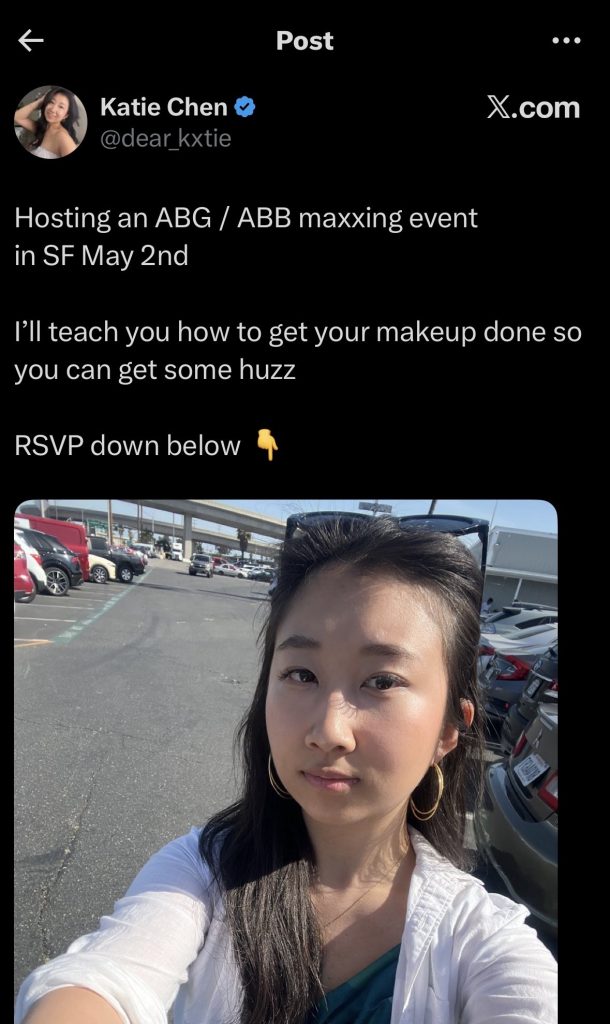
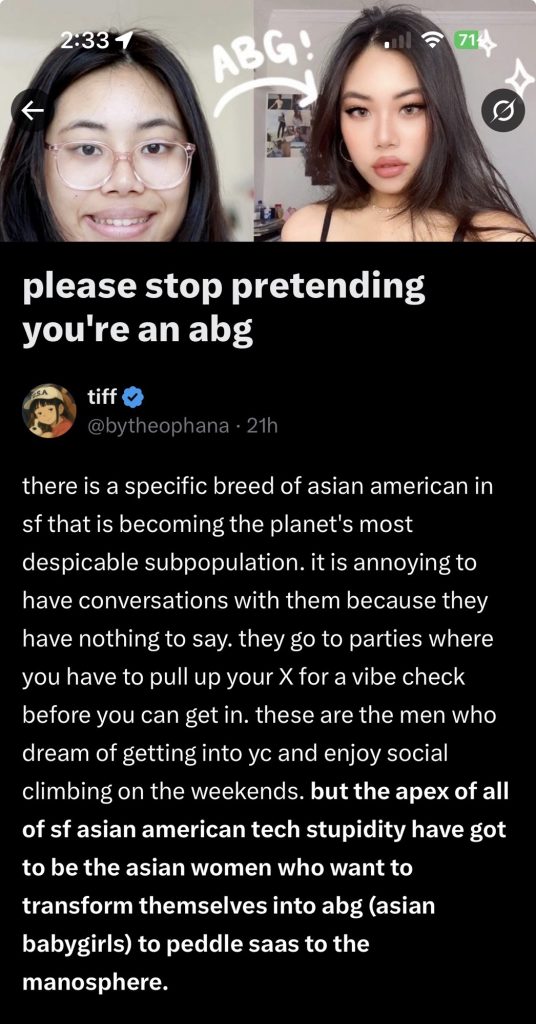
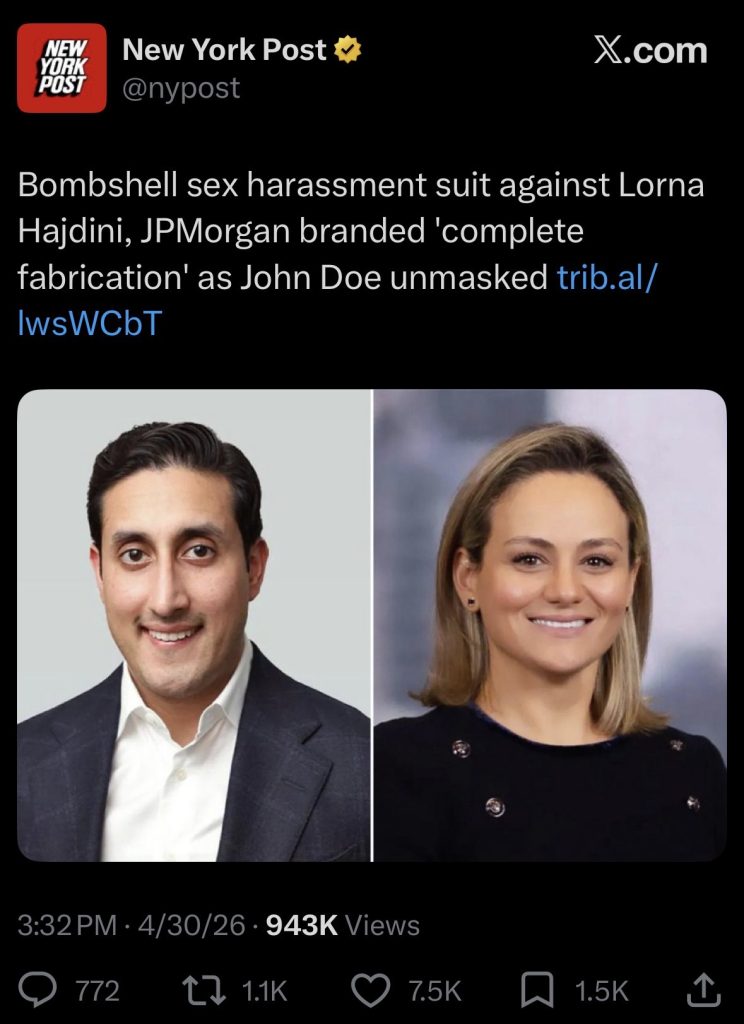
So naturally I got caught up in bizarre intrasexual and intersexual competition schemes. Two absolutely bizarre stories dominated the feeds. The first is Asian women in California and the appeal of the ABG. The second is the alleged fantasies of an Indian banker who wanted us to “believe all men” but like Penthouse letters, it seems too good to be true. An Albanian baddie at JPM wouldn’t be that careless.
No clue what I mean? Let me urge you to stay that way. But I’ll put down some thoughts.
If you are a Subaru driver and Vin Diesel fan, you may dimly remember that they were once rice rockets and not lesbian all terrain vehicles. California has diverse homegrown culture of Asian American women who embrace bad boys, fast cars and their East Bay neighborhoods.
The controversy? The ABG culture is being appropriated by striving Product Mommies who believe their B2B SaaS baes will enable their inner Asian Baddie Gangsta ways. I am not from this culture so I can’t exactly say. I think it’s fine if you want to improve your looks in search of a specific aesthetic. There is even an event you can RSVP to attend.
Now the other horror show I mentioned is about intersexual competition schemes from a different Asian culture. Ink has been spilled on western portrayals of the sexuality of Southeast Asian men, specifically how Anglo culture emasculates them. Well, that’s how the story started out.
Now why am I associating these two stories? I think that identity in Anglo-American dominant cultures has often flattened the experiences of assimilation into our melting pot. London, New York, the Bay Area all have unique flavors of this blending.
And a cultural niches like East Bay Asian gangster baddies (Los Angeles also has its own variants) being consumed as an identity by other Asian cultures as a way to “be bad and sexy” seems harmless. But it’s also consuming a culture you didn’t create. I understand the annoyance.
The upsetting story coming from banking may be a very different way of embracing and reinforcing sexual narratives for southeast Asian men, but it is still fundamentally a story of belief about sexual identity and how it gets used in the workplace. H
ad it not been so incredibly salacious, we might have considered his side of the story a little bit longer, but it is now a piece of culture that reinforces some of the most negative perceptions of southeast Asian men.
Everyone is free to form their own identities and preferences, but it’s a fascinating day when the two major stories running rampant on social media are examples of constructing westernized, fetishized identities to get ahead.
It’s been such a crazy week. I don’t “feel the AGI” only because I am mired in the give and take of living in America where we still have businesses to run and a lot of regular people committed to actual civics. Progress is fast but implementation is slow.
And then above our daily lives, we are actively in the middle of a kinetic war that our population is only dimly watching.
The information environment being irradiated by foreign propoganda. I am astonished to read regular blatant campaigns that no one questions. I get ads for Chinese phone companies on Twitter. Phones that are not legal to sale in America.
It doesn’t even need to be about any of the active campaigns in the news that a New York Times reader would pay attention to. Below the fold, regional political issues go uncovered. The impolite “nobody reads the Africa pages” is an indelicate joke for readers of international newspapers. Americans often don’t even get them delivered with their printings.
As an example. What does an American understand about Mali anyway? I’ve got like a half dozen friends who care about French colonialism (and the sins of Nicholas Sarkozy) so it’s a niche Francophone thing. The stuff you maybe picked up from those who lived abroad.
So no real tangible value there that isn’t social, but lots of Americans used to study with French families so you might be dimly exposed. Or in the past we had a class of people who were and had state department of think tank jobs.
You’d be shocked at how much we’ve cut back on education in the liberal arts. Just as America has her very own Sicilian expedition, we stop bothering to teach Thucydides. I’m in my Allen Bloom season but without any book tour.
I have been trying to keep my cool as a week of progress is just so fast in very real world situations. I am relishing the success of Valar Atomics as they continue own a fast pace of progress. We are going to need a lot more power to meet needs in America. I want to meet them cleanly so I am honestly wishing for a boom in nuclear beyond personal interest.
All the pissing and moaning about the ethics of artificial intelligence misses the point that we need to supply a lot more power for both consumer and defense needs before disaster could strike. So we might as well suit up. We have to manage what might happen with our physical reality. Like physics bro.
So this week was wild to watch the labs stand off with fast releases. It’s very herky jerky the progress from OpenAI but they had a big week. The enthusiasm around Codex is very real even as no one entirely trusts the even management. Still it was fun to have two new models from OpenAI in a week. It’s funny how running a big startup is still largely product management. And they struggle with it.
Which sounds cute I realize. That I am charmed by progress in energy and algorithms while we test being under a kind of network attack with a very naive and easily swayed online population.
I like to think Americans are independent but we are not doing as much as we could to enable good governance. Americans have a say and plenty understand “right to compute” just as they did the “right to repair” but some in government are actual hard power types. Did no one do any of the reading? I thought everyone was all about the Powerbroker for like a decade.
But we seem to have some real second order effect issues being missed entirely by the labs. Like maybe they are bad at politics? I know it’s a cheap shot but I spend so much of my private time as a citizen doing mop up after companies whose management is under stress.
And being transactional with people isn’t very effective for revealed preferences. You can’t buy people and Americans don’t like the implication it sends about being treated like you can.
Every time a new AI image generation model comes out, there is a wave of people creating new content riffs inspired by their friends testing out the newest capabilities.
Yesterday OpenAI released ChatGPT Images 2.0 which is tool powered by the gpt-image-2 model designed as a “visual thought partner.
It is pretty fun to play with if you have even the slightest design or visual vocabulary to work with. Or even just a couple cool selfies.
No need to focus on regulatory capture politicking, compute shortages, geopolitical drama or shipping choke points when you can create cute social media content right? Screw a grey zone informational wars (or even a hot kinetic one) girls just want to be remade as a fairy princess science or as Studio Ghibli character.
So what’s the next trend? My feed produced a wave of mood boards with color theory, swatching, fabric pins, makeup stories, hairstyles, other mood board elements that combines everything from descriptive prose to capsule wardrobes. And all this from a a couple of basic uploaded photos and some simple prompts.
I choose the below images and said “do a color analysis of the woman in this picture including best colors, makeup choices, hair choices, style options and create a mood board with outfit inspiration, prints that work, accessories and other details”
From there it spat out a long analysis which I will post below. I then asked that analysis to be mocked up in a mood board based on the look and feel of the images with the descriptions from the analysis. And I’m not going to lie it’s pretty good and clearly ChatGPT can smell the Ann Taylor on me. I mean, umm, it can tell I spent time working for some of best known American heritage retailers.
Now it gets weirder the more you try to edit it. The slow warping of my face from my own to I’m going to say Sheryl Sandberg is a little unsettling. But I do wear a lot of silks and prefer greens and browns though I am often a little black dress defaulter.
Now I just went through an enormous exercise in which I tried to find a television and camera ready foundation where other models were sure I was a soft autumn but a soft summer isn’t all that far off.
And I appreciate the buttering up OpenAI does with their quiet luxury spiel. I’m more of an Italic luxury buyer and a Quince if I’m feeling like a gamble. But somewhere back before all this inflation I for sure was the kind of girl who wore chunky antique vermeil accessories and never turned down a nice olive green.
This is a great set of photos for analysis—different lighting, styling, and contrast levels make it much easier to see your natural coloring clearly.
🎨 Overall Color Season: Soft Summer (leaning Neutral-Cool)
You sit in that refined, muted, slightly cool palette with:
Low-to-medium contrast (your features blend rather than sharply contrast)
Soft, diffused coloring (nothing overly bright or high-chroma)
Neutral-cool undertone (pink in the skin, but not icy)
You can borrow slightly from Soft Autumn (especially olive/green tones), but your best looks are cooler and more muted.
🌈 Best Colors for You
✅ Core Palette (your power zone)
Dusty rose, muted mauve
Soft plum, blackberry
Blue-gray, slate, steel blue
Sage, eucalyptus, muted olive
Taupe, mushroom, cool beige
Soft navy (not inky or harsh)
⚠️ Approach Carefully
True black (can feel a bit heavy—your blazer photo shows this slightly)
Bright white (too stark—soft ivory is better)
Bright jewel tones (too high contrast)
🚫 Avoid
Neon anything
Super warm oranges/yellows
High-contrast combos (black + white, etc.)
💄 Makeup Direction
You look significantly more harmonious in the softer, diffused look (photo 1 and 3 vs the sharper blazer look).
Skin
Light to medium coverage with a natural or satin finish
Avoid overly matte—your skin looks best with a bit of life
Blush
Rose
Soft berry
Muted pink (what you’re wearing in photo 1 = excellent)
Lips (this is your strongest feature zone)
Rose gloss (photo 1 = perfect)
Mauve nude
Sheer berry stains
Avoid: orange-red or overly brown lipsticks
Eyes
Taupe, mushroom, soft plum
Cool brown instead of warm bronze
Soft liner (charcoal > black)
Mascara: brown-black ideal
💇♀️ Hair Analysis
Your natural coloring works beautifully—this is key.
Best Hair Direction
Neutral to cool brown
Slight ash or soft cocoa tones
Subtle dimension (very blended, not high contrast)
Avoid
Golden highlights (too warm)
Very dark/black dye (overpowers you)
High-contrast balayage
Styling Note
You shine with:
Soft movement
Natural texture
Slightly undone polish
👓 Glasses (important win here)
The black frames:
Add structure (good)
But slightly overpower your softness
Try:
Soft charcoal
Translucent gray
Muted tortoiseshell (cool-toned)
👗 Style Essence + Mood
You read as:
Soft Minimalist + Intellectual Romantic
(very understated, very intentional, very modern)
Think:
Quiet luxury
Slightly academic
Soft structure, not rigid tailoring
🧥 Outfit Direction
Silhouettes
Fluid tailoring
Draped fabrics
Soft blazers (less sharp shoulders)
Relaxed but intentional lines
Fabrics
Silk
Fine knits
Matte satin
Soft wool
Avoid stiff, shiny synthetics
🧵 Best Neutrals (your wardrobe backbone)
Mushroom
Cool taupe
Soft navy
Dusty olive
Muted charcoal (instead of black)
🌿 Prints That Work
Because your coloring is soft, your prints should be too:
✅ Ideal
Blurred florals
Watercolor patterns
тонal (low contrast) stripes
Soft geometrics
🚫 Avoid
High-contrast graphic prints
Sharp black/white patterns
Loud, busy designs
📌 What Your Photos Show (Specific Feedback)
Photo 1 (window light, glasses)
Best overall look
Soft pink lip = perfect
Brown shirt = harmonious
Natural light = confirms your muted palette
Photo 2 (black blazer)
Black is wearing you slightly
More contrast than your features naturally support
Makeup slightly sharper → less aligned with your softness
I am finishing off a series by Charles Stross called the Laundry Files. It is a fifteen book series with a bunch of novellas that I’ve been reading since college. It’s James Bond meets Cthulhu in British bureaucracy. The last book The Regicide Report came out earlier this year.
It’s Lovecraftian horror about an applied computational demonologist. Confused? He’s computer programmer but surprise in his world computational power can summon demons. “Bob” fights gibbering horrors from beyond the veil. It’s top notch Dad fiction if you prefer your thrillers with a side of weird.
He left Twitter during the great Elon-ment so I hesitate to imagine what he thinks about say Anthropic’s Mythos or the current frontier labs racing to create “AGI” as he’s the guy who invented half the terminology our doomers currently use. He wrote a lot about mind viruses so he might not appreciate if one of his fans thought he caught one or two.
But boy is Stross prolific. I met the guy at a sci-fi con put on by the math department at SUNY Stony Brook before he became a publishing sensation. Not only has he exceeded a baker’s dozen in the Laundry Files but he’s also written dozens in a series called the Merchant Princess as well.
My best buddy and I were the only kids in the room waiting to hear him read. At the time, I think the only people worried about artificial super intelligence and the singularity were a bunch of mathematicians and some weirdos on a listserv. That included the two of us.
The worry that has never left Stross, no matter his subject matter, is whether or not we idiot humans are mere meat waiting to be devoured by barbarians held back by the gates of our reality.
Maybe the Elder Gods want our Mana. Maybe the historic light cone has spoken and we are pet humans at the end of all possible realities being kept from annihilating our future. Lots of sects of folks are in massive schism and have been for basically all of Stross’ career and my adult life.
It’s hard to imagine worse demons than the ones we’ve already imagined ourselves. Which is why it’s helpful to ask which barbarians are banging at whose gates? Who’s keeping what out? Or are we being kept in? And what counts as a barbarian anyway.
Everyone is maxing now. You can barely read a proper broadsheet without the Zoomer coinage crossing your transom. Maxxing is everywhere.
Maxxing means maximizing a certain aspect of one’s life. Comes from “minmaxxing”, a term for extracting the maximum output from the minimum input.
Urban Dictionary gives its history though the minmaxxing, though lately I’m not sure minimum input is actually part of the Maxxing game.
Maxxing is now maximizing every aspect of wherever you are focusing on improving. And boy do people want to improve across all possible vectors and all at once.
Is a geopolitical conflict all about Chinamaxxing? Is an influencer Looksmaxxing? Is a certain venture capitalist Retardmaxxing? It’s a little uncomfortable all around but time is short so why not go all gas no breaks.
I myself have noticed a kind of JulieMaxxing creep into my life I refuse to settle for a set of interconnected yet impossible to tease apart health issues.
From hyperbaric chamber oxygen therapy to everyone’s favorite semaglutide I intend to do it all. The same goes for face. I do an ABC+SPF routine just for starters for my skin. I am going to JulieMaxx if only so I can get back to Minimum Viable Julie.