Categories
Chronic Disease Chronicle Emotional Work

Day 1825 and Thoughts On Five Years of Writing Every Single Day

Much as it amazes me, I have written a public post every single day without fail for five straight years. I’ve not missed a single day.

I’ve written so many posts and essays, it honestly astonishes me. I didn’t expect to have this kind of longevity when I began but the world changed a lot in this past half decade. I am a woman of habits & routines, this blog helps me manage the chaos and instability that surrounds us. And hopefully I’ve become a better thinker (and writer) for this habit.

If you’d like to look back with me, I have a round up of 2021‘s best posts from fashion theory to the emotions of startup exits. They feel like a lifetime ago.

In my round up of favorites from 2022 aka year 2 of the experiment, we moved to Montana, bought our first house, had silly viral hits, & I became a certified wilderness first responder.

In my third year of posts from 2023, things remained intense. I accelerated into chaotic optimism, helped other millennial women understand fucked up fertility, and experimented with living outside America part time to improve my visibility on global issues.

And in fourth year of writing, my round up of my best posts of 2024 really showed a world sped up even further. My essays ranged widely with emotional work, crab bucket zero sum-ism & young men, Vernor Vinge’s legacy becoming our actual reality and the bizarre experience of digital memetics becoming constant real world issue.

So now it’s time to think about year five of the experiment. 2025 was a hard year for me even as it contained incredible wins. Going into it, I wondered how could year five top the past four years chronicled here? It both does and it doesn’t. Life, and the time we spend living it down, isn’t getting any easier. Life is barely human at all anymore. I feel the struggle in myself as I am still very much human.

It’s easy to feel as if I’ve not accomplished as much as my own written records show I did. If you ever feel like you get less done than you’d like, I encourage you to keep a log or journal as it helps show how much can do and how much does get done. Plus if you publish it online you’ll contribute to a wider humanistic understanding as our digital life becomes more mechanistic.

Another facet of this writing experiment has been fighting a chronic disease in my personal life that has no cure. Managing disabilities during with the pandemic years as it overlaid civilization shaking political and technological changes has been hard. I want to work and live as if I am healthy and it isn’t likely to ever be true. I work smarter because I can’t work harder.

I don’t always write about my investments in these posts, but I see how my thesis of chaos has forced us all into requiring more decentralization, compute and power. My once weird ideas are now common knowledge. Now everyone agrees with me.

The end of the neoliberal consensus and the beginning of the artificial intelligence buildout would have been hard on anyone. I’m proud that I was able to turn this change to my advantage.

I realize I’ve written quite a bit about the experience of these years where I wrote daily without showing off the last year of posts.

Since I’ve got one more day before 2025 officially ends, perhaps I’ll put the round up of posts tomorrow as I’ve given an overview of the experience of half a decade of daily essays today. What’s one more day among thousands right?

Categories
Finance Internet Culture Politics

Day 1807 and Set Hyperparameters to Dumb

As much as I’m trying to salvage the end of my year by taking it slow, I’m still keeping myself plugged in. There is no unplugging in our hyperreality.

I’ve accepted this is a part of being human for the time being. I don’t struggle with internet addiction even if understand how it can be for others.

So here I am keeping an eye on various market movers like central bank rate cuts and earnings calls. It’s a shame I didn’t go into banking as it’s a lovely hobby I just happen to enjoy it watching the data go by.

The intake of long insight and slow instincts interplays with short data and animal spirits if you can stomach it. For me at least I don’t make moves based on any given day.

I find impossible to make much sense of the here and now, so the best I we can do (at least those suitably complex situations) is make very long plays or extremely short ones. I wouldn’t want to plan for a middle distance. Pity the politicians operating on two year schedules.

I’m glad I make long plays if it’s a choice between long and short. I wouldn’t want to edge out small gains in the algorithms like my quant friends do. Too much is out of distribution and nothing is ever really priced in. Cliff Asness is right. Markets have become less informationally efficient. Information becoming free made insights almost impossibly expensive.

For me it’s silly to make grand claims of sensemaking as we bumble from “so over” to “so back” by the hour. I’ll never compete with that.

What do we need over the next decade? How about two or three? That’s my plan. Anything else risks tip toeing between hyper tulip mania and the deepest depths of the Great Recession trough. I’m amazed we’ve shaved off volatility as long as we have. Apres Boomers, le deluge? Reality feels like hyperparameters are deliberately set to dumb.

And so Wendell Berry is now percolating up not just through the permaculture hippies, Monsanto fighting eco-terrorists and nouveau TradCaths but in the feeds of my design hipsters too.

Williamsburg taste by way of pastor parents has found its way back to the Kentucky poet. Back to the land didn’t take for the Boomers but maybe this time it’s different. (Only if you are landed gentry).

The cure proves incurable.”

Categories
Aesthetics Internet Culture

Day 1803 and Anemoia

You know I am old as I just don’t consume or create short form video content. Every new trend that filters to me on Twitter or on my reader feeds presents as sadness to me. I don’t fully understand them and probably never will.

The newest TikTok trend involves Zoomers pretending to be happy millennials in 2012 Williamsburg Brooklyn. They romanticize millennial optimism as unpolished and carefree for some sort of shared but unreal nostalgia for pre-gentrification Brooklyn.

I left Williamsburg in 2010 for Manhattan’s Chinatown as even the south side past the JMZ had become too expensive. The loft I shared above Future Perfect on North 8th and Berry was getting expensive on just the other side of the Great Recession. It was a loud place to live and a lot of fun but I needed a lease with my name on it and prime Williamsburg wasn’t it in 2012.

I wasn’t in a position by 2012 to buy an apartment but neither did I have any debt. So I’m sure that made me better off than the Zoomers coveting my life just before New York would go ZIRP. Not making a fortune wasn’t too bad when you could still enjoy a lot of hipster consumer choices.

You can’t blame the Zoomers for feeling like today’s economic volatility and social fragmentation makes our “before times” life look relatively utopian.

Michael Milaflora brought to my attention Gen Z’s “anemoia” which is a broader trend. A 2023 study in Emotion journal found 68% of young adults report nostalgia for past decades they didn’t live, linked to rising anxiety levels post-pandemic.

I’ve previously enjoyed when my own past lifestyles are the subject of nostalgia rehashes on social media. Now I think worried as no one should be too obsessed with the past. Especially not the young.

Categories
Aesthetics Media

Day 1801 and Parked in Front of The iPad

My immune system must be reacting to something, be it travel and environmental factors or perhaps a bug I caught, so I’m in bed and trying to keep my body happy. That means catching up on a few Love is Blind seasons.

As the American seasons get worse and worse, the international editions offer up clues as to the politics and tensions that producers feel the need to offer up to international Netflix audiences.

I am an unabashed fan of the franchise and what it offers up as a cultural mirror especially as different countries try to show the ways their status, class, colonial and power structures impact marriage.

The United Kingdom had a Manchester season that was more commentary on the failures of the working class and the country’s immigration systems than it did romance. It almost hurt to watch.

France’s most recent cast was more pan-Asian colonial tensions at the forefront (with an Algerian or two) than featuring any continental or regional ties. The Italian season reflects a more United Colors of Benetton than Georgia Meloni’s. European franchise spin offs feature more immigration more than America.

While everyone is talking about Netflix acquiring Warner Brothers today, I wonder if Hollywood will drive new cultural directions or if the data driven Netflix will produce endless remixes of subgroups and niches so no matter your identity you too will have an avatar on a spinoff of a reality show. Love may be blind but the watching data sure isn’t.

Lest you think it is all fan service and showcasing different immigrant groups being absorbed into the wider national identities of their former colonial governments, you do see the occasional fusion of sanded off styles meant to appeal across strange niches.

I love watching the style of the country doing offs as it is both globo-homo any and everywhere while still targeting very identity driven and place specific people.

Some make no sense. Who doesn’t love seeing a bizarre fashion choice like a Prada bolo ties at a French wedding? Unless you are an Italian getting married to a Texan girl at Marfa, it’s odd to pick 2020’s most viral celebrity accessory to get married in France on a 2025 reality show.

Sure still see some aesthetic choices you expect for both local and global reasons. Like the Italian party planner with the Gucci bee broach. That seems culturally appropriate with a cast that was variably actually Italian despite their their aesthetics

Long burgundy blazers and Gothic Bulgarian girls could work in any country this year. That’s simply globally appealing in the now in any country. Warner Brothers should be taking note.

Categories
Aesthetics Internet Culture

Day 1794 and What We Expect From The Wives

I’ve been intermittently online (as opposed to extremely online) this week what with the travel and the holidays. So I decided to use the Twitter algorithm to catch up on what the “Everything Platform” thinks I should see.

Which I realize is a bit like saying I’ll just have a little bump to see what is driving the rest of the club insane. I knew it was a bad decision and I fully endorse only using social media without algorithms. I generally use my following list in a chronological feed and stay away from image or video driven social networks.

But I am in many information flows that are built to grab attention and normalize information outside our Overton Window of current civil society consensus.

I was taught this was a good thing as a child. Reading and reconciling conflicting arguments was an important democratic norm required of all responsible citizens. I also understand as an adult that this exposes me to propaganda made by any number of sources.

Now you can judge my information sources but I value both of them and they had a common theme. Women, and in particular the wives of powerful men, are the keeper of m civilizational standards and used for this power. This message came from two very different places.

One is widely known indie founder who writes about doing business in Europe and the other is a publisher of books outside polite discourse messages as well as my neighbor in Montana.

Both accounts took me down different uses of the matter. Though both have share other accounts I’d consider right conservative populists. One was about an interview with Nicole Shanahan the ex-wife of Google co-founder Sergey Brin, former running mate of RFK Jr.

She discusses how the wives of wealthy startup founders are finding causes that are not actually helpful to their intended purpose and are perhaps even actively harmful. It uses some language that is tied to a number of conspiracy adjacent words like the Great Reset and the World Economic Forum.

It is still fair game as a civic polity might ask about the responsibility of the wealthy pretty regularly. I do think Silicon Valley wives are a new vector to watch as a pressure point though. I better watch it as if the tech billionaires’s ex wives are under watch, I can’t wait to see how their less powerful (but much more numerous), Girlbosses will be scrutinized.

This video sent me right into an interview Jonathan Keeperman aka Lomez doing an interview with right populist pressure researcher Christopher Ruffo. He who made critical theory and Critical Marxism a household issue in Republican America.

Lomez has an essay about the feminization expressed in the longhouse. I won’t do it justify by doing a synopsis but Vikings had longhouses and so do plenty of other cultures. This is not all together a positive portrayal of women’s role in civilization but certainly as its driving force.

The video I was served after LevelsIO’s retweet of a video clip of Nicole Shanahan was certainly further down a worldview. But it was also a more positive view of the role of women could be if the Karen was not viewed as a villain but as a hero of social norms.

Algorithms refine down to clearer distillations. Smoothing functions are revealing of form after all. And I think it is interesting that Silicon Valley liberal ex-wives are being shown against the backdrop of norms enforcing regular mothers, wives and guardians of the good life the Karen.

The Karen was once a liberal nightmare and it is an interesting space to replace for the culturally conservative, especially as the Zoomer incel nihilist view is raging across the internet like a prairie fire. So that was an interesting gradient from a European founder to my neighbor.

I’d also say it’s exactly why I don’t read from the algorithm. I fundamentally agree with different positions expressed here but mane not in ways you’d expect. I’ve seen the pressure we place on women in certain social contexts and we make them feel crazy for being the balance of norms but also being hated for it if we don’t chose the ones our clique or social context prefers. My algorithm wants me to understand the narrow band I walk on. Fucking dicks.

Categories
Aesthetics Culture

Day 1779 and Panic at Disco, Panic In The Waymo

I don’t quite know what it is about San Francisco but it’s just not my town. I love so much about it San Francisco. And it has much to love. But I’ll never love it the way it deserves.

I love what once represented in culture, technology and history, I love its portrayal as the epicenter of a certain kind of future. Whatever universe got us to Star Fleet Academy seems even if 2025 was pretty bleak for them too. Most importantly I love my friends San Francisco. It’s impossible to base a career on startups without spending some amount of time here.

But I just do not love being here for any amount of extended time. I find myself in an absolute misery adjusting to it every time.

Even when I lived and worked in neighborhoods with microclimates more suited to my preferences, I struggled. Dry, sunny and friendly is surrounded by gray, damp and miserable. And you can’t easily get out of where you live. Everything is 30 minutes away by car and the only way around that is biking.

The rolling hills in the 7×7 block that make up the core metropolitan area are a fair representation of my moods and the city’s fate. You can enjoy spectacular highs but you see the lows spread outward before you and it makes you question why you should have this unfair vantage point. Right up until you are trapped by the mountains at the horizon. San Francisco makes it easy to forget the rest of the world.

Some people manage to find an entire world here. I envy that. All I ever feel is hemmed in. It deepens whatever mood I am in, and heaven forbid I experience a depressive fit as you can roll very dark and deep here.

The expense, the hassle, the status games, and somehow (still!) the lack of women are all points in its disfavor. You can tell it’s a boom town because it’s where men seek their fortune and women don’t seek the men with fortunes. San Francisco is probably the best advertising for women seeking men beyond their utility. And they have tried importing the art hoes it just work. I promise it’s been tried.

Categories
Finance Startups

Day 1775 and It Is A Lot Easier To Just Be First

I often wonder how it is that venture capital remains so male-dominated when most of the work is the same skill set as a fashion editor or a style writer.

Sure, you occasionally see a man with good taste, and the twinks and gays are obviously the best of breed in both venture and fashion. But the game is basically the same. And yet fashion is dominated by women and venture as an esoteric sub-asset of private equity is very much not.

Let’s compare. Venture is a small, tight-knit group of people, who run on backchannels and gossip, and absolutely everything is determined by being the first person to land the next hot thing.

Now there is an avant garde who sets trends which then get validated with market success. In venture these are the earliest angel investors. In fashion, it’s the indie publishers who slog through the upstarts and pick who to champion.

The angel investor hopes their deal will go to later stage investors just as the trendsetting editor hopes their designer pick makes it to Vogue. Picking the next “it” thing and riding the wave to fortune is the goal for editor and designer, just as it is for investor and founder.

I personally think my skills are validated just as much being the person to get Mansur Gavriel added to the right boutiques as I am being the first check into Valar Atomics.

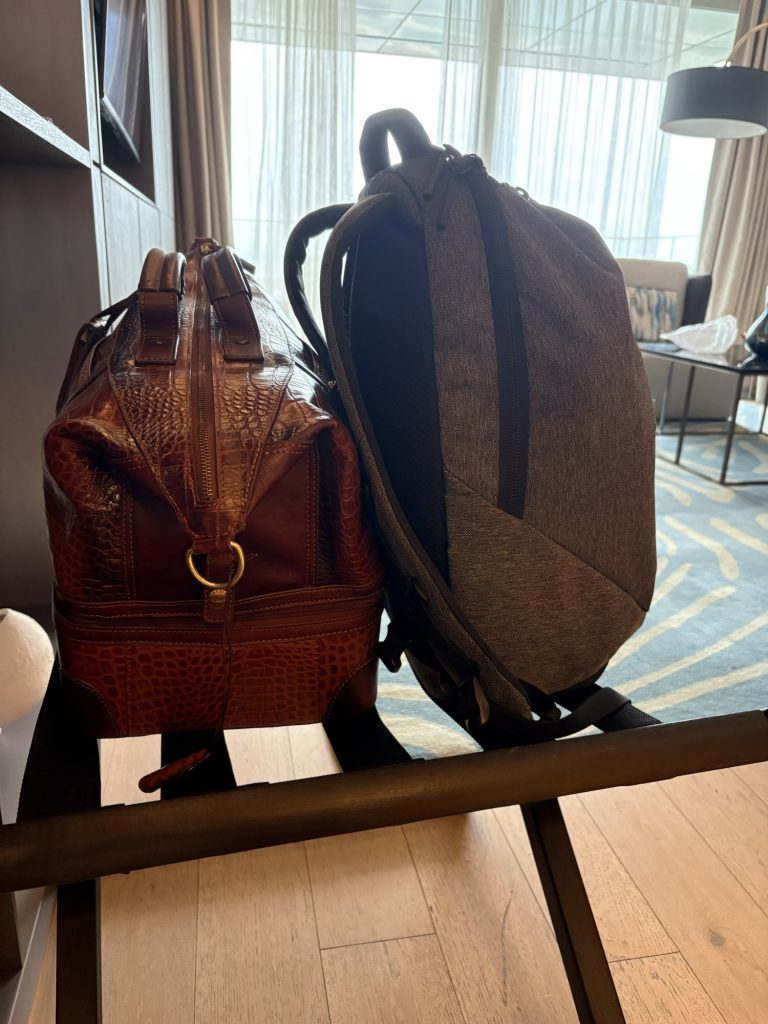
I took my bag to a breakfast at a boutique investment bank (you know the one with the summer camp) and happened to be meeting with an investor who loved the bag so much that the founder of their luxury ecommerce investment picked up the bag to stock immediately. Well over a decade later, I still carry that bag almost everyday and so do millions of other women.

Now ask yourself if this next story sounds pretty similar. I sent a direct message on Twitter to a young founder who seemed interesting. He had a quickness to his thought I respected as well as humility that set him apart.

Alas I didn’t like the company he was working on at the time and I didn’t like that he wasn’t its CEO. Sounds like “the food was bad & the portions are so small” sort complaint right? Well, I just thought he was so good he should be the lead in whatever he did next.

The young man had partnered with an experienced elder (which was probably wise for that industry) but the founder was clearly the dynamo in that situation. I told the founder that straight up. He had earned complete candor from me.

We began talking about what he really wanted to build. His intensity was awe inspiring. And his vision was just so crazy that I knew I had to back him. Many phone calls and strategy sessions later I wrote a check. It would take less time than I’d dared dream for others to see what I saw first.

Two years and change later, that young man is the founder and CEO of Valar Atomics which just raised 130 million dollars to make small modular nuclear reactors. Isaiah Taylor may have been a diamond in the rough when we first met, but I knew he’d sparkle in any setting.

To see him now as the jewel in the crowns of many much larger funds and backed by much more impressive and capable people than me feels amazing. I’ll always have the satisfaction of being the first to know he was going to be the next big thing.

And that’s not so very different from helping select the hottest hand bag of the last decade. Like Jeremy Irons’ character in finance classic Margin Call, I know the value of being first.

There are three ways to make a living in this business: be first, be smarter, or cheat.

Now, I don’t cheat. And although I like to think we have some pretty smart people in this building, it sure is a hell of a lot easier to just be first.”

If Isaiah’s work is successful, it will be an awful lot bigger than the hottest handbag. It will materially change the conditions of fueling our lives.

And while I am pretty smart, I knew enough to act first. Because it was a hell of a lot easier to just be first. And if I’m lucky, I’ll carry my bag and own equity in Valar for a long time to come. Read the full story in Bloomberg with a gift link.

Categories
Biohacking Media

Day 1766 and Thursday Styles Theory Strikes Again: Testosterone for Women Edition

One of my long standing theories, and a personal coinages, is the Thursday Styles Problem. It’s a theory of knowing directionally what is coming, but never being quite sure of when.

The New York Times publishes its “styles” section on Thursdays and Sundays. If you work in media, public relations or culture, you are aware of the general trends that will emerge on Thursday ahead of time. If you know “what everyone knows everyone knows” ahead of time, there is a lot of money to be made.

Predicting the trends sounds easy when I put it this way, but the timing of it requires quite a bit of foresight, and considerable planning.

The trend piece is researched and reported over months. It requires the editor to be familiar enough with the trend to approve the writer taking time & resources. That means other upstream media has to have covered the topic in the niche which requires its own planning and coverage.

And while hype cycles have shortened, culture still takes time. And really important cultural trends may even require years to be relevant enough to be Thursday Styles worthy.

And can you afford to wait for the cycle to run? Breaking news happens and a piece gets pushed. A hotter trend might push the piece for weeks or months. If your business can’t survive the long game of becoming a Thursday Styles trend, being first hardly matters. Being right doesn’t matter as much as being right on time.

There is an art to this. Publicists play long games. They seed articles with a long arc in mind. Prediction markets place bets on the likelihood of something occurring, but with many actors you can’t really control when and how a thing happens.

It’s hard enough that Alex Danco believes it to be its own cultural movement and a force akin to past movements like modernism. Predicting the future is now an active part of living in the present for everyone.

So naturally when something I am doing happens within a month or so of me doing a thing, I tend to feel smug. When Albania was on the front page of the styles section while Alex and I were vacationing there, I gloated. I’d been hip to the forgotten European country for years.

Today I got a push notification about women taking testosterone. It had the full ugly animations of a thirty minute reporting on a full blown phenomenon.

Frustratingly it is very light on specifics as to what constitutes a “high dose”, while framing the piece almost entirely around the wonders women experience from taking a higher dose of testosterone than what might be considered average. 5mg a day is roughly average, and the procedure I did lasts 4-6 months, so I am starting at an average dose after having been on a 3mg a day cream without getting an improvement in my bloodwork.

We’re started me with 10mg of estradiol (range 6-25mg with 8-10mg being most common), and 75mg of testosterone (range 50-150mg with the most common being 75-100). Day 1754

I have been very open about my dosing, my own bloodwork, and what went into why I chose to do it. Which, I’m glad, as the New York Times sure isn’t telling. Being very honest and open about details seems important as I have the privilege to experiment and I want others to benefit from that.

Because of minor complications, I’ve been attempting to be entirely transparent with those as well. The treatment itself is not dangerous and is tolerated very well, but I have had unusually high incidences of skin infections due to the IL-17 inhibitor I take for my chronic inflammatory condition, which led to a longer recovery than I’d have preferred.

Now that this is a full blown trend I promise to report back as I heal and as my blood work begins to show results. Until then, if you want to know what other trends I think will hit big and want to get ahead of the pack, remember I am just a message away. And I keep a shopping blog as well so you can buy what I buy before it shows up with a rave in the New York Times.

Categories
Culture Reading

Day 1758 and Fluctuation in Society

I was ordered into bed for a couple of days by not one but two doctors. As I mentioned yesterday, a small incision for testosterone pellets must have let in a small amount of bacteria.

Maybe we didn’t pick the correct antibiotics (or maybe it was an inadequate dose) so what looked like healthy healing turned into a subcutaneous infection just as it was all look well which needed managing and cause me a bit of trouble.

So I’ve been catching up on costume dramas like The Gilded Age about the 1880s boom times in America. I’m on the third season of it and while not quite done but I’m enjoying it.

It’s provided me inspiration before as I’m fascinated that corporate charters are what lead to America’s experiment in self governance and each new era of technological and commercial development seems to kick off new organizational opinion of how best to manage society.

No matter the era or the people involved, humans will always find new ways to organize themselves into hierarchies that reflect changes in technology and material conditions.

As eager as we may be to unravel past cultural ways of organizing our status and importance, we always find new ways to set new standards of who matters and why and the same human nature finds a way to creep back in.

Position, birthright, inheritances and other ways of marking nobility and aristocracy manage to find a way to accommodate wealth and power lest they lose all status.

And who has wealth and power in this century whipsaws so fast, it feels like change is as seasonal as the weather. Even if in reality, society changed little if at all. Money and birth still matter quite a bit no matter how many followers someone has on the latest attention gathering platform.

I’ve mentioned my fondness for Paul Faussell’s Class: A Guided Tour Through The American Status System as a good jumping off point for understanding how American has organized its flavors of granting social capital within our supposedly classless society.

The Gilded Age attempts across the seasons to show that our society is always changing with subplots about rising in society through invention, intellect, political organization and sheer force of will.

Gilded Age’s director Julian Fellows also directed Downton Abbey which famously showed a British aristocratic family struggling with money, social change and war.

Both shows may show ways of changing one’s position in society but the skeptics exist at every turn. Even Fussell has Class X in his guide who exit rather than participate in what he calls the charade of meritocracy.

Fussell argues that it is essentially impossible to change one’s social class —up or down — but it is possible to extricate oneself from the class system by existing outside the system as a X person. Wikipedia

I find this particularly funny as we have entire institutions dedicated to deciding how we see and experience class and their luminaries hate how society organizes itself as much as anyone. The New York Times’s infamous columnist David Brooks finds Fussell’s book a “caustic and extravagantly snobby tour through the class markers of its time” which strikes me as especially funny as he once dedicated a column to worrying if he’d put his assistant into an awkward spot by presuming she wouldn’t know how to order in “gourmet” Italian deli.

Bourgeois bohemian that Brooks was, it never occurred to him that an Italian deli might actually be a lower class marker for plenty of people. American Society being filled with semiotic markers in America to ever really manage a static set of signifiers for all that long.

Categories
Aesthetics

Day 1747 and Hyper Autistic Protestant Work Ethic Beauty Blog

I spent some time being really “in my special interest” today writing about why I think we should give more, and not less, time to beauty. I’ll post it to my new substack tomorrow as that will remain focused in subject matter.

Appearances clearly matter in every facet of life, but we don’t do much to help develop taste even as we face an onslaught of the hyper visual unrealistic world of short form video.

It’s all dopamine drips and quick hits that make it hard to develop taste of your own. At best you found algorithms that suited some things you could enjoy but sincerely held joy is rare. I’ve been able to experience many times and it’s now one keeps going in a cruel world.

I spent so much of my life beating the drumbeat of more access to the secret knowledge of the world only to discover again and again, that even if you offer up to the world pearls, not everyone will want them.

Or as my mother liked to say her Latin teacher said “I’m throwing pearl’s before swine!”

To appreciate the details is to recognize that layer upon layer of irritation worked to a finished pearlescent sheen which seems too delicate to truly show the process. That’s its beauty.

Each layer of culture is built by people who cares about details. And all kinds of details matter. Sometimes the details are financial. Sometimes aesthetic. Sometimes it’s noticing a very specific signal inside a very particular group and being able to admire the elegances.

I myself didn’t think I ever much went in for subtlety of any kind until I spent more of my time in mass markets. I’ve come to realize I was allowed to live without too much push on my own tastes for so much of my life.

And because I care about details, now I know I a stupid amount about the business of appearances because I worked at its heart.

So naturally I’d like to do more to share that knowledge as I realize it is maybe much rarer than I realized.

I intend to do it as a fun addition to my life as I experience so much of life through professional and personal interest in technologies. I’ve got aspirations for a world where we choice to work to be better. That requires a world where beauty can be cultivated in improving ourselves. so you can be certain I appreciate the angles of how we use the existing culturally technologies at hand to create the new ones.