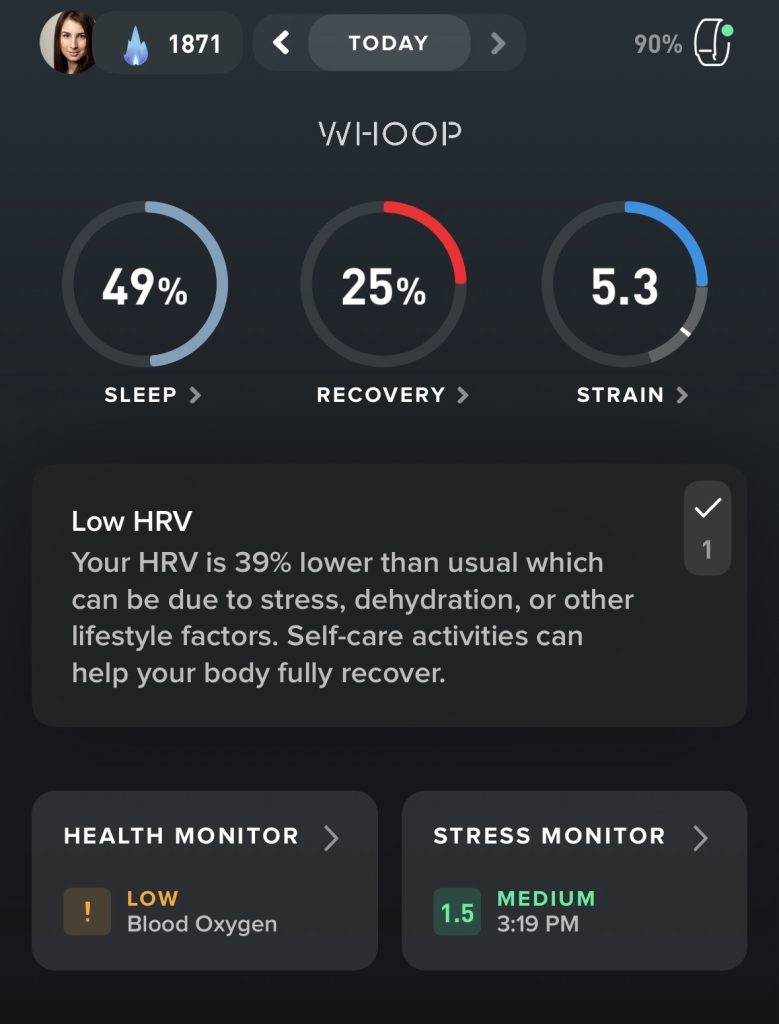
It’s funny that whenever I should have a particularly good week I am inevitably presented with pain and a bad day. And today was a bad day.
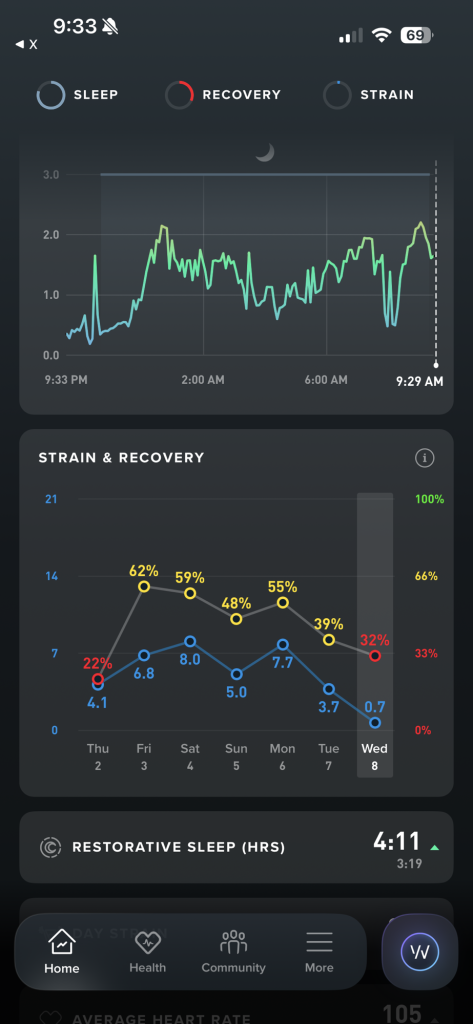
I woke up starving at 5am for no reason. Everything hurt. My skin was peeling and I was freezing. A snowstorm barreled in overnight which was cause for some distress and an awkward moment of uncertainty as whether our spring chickens could weather the storm. It’s their first full week out of the barn and in the outdoor coop and the smallest one is still so very little. They did great but they were not happy about it.
Our five new pullets who are snowed in on the first week outside the barn
I also got a sad bit of news about a company that I had witnessed being birthed through its early years as a direct to consumer darling. My first boss had been on its board and their technical cofounder was a college friend who also worked with my prior boss.
If one is to believe the reporting it was sold in debt to a large foreign company whose own brand is the antithesis of what the startup has meant to its customers. It was the first and last of the direct to consumer companies.
I don’t wish to make anyone sadder than they already are about it and I am saddened common stock holders get nothing. It’s a common story in the space and it hurts to see every time.
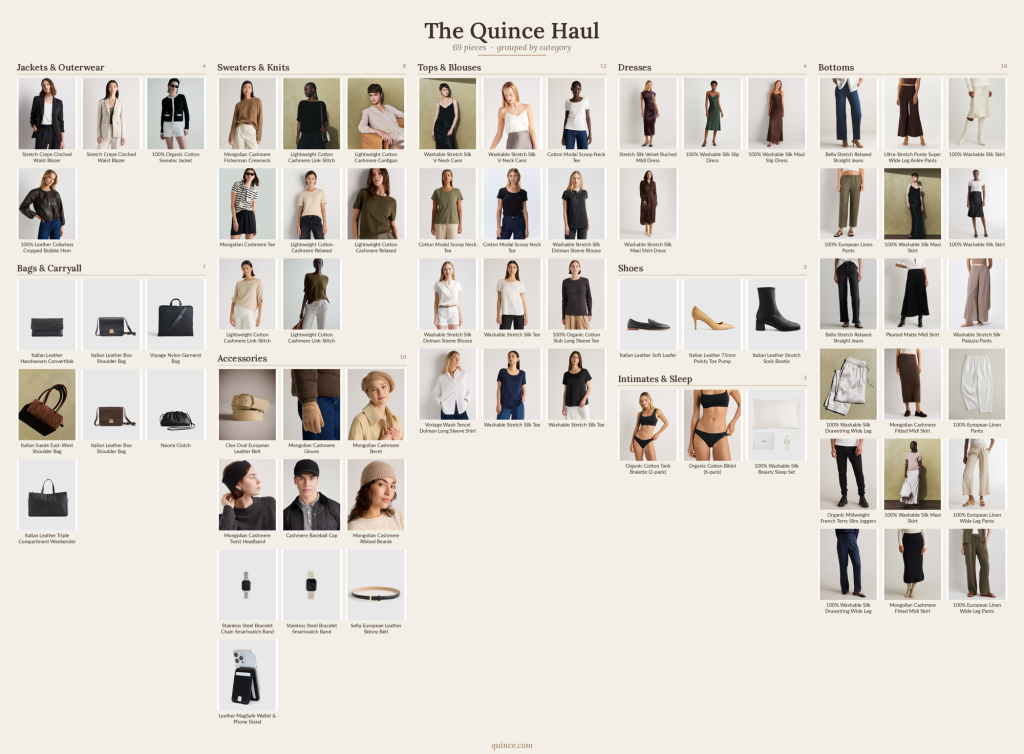
So I went and bought a bunch of basics in memory of what the company had tried to be and in a show of mourning as I do not trust the new owners to maintain quality.
That’s a common story in all consumer categories now. One is sometimes let down by growing too quickly or raising too much too fast and I have so much sadness in my heart that reality. It was the end of an era.
The more the power we seem to gain working with large language models, the more apparent it is that few of us are visually literate in a meaningful way. When you hear talk about design, it is all too often moods and vibes with no specifics.
Now, you might say that you know what you like when you see it. That’s also how we let the Supreme Court talk about porn. Clearly untangling the weft and weave of taste (and by extension culture) can be further articulated than through subjective, non-definitional standards.
How you came to your visual reference preference set is quite a bit more complicated than whatever pre-digested piece of media came across your algorithmic feed.
You can explore design languages from one token to the next, but visual literacy involves a lot more than scrolling or confirming you’d like to see more content “like this.”
Edward Tufte taught data analysis and public policy as a professor at Princeton and Yale for 31 years.
Tufte, via his Graphics Press, wrote, designed, and self-published 5 books on analytical thinking and showing, taught a one-day course, Presenting Data and Information for 923 days to 328,001 students.
Who knew Tufte and I both shared a love of marking the days of our work? He influenced many more people than I have but I find some joy in that coincidence.
His most referenced work, which I mentioned above was published in 2001. Visual Display of Quantitative Information was on the desks of everyone designer I knew, from fashion and Silicon Valley to public policy it was a mainstay. The man knew how to lay out information visually and he became the standard.
Some of Tufte’s self published tomes
The long tail of enthusiasm for displaying data beautifully surely owes its ubiquity in some part due to his success in teaching my generation’s designers.
He’s became for a period so universally referenced that Tufte became a cliche. Now he’s classic a quarter century later. His work arguably as successful as a visual language reference anchor as bookshelf favorite, “The Design of Everyday Things” by Donald Norman. His work is also denigrated as cliche in some circles.
The Design of Everyday Things second book cover
Both men offered clarity and practical principles over taste and theory. Those academic predecessors befuddled many who experienced aesthetics primarily through semiotics and critical theory. It felt revolutionary to return to form and function
You “Kant” really learn to love the languages of aesthetics from theory alone as it turns out. I’ll place a little AI synopsis to make the connection clear. This is from Perplexity:
Someone might relate to the popularity of Edward Tufte and The Design of Everyday Things as part of a broader hunger for clarity over clutter in how information and objects are presented.
Tufte’s work is influential because it treats visual design as a serious vehicle for understanding data, while Norman’s book argues that everyday things should be intuitive, legible, and centered on the user.
A Tufte-style chart removes decoration so the trend is easy to read, while a Norman-style kettle shows clearly how to fill it and pour it without guessing.
Both are forms of respect for the user: one respects the reader’s attention, the other respects the user’s actions.
Learning how to use an item or a tool, or how to interpret charts or graphics, can easily overwhelm anyone and feel disrespectful to students. A whole era of computing was stuck between the power of the command line and the legibility of the desktop metaphor.
Norman spoke of the Gulf of Execution as the gap between a user’s goal and the means to execute that goal. Tufte similarly wished to remove the confusion in charts and graphs so one’s ability to glean information wasn’t stuck in a gulf of understanding thanks to overwrought bar chart or sankey diagram.
With new artificial intelligence tools we are bridging some of that gap, not with design but with raw computing power. We are moving beyond the CLI and the desk and into a world of reference and inference.
I just hope we all take the time to learn our reference set so we can do more than say “I know it when I see it” as that will be our only way across the gulf of execution. Some things never change. Learning the languages of your field is one of them.
I’m in my luteal phase so primed to be grumpy, frumpy and otherwise combative. You’d think this wouldn’t be an issue as I’m currently experimenting with synthetic hormones and all sorts of experimental peptides but the feminine is a mystery.
Thankfully this cunty attitude had a positive side effect of spiraling me into a group chat debate over what constitutes couture. Haute couture literally means “high sewing” or “high dressing making” in French.
I just had to be technically correct as it’s the best kind of correct. I only know as once upon a time I picked a fight with Fédération de la Haute Couture et de la Mode aka La Chambre Syndicale as old school fashionistas tend to still call it.
I may have done a kind of DDOS (allegedly) on their publicity fax machines to get their attention to further my guerrilla reporting efforts. They were not amused by the chron job I set to send them regular faxes at specific intervals. Anyways.
The TLDR is essentially that what constitutes couture is a bit like champagne. It only counts if it’s from the ateliers of Paris with very specific artisans (and a number of them) using hand sewn techniques which sell only to private clients with custom fittings. They then approve your atelier if you meet these standards.
Couture is not custom made clothing nor is it a form of luxury determined by price or self labeling. And it is definitely not “ready to wear” clothing you can buy off the runway. If an elaborate dance of craftsmanship and French bureaucracy. As an American I find it a bit silly but I don’t care for cartels of any kind be it drug, oil or clothing.
Many designers will try to get away with calling a custom made item couture in order to ride on the 170 year aura of French fashions but it’s not really what is meant by couture and it’s absolutely not what is meant by haute couture.
You don’t see Savile Row tailors calling themselves couture designers nor should they. That would be silly and imprecise. They are Savile Row tailors and that’s its own special custom suiting process.
Being imprecise in one’s specifications is exactly the opposite of what you’d want from someone making you a custom wardrobe based upon nearly two centuries of a professional cartel’s specifications.
So please don’t call something couture as a short hand slang for custom design. It may be ready to wear. It may be tailored to you. But only those who meet the standards of the Chambre Syndicale carry the designation haute couture. Otherwise it’s just sparkling custom made clothing.
My father loved gadgets. He was always tinkering with something and was always upgrading his electronics to some new specification.
Is it any wonder that I married such a handy husband? Men love futzing around with stuff. Sometimes they have daughters and then you’ve got women like to mess around with projects too.
I am sure we will have endless rounds of nostalgia for the eighties and nineties era gadget, electronics and novelty shops. You could get lots of mileage out of building your own computer.
But even setting up something silly from Skymall or Sharper Image captured some of the joy. The novelty of a new invention was visceral. I wouldn’t say no to a Hammacher Schlemmer renaissance myself.
I didn’t love it when we remade that style of retail into quirk chungus millennial fandom but I didn’t hate getting Star Trek tchotchkes either. And now I dearly love websites that my friends have built like WireCutter.
My husband was humming the tune to a piece of YouTube esoterica that is a deep cut to the original editor of that bastion of shopping guides. Choire Sicha launched the WireCutter but it’s in some ways the least soulful of his franchises. A Mike Albo shopping column already nailed thebit we’ve just been redeeming it since then.
Choire gave us Gawker 2.0 before his his incredible era of independent publishing streak making properties like the Awl and the Hairpin.
In a world with more shops and essayists than good shoppers or readers, Choire found the good ones and shared. And one of his discoveries was Nina Katchadourian’s work.
I’m sure we will enter an exciting new era of curating down the perfect piece of cultural detritus with artificial intelligence. But I will always be grateful to electronics dads and savvy buying guides for teaching me to enjoy the joy in making something. Even if it is profoundly uncool. I’m still team Barbara Kruger though. Don’t believe the hypebeasts.
Yesterday both my husband and I were quite sick. We had very different symptoms but my worst one was a fever which added additional pain to the usual autoimmune nonsense. Naturally I subjected myself to more pain by spending the day on the internet. There is a lot going on and my brain was foggy in the wilds of the open internet.
Thankfully my fixation on consumer packaged goods’ price risk coincide with the arrival of a fresh round of skincare as well as a number of grim stories on the K shaped economy. Southeast Asian is rationing fuel while in Harper’s Bazaar wanted me to know that K-Beauty was coming for my neck. .
I don’t write headlines but I thought it was a bit on the nose to suggest fashion magazines are vampires. I clicked though.
It turns out there is a lot you can do for your neck but be warned the skin is thinner so promote collagen growth and be aware fewer sebaceous glands means it is dryer and more prone to irritation when exposed to actives like retinol. Useful information reinforcing my recent experiment with using Medicube’s PDRN Pink Niacinamide Milky Toner on my neck.
The beloved director of romantic comedies Nora Ephron m released a book in 2006 about the trials of womanhood. One essay was dedicated to how her neck was giving away her age. At the time I don’t even know one could be anxious about one’s neck but I filed it away as a to do in the endless list of feminine expectations.
“Short of surgery, there’s not a damn thing you can do about a neck. The neck is a dead giveaway. Our faces are lies and our necks are the truth. You have to cut open a redwood tree to see how old it is, but you wouldn’t have to if it had a neck.” – Nora Ephron’s “I Feel Bad About My Neck: And Other Thoughts on Being A Woman
Now maybe back in 2006 there wasn’t as much you could do about your neck when you’d smoked, tanned, and I will presume maybe occasionally enjoyed m drinking or other substances. But her Boomer fears encoding their neurosis into my generation was not in vein. I did none of those things.
Now that my fever has broken, I’ve been able to enjoy simple pleasures like the arrival of a box of skincare for myself (and also Alex because obviously I help him out) and ponder that I can feel anxiety about risk in the petroleum derivative markets like consumer packaged goods and also I can worry if my neck isn’t aging well.
I imagine I won’t get to enjoy that luxury forever. We have it very good in America with access to the best French pharmacies and South Korea plastic surgery clinics have have produced. I slathered on a milk toner and then topped it with hyaluronic acid water cream and a few drops of a Matrixyl peptide to boost collagen and elastin production.
The Internet as we know it is under new pressures from artificial intelligence as automation washes across digital spaces once populated by humans. The pressures in the market for technology private debt as it reconciles old Internet companies with cash flow against changing terrain.
It’s not just creative destruction in software businesses. Storied luxury families like the owners of Puig and Estee Lauder are discussing a merger. Price inputs are a killer when share prices are under pressure. Thats more of a geopolitical risk worsened by consumer struggles. The top 20% of the market does 80% of the spending is the new horror metrics.
So much for the lipstick indicator eh? Maybe I’ll look back and be glad I stocked up on serums, creams, drops, peptides and other petrochemical packed Swiss and Seoul laboratory style miracles. There is always shea butter and beeswax.
I don’t wear makeup everyday. When the pandemic hit and life moved online, one could easily slap on a video filter and avoid the additional labor required to look professional as a woman.
I went from a life where wearing a full face of makeup was the professional default expectation to one where there was no expectations at all. People don’t like a world without rules.
That vacuum of expectations has been filled with even more intense appearance expectations. Now that “in real life” experiences have become luxuries, many social interactions have developed new norms in which cosmetics are part and parcel of expected manners and basic decorum.
Not all scenes have incorporated makeup. Technology is still relatively laid back about visible makeup but many have gone the opposite direction. Washington D.C. is a scene where professional expectations demand polish.
Maybe some of this is the Boomer expectations of television ready appearances or maybe it’s the constant Zoomer video recordings but this town likes a full face. A beat mug with a limp wrist as they say.
That means your face’s skin has multiple different layers from contour to powder, your eyes require eyeliner, eyeshadow and mascara and your lips are lined and colored.
I’ve enjoyed doing a “natural” look this week which despite its misleading name is still quite a few steps. The basics aren’t that hard though. Light brings a feature forward. Shadows move a feature back. Everything else is details.
I brought cosmetics for a few friends and one girlfriend who mentioned the cosmetic expectations asked me for some basic advice on eye makeup as she’s found it a nuisance and quite a bit of work.
I grabbed a few eyeshadow sticks and we popped into the bathroom of the Waldorf which was the home base hotel of the conference I’d been attending.
I will use brushes and powder eyeshadow palettes when I need a very specific look, but if I just need to be “done up” I like the ease of an eyeshadow stick. You smudge some depth into your crease and some light on the inner edge and you are good to go.
Two or three colors gets the job done. I use a gel twist up eyeliner just on upper line. I prefer lengthening mascara or tubing varieties as volume mascaras tend to drop fiber.
Demonstrating this process got us a small audience. The bathroom attendant was curious about the ease and speed at which this was possible. Nothing brings women together quite like the rituals and secrets of aesthetics. All eyes on my eyes and all hearts open to finding a new way to feel comfortable. That’s beauty to me.
As I’m heading to our nation’s capital soon I am taking extra care with my “run of show“ as I’ll have more varieties of events to account for over my stay. I expect humidity and rain so that should be fun for hair and makeup. All men need to worry about is sunscreen and maybe a bit of hair gel.
Now my travel wardrobe must account for visits to historical sites, nice dinners, late night parties, internet friend meetups (see you at the Polymarket’s Monitoring the Situation bar?) and a conference that is somewhere between startup event and defense contractor conference.
If you are a woman, you are probably nodding your head and thinking well that’s at least 4 different pairs of shoes and two purses. Then there is evening wear, day blazers and skirt suits, sweaters and other mix and match separates, and heaven forbid I find time to exercise so sweats and all the undergarments.
All that packing must work with the additional run rate risks of TSA slow downs (can Congress pass a budget) while presumably needing additional care and attention to security. Given we are embroiled in a war with Israel in Iran it’s hard to count on smooth sailing. So I pack as if I will encounter unexpected difficulties. Hopefully none more irksome than long lines.
As a woman who mostly spends her time in Montana or otherwise in the middle of nowhere, you can imagine that my makeup these days has a bit more in common with tinted sunscreen than it does with a smoky eye with a cut crease let alone a full powdered contoured beat fit for television. However I’ve heard polished full makeup is the preferred look on the hill including eye makeup basics.
I’m hoping I’ll be able to rely on my skills without additional practice, but I won’t lie I did a couple dry runs on new palettes I’d picked up and a few new colors. Very little new made the cut. When traveling, rely on what is reliable.
Psychologists can argue until they are blue in the face about the appeal of Veblen Goods or that value can be demonstrated by price point, but veteran retailers know that everyone likes a good deal.
Rich or poor, young or old, oligarch or peasant, the shopkeeper knows the mind of the buyer requires we feel like we are getting more than we paid. This has some downstream consequences.
Retailers try to avoid degrading their price points and brand reputation with tactics like percentage off sales. And they can be clever about it. There are seemingly innumerable shopping holidays now where you can play with merchandising, special collections, loot boxes and creative value presentation.
Black Friday, Cyber Monday, Single’s Day, Christmas in July, Prime Day, Fukubukuro (福袋) Lucky Bags, and Lunar New Years are just some of “tentpole” shopping holidays around the world that provide merchandising opportunities and encourage taking a look at what is on offer.
Yet somehow the middle market of mass retailing is still struggling with how to manage sales. If you train your customers to expect a deal, and worse if they expect it at a regular time and frequency, what will make them shop in between those opportunities? Mall brands regularly get trapped by sale training behaviors
I’ve been watching Sephora go from a twice a year sale brand to trying their hand at daily drops. It seems as if they are going the Ulta route in the hopes of driving more purchasing at lower price points. Drive repeat purchasing at higher frequency and it might work.
However the average order volume has to be going down. I wonder if they have no choice having re-oriented the brand down market to attract younger buyers during the Sephora Teen pandemic era. But we are no longer in stimulus spend era and I imagine this is alienating to their older upper market customers. I’ll be watching it.
I’ve wandered far from the traditional life paths that might have recognizable to past generations of my kin.
It scares me. Any time I contemplate the change I have already experienced, I imagine how much more change I can expect to see.
How are we supposed to raise children, mentor young leaders or align artificial intelligence with the good, the true and the beautiful when we adult humans have experienced life so far from past ideals?
So I’ve been toying with a portmanteau blending attempt and template to express the idea of “an experimental framework” or “proto-template for living, learning, or skill-building.” I need templates to help me attempt to adapt while retaining my humanity.
We will all be re-skilling, re-learning, and re-engaging with our values and as I try to structure templates that help me walk a life and prototype styles that might work for myself and others.
I hoped to communicate both clarity and flexibility with the choice. We are building good ways of being in a world of rapid change. Templates must change and we must always be attempting to learn and adapt.
I liked that attemplate sounds like a natural word you felt like you may have already encountered. It does a nice job of mirroring the thoughtfulness of contemplate. A template for a new era which will be attempt to build, even if the foundations we thought were firm in the past give way to much broader ways of being.
I played with “attempate” which sounds procedural (almost bureaucratic) as if one would take a sheet of paper with an assigned attempate to fill out and live. Why yes, I took the project management attempate sheet to see if I had natural aptitude for detail work.
“Temptlate” sounded engineered. Maybe it would be suitable name for an internal tool or concept document. We will add that to the family Temptlate and see who bites on it for Saturday plans. It’s cute, playful and almost experimental, but not entirely as serious as the scaffolding one hopes to build upstairs n.
Maybe I’m the only one who feels like I lost decade between Trump Derangement Era through Pandemic Biden Gramsci End of March Institutional Capture.
What I thought was true slammed into things I wished were not. And then we fought years of anarcho-tyranny as the state refused to budge even if you attempted to follow its templates.
So here I am trying to find new ways of being for myself, for the future, and for my present. Maybe it’s entirely selfish. Templates for how to live are the anchors from which we used to build religion and power.
We’ve stripped much of the meat from life and turned past ideals into brands and merchandised them into outfits and starter packs. But it’s worth an attempt don’t you think?
I love a good signaling and status competition. There are so many ways to to signal that at the far reaches of taste you will never fear to tread. Just don’t worry about how other people live.
I’ve worked in luxury fashion and venture capital and they run on the same rules. And it’s all snobbery up and down and it is a mixed bag when it comes to what works in reality.
I’ve known sneakerheads who seamlessly transitioned to private equity because they know in some fundamental way that rising price increases demand in strange markets. But the little signals can give away your whole game and you can’t always assume you are speaking their language.
Many an investor and fashionista has made good use of this basic understanding of a Veblen good. The more expensive it gets, the more it stokes demand. Everyone thinks they can become Hermes or Facebook but if you could well you would have.
This can fuck with actual performance as the thing being performed isn’t necessarily the thing that is getting done in reality. You can show your own displeasure with the pricing scheme by not participating. You can short a thing with a little creative and signaling of your own.
Many decided will continue to play along despite not needing to participate in status games. Outsourcing taste is actually something you can pay for and sometimes you should just get a realistic budget.
Often you really can’t afford to play the game and it’s better to cultivate your own taste and satisfactions in life so you are comfortable taking on the risk load of stepping out of unnecessary competition. You play your own game and win on your own terms.