Categories
Aesthetics Startups

Day 2022 and Let’s Dance Quince

I have complained in the past about the slow degradation of quality standards in contemporary fashion and the negative consequences it has had on quality for consumers who are not in the top half of the K-shaped economy.

The shrinkflation and reformulation that’s rampant in food has hit clothing quite hard. And has made much easier to justify simply buying fast fashion that’s disposable simply because the quality bar for even beloved basics like L.L Bean has gone down.

I actually sent a note to the Chief Merchandising Officer of Gap, who, of course, did not email me back, about the loss of a particular pair of basic straight-leg black cotton sweatpants. I asked if it was possible to bring it back, as I had discovered a number of other internet complaints about its discontinuation.

The sweatpants had cost somewhere in the realm of $30 for a decade, I owned at least a dozen, and have now worn them all out entirely. They were cotton with just a hint of elastane, very lightweight, and the ideal pant for sleeping and home wear.

Now you find pants that are 30-40% plastics of various blends that promise super soft or super drape-y silhouettes consumers don’t know or even mind that the clever branding of “scuba” pants is just marketing for thick polyester knits.

I’m not against some of it. Somewhere between 2% and 5% works just fine for most fabrics, but I’m up to 10% for some garments as I’ve got boobs to work around. However when things are close to your body, particularly in the intimates category, 100% cotton is absolutely my standard.

To be clear, I have no problem with technical fabrics and am a great fan of innovators in that space, from Uniqlo to Norma Kamali, both of whom I wear. I do care about using the best possible quality in any given category. I also look for that in my wool, silk and leather goods.

This is all a somewhat elaborate setup for the fact that, having been sick in bed for the last week or so, I spent a lot of time browsing Quince.

I have not successfully found garments from them to work, though as a regular reader of things like Wirecutter and The Strategist, I notice when their items get put on lists. Or when people are skeptical of its promise.

The idea that you should be able to get something high quality and tasteful is, alas, becoming a luxury. Even when you spend full freight. A Substack called Magasin today seemed excited when most pieces were “under a thousand” when despite doing alright, I am entirely an under $300 shopper for most items. Coats and bags I’ll go higher but I’m not crossing a thousand. I’m from the industry I know what this costs thanks.

I am also no stranger to the direct-to-consumer world. I was a long-time shopper of Everlane as their founding team was close to me. I’m also a big fan of previous attempts in the category, like Italic, to bring the factories that we in the fashion industry know so well closer to the consumer.

However, I don’t think any of us expected the category winner Quince. That we would get one giant sourcing machine whose entire philosophy appears to be that merchandising is unnecessary. They will allow whatever the market pulls forward. On to the website and take customer demand pulls from there.

Which I suppose I’m going to have to get used to, because why hire a merchandising team when you can just make the market do it for you? Unfortunately, the market isn’t always as good at the job as somebody who is actually a capable market editor or a top merchandising manager. It’s maddening for many consumers to have no sense of quality, fit, style, color or other characteristics we might like from an online retailer. And yet here we are.

So I did something insane. I went through the entire women’s section of Quince. I scrolled through shirts, skirts, pants, dresses, sweaters, blazers and layers, accessories, hand bags and shoes. I didn’t set out to do it as I just added on what I thought might work for me to see if this was part of the appeal. The sense of hope was always there but it was easy to spot where corners had been cut and the reviews are often hit or miss unless it’s a definite best seller.

I ended up selecting what I thought would be a comprehensive capsule wardrobe for what fashion calls pre-fall. It’s the maddening middle season where you have to layer but it also can get very hot.
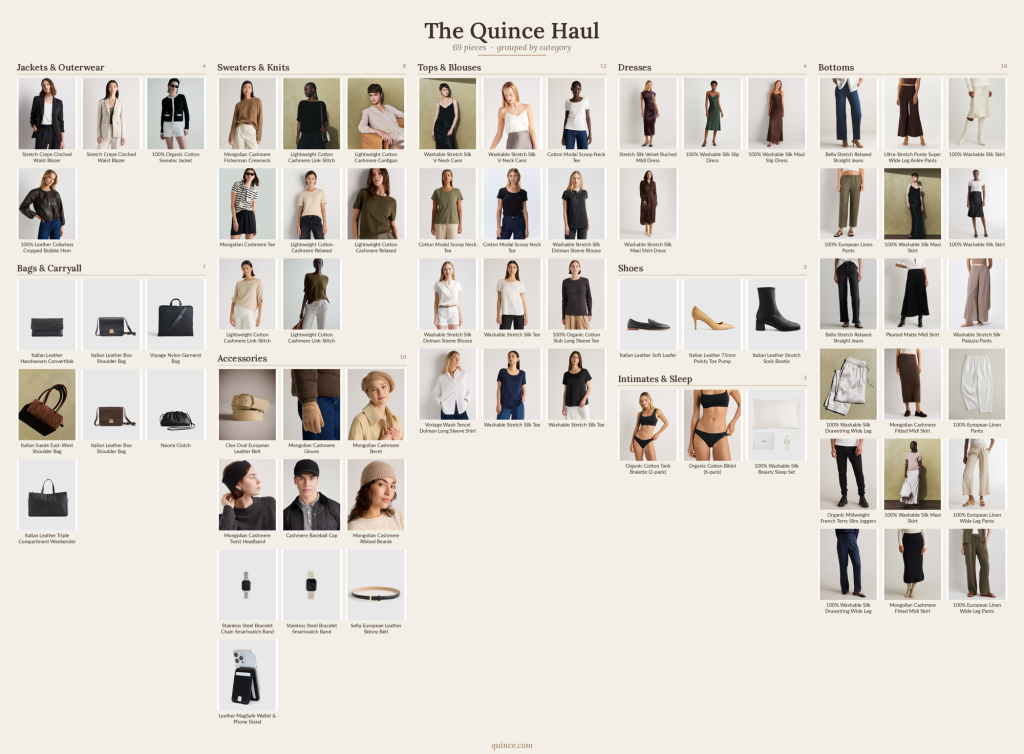
Sixty nine items culled from mid July Quince I could see being useful in the next quarter.

We will see if I can reconstruct a capsule wardrobe from what is merchandising that has no sense of what will fit, what will flatter, how consistent their sizing will be, how consistent the quality will be, or if entire categories will fail me.

Now some categories are heavier weighted as I’m trying a lot of bags and travel. Some are light like shoes as I have basics from actual functional fashion lines from my past but I’ll try these out. I don’t know what fabrics will flatter in what cuts so I got multiple colors but if it doesn’t fit I am likely a full pass as I don’t want to double the order with sizes so if it fits I sits.
Categories
Aesthetics Culture

Day 2014 and It Feels Like 2014 All Over

The beginning of the post Great Recession (or The Global Financial Crisis) recovery was just getting traction in 2014, not so much that everyone you knew felt like their goal in life was to become a product manager at Meta or Google.

And this turning point provided a surprising amount of freedom to try to turn an aesthetic into a business. Previously most were happy with an advertising campaign from a big brand and now every constituent part is its own fully monetized subculture.

Money was being thrown at any authentic form of culture that could be commoditized during turn Zero Percent Interest Rate phenomena years. I didn’t know it then but everything I considered to be the day to day culture of my friends was about to be hovered up first by venture and then by private equity and turned brands.

Coolhunters didn’t sell out they were eaten by the inexorable logic of attention economies. More than one Style Forum guy has gone on to success. One of them even runs national security now. No really.

Just as an aside, Freeman’s is still a thing and the New Musuem is involved. Some fashion substack (that is hired an editor who used to run fashion blogs) alerted me to this fun fact. I genuinely feel for folks in fashion as it feels as if culture has simply devoured itself orosbourus style into a null space.

In a post chronological world at the end of history style has nothing to do but recycle drink ideas and how tight or baggy a pant is will determine your swag within your very specific age bracket and algorithmic context.

I’m very grateful I’m not an Instagram addict (just a Twitter one but hey that’s part of my work right?) as I dread the all encompassing algorithmic cycle. Today’s podcast viral hit with Jeremy Giffon reminds us if it is important it will reach you.

And I agree. Being cool has always meant doing your own thing. And we are all just here to be entertained. From Gladiator to Accellerando, our lightcone demanded to be entertained.

So as I flip through Substacks of Condé Nast defectors I feel like they are stuck in my past. Substack works is mostly packaging takes and have yet to package what a crisp market editor would deliver me once a month from the old guard even if it’s already my summer itinerary.

Honestly the first generation of beauty bloggers giving product reviews. What are we even doing anymore? Ipsy turned a YouTuber into a makeup sampler and Allure turned into self into a sampling service. Albeit the best of the sampling services, but still who are we even meant to trust anymore?

Maybe that is why the only style anyone can ever really have honestly comes from study of themselves and their life. What is empathy of not conform to the rules that help make others feel at ease. Manners are after all, meant for the comfort of others not yourself. I am sure that can make it very tempting indeed to only say nice things. Which should be easy as editor of taste. Only tell us about the good stuff.

Categories
Aesthetics Culture Reading

Day 1960 and Return to Tufte

The more power we seem to gain working with large language models, the more apparent it is that few of us are visually literate in a meaningful way. When you hear talk about design, it is all too often moods and vibes with no specifics.

Now, you might say that you know what you like when you see it. That’s also how we let the Supreme Court talk about porn. Clearly untangling the weft and weave of taste (and by extension culture) can be further articulated rather than relying on subjective, non-definitional standards.

How you came to your visual reference preference set is quite a bit more complicated than whatever pre-digested piece of media came across your algorithmic feed.

You can explore design languages from one token to the next, but visual literacy involves a lot more than scrolling or confirming you’d like to see more content “like this.”

When I first began circulating in design circles in the early aughts, the hipster set was obsessed with Edward Tufte and his now classic Visual Display of Quantitative Information.

Edward Tufte taught data analysis and public policy as a professor at Princeton and Yale for 31 years.

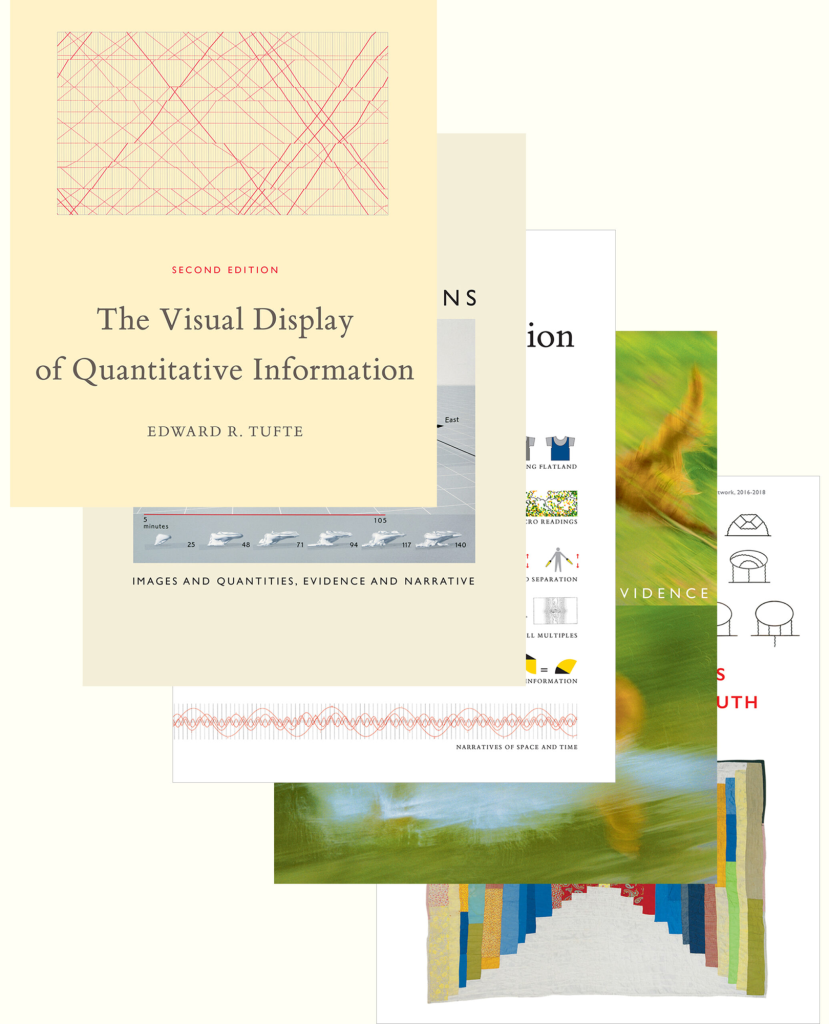
Tufte, via his Graphics Press, wrote, designed, and self-published 5 books on analytical thinking and showing, taught a one-day course, Presenting Data and Information for 923 days to 328,001 students.

Who knew Tufte and I both shared a love of marking the days of our work? He influenced many more people than I have but I find some joy in that coincidence.

His most referenced work, which I mentioned above was published in 2001. Visual Display of Quantitative Information was on the desks of everyone designer I knew, from fashion and Silicon Valley to public policy it was a mainstay. The man knew how to lay out information visually and he became the standard.

Some of Tufte’s self published tomes

The long tail of enthusiasm for displaying data beautifully surely owes its ubiquity in some part due to his success in teaching my generation’s designers.

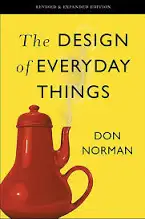
He’s became for a period so universally referenced that Tufte became a cliche. Now he’s classic a quarter century later. His work arguably as successful as a visual language reference anchor as bookshelf favorite, “The Design of Everyday Things” by Donald Norman. His work is also denigrated as cliche in some circles.

The Design of Everyday Things second book cover

Both men offered clarity and practical principles over taste and theory. Those academic predecessors befuddled many who experienced aesthetics primarily through semiotics and critical theory. It felt revolutionary to return to form and function

You “Kant” really learn to love the languages of aesthetics from theory alone as it turns out. I’ll place a little AI synopsis to make the connection clear. This is from Perplexity:

Someone might relate to the popularity of Edward Tufte and The Design of Everyday Things as part of a broader hunger for clarity over clutter in how information and objects are presented.

Tufte’s work is influential because it treats visual design as a serious vehicle for understanding data, while Norman’s book argues that everyday things should be intuitive, legible, and centered on the user.

A Tufte-style chart removes decoration so the trend is easy to read, while a Norman-style kettle shows clearly how to fill it and pour it without guessing.

Both are forms of respect for the user: one respects the reader’s attention, the other respects the user’s actions.

Learning how to use an item or a tool, or how to interpret charts or graphics, can easily overwhelm anyone and feel disrespectful to students. A whole era of computing was stuck between the power of the command line and the legibility of the desktop metaphor.

Norman spoke of the Gulf of Execution as the gap between a user’s goal and the means to execute that goal. Tufte similarly wished to remove the confusion in charts and graphs so one’s ability to glean information wasn’t stuck in a gulf of understanding thanks to overwrought bar chart or sankey diagram.

With new artificial intelligence tools we are bridging some of that gap, not with design but with raw computing power. We are moving beyond the CLI and the desk and into a world of reference and inference.

I just hope we all take the time to learn our reference set so we can do more than say “I know it when I see it” as that will be our only way across the gulf of execution. Some things never change. Learning the languages of your field is one of them.

Categories
Aesthetics Media

Day 1957 and Closet Rummage

I am not up for the nostalgia festival around The Devil Wears Prada. It’s funny to have been in the fashion industry as the world of high gloss fashion magazines was rising in the public eye. It was ironically just as the business of publishing was about to be upended by technological change.

I never did take a job at Condé Nast, though I have some great stories. But I have enjoyed the largess of being inside a fashion brand with a closet. Nothing can fix a day like changing your look without spending a dime. Just “shop” the closet!

If a fashion closet doesn’t appeal to you, imagine a beauty closet. I was on the public relations gifting list for MAC during several of its glory years. I still treasure the packaging. Once I had my own beauty brand, I was swimming in samples that were far less polished but no less enjoyable.

So today that was the happy memory on my mind as I pulled together samples for a friend from my own beauty closet. who is about to go on tour for their work.

Finding just the right colors, chemicals and packaging for her needs was such a joy. I still love the hunt for just the right item that will work. From blazers to retinols, the closet contains fixes to almost all style problems. The bigger problems in life never have a quick fix so it’s worth treasuring the joy of the closet rummage.

Categories
Aesthetics Culture

Day 1925 and The Road to Nora Ephron

Yesterday both my husband and I were quite sick. We had very different symptoms but my worst one was a fever which added additional pain to the usual autoimmune nonsense. Naturally I subjected myself to more pain by spending the day on the internet. There is a lot going on and my brain was foggy in the wilds of the open internet.

Thankfully my fixation on consumer packaged goods’ price risk coincide with the arrival of a fresh round of skincare as well as a number of grim stories on the K shaped economy. Southeast Asian is rationing fuel while in Harper’s Bazaar wanted me to know that K-Beauty was coming for my neck. .

I don’t write headlines but I thought it was a bit on the nose to suggest fashion magazines are vampires. I clicked though.

It turns out there is a lot you can do for your neck but be warned the skin is thinner so promote collagen growth and be aware fewer sebaceous glands means it is dryer and more prone to irritation when exposed to actives like retinol. Useful information reinforcing my recent experiment with using Medicube’s PDRN Pink Niacinamide Milky Toner on my neck.

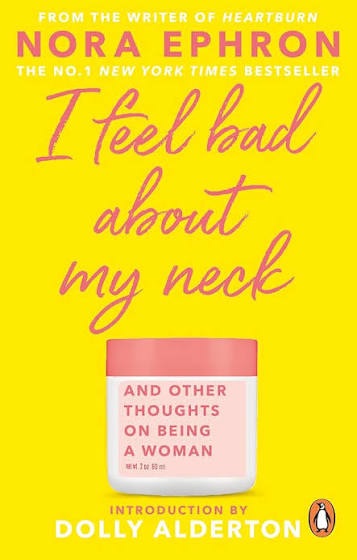
The beloved director of romantic comedies Nora Ephron m released a book in 2006 about the trials of womanhood. One essay was dedicated to how her neck was giving away her age. At the time I don’t even know one could be anxious about one’s neck but I filed it away as a to do in the endless list of feminine expectations.

“Short of surgery, there’s not a damn thing you can do about a neck. The neck is a dead giveaway. Our faces are lies and our necks are the truth. You have to cut open a redwood tree to see how old it is, but you wouldn’t have to if it had a neck.” – Nora Ephron’s “I Feel Bad About My Neck: And Other Thoughts on Being A Woman

I Feel Bad About My Neck illustrates book cover

Now maybe back in 2006 there wasn’t as much you could do about your neck when you’d smoked, tanned, and I will presume maybe occasionally enjoyed m drinking or other substances. But her Boomer fears encoding their neurosis into my generation was not in vein. I did none of those things.

Now that my fever has broken, I’ve been able to enjoy simple pleasures like the arrival of a box of skincare for myself (and also Alex because obviously I help him out) and ponder that I can feel anxiety about risk in the petroleum derivative markets like consumer packaged goods and also I can worry if my neck isn’t aging well.

I imagine I won’t get to enjoy that luxury forever. We have it very good in America with access to the best French pharmacies and South Korea plastic surgery clinics have have produced. I slathered on a milk toner and then topped it with hyaluronic acid water cream and a few drops of a Matrixyl peptide to boost collagen and elastin production.

The Internet as we know it is under new pressures from artificial intelligence as automation washes across digital spaces once populated by humans. The pressures in the market for technology private debt as it reconciles old Internet companies with cash flow against changing terrain.

It’s not just creative destruction in software businesses. Storied luxury families like the owners of Puig and Estee Lauder are discussing a merger. Price inputs are a killer when share prices are under pressure. Thats more of a geopolitical risk worsened by consumer struggles. The top 20% of the market does 80% of the spending is the new horror metrics.

So much for the lipstick indicator eh? Maybe I’ll look back and be glad I stocked up on serums, creams, drops, peptides and other petrochemical packed Swiss and Seoul laboratory style miracles. There is always shea butter and beeswax.

Categories
Aesthetics Startups

Day 1866 and Never Escaping Veblen Goods

I love a good signaling and status competition. There are so many ways to to signal that at the far reaches of taste you will never fear to tread. Just don’t worry about how other people live.

I’ve worked in luxury fashion and venture capital and they run on the same rules. And it’s all snobbery up and down and it is a mixed bag when it comes to what works in reality.

I’ve known sneakerheads who seamlessly transitioned to private equity because they know in some fundamental way that rising price increases demand in strange markets. But the little signals can give away your whole game and you can’t always assume you are speaking their language.

Many an investor and fashionista has made good use of this basic understanding of a Veblen good. The more expensive it gets, the more it stokes demand. Everyone thinks they can become Hermes or Facebook but if you could well you would have.

This can fuck with actual performance as the thing being performed isn’t necessarily the thing that is getting done in reality. You can show your own displeasure with the pricing scheme by not participating. You can short a thing with a little creative and signaling of your own.

Many decided will continue to play along despite not needing to participate in status games. Outsourcing taste is actually something you can pay for and sometimes you should just get a realistic budget.

Often you really can’t afford to play the game and it’s better to cultivate your own taste and satisfactions in life so you are comfortable taking on the risk load of stepping out of unnecessary competition. You play your own game and win on your own terms.

Categories
Aesthetics Culture

Day 1854 and Will The Real Fake Fendi Please Stand Up?

I don’t know if I should be flattered or irritated but I learned funniest thing this week. Netflix “stole” my Real Fake Fendi story for their hit show Emily in Paris. Let me explain.

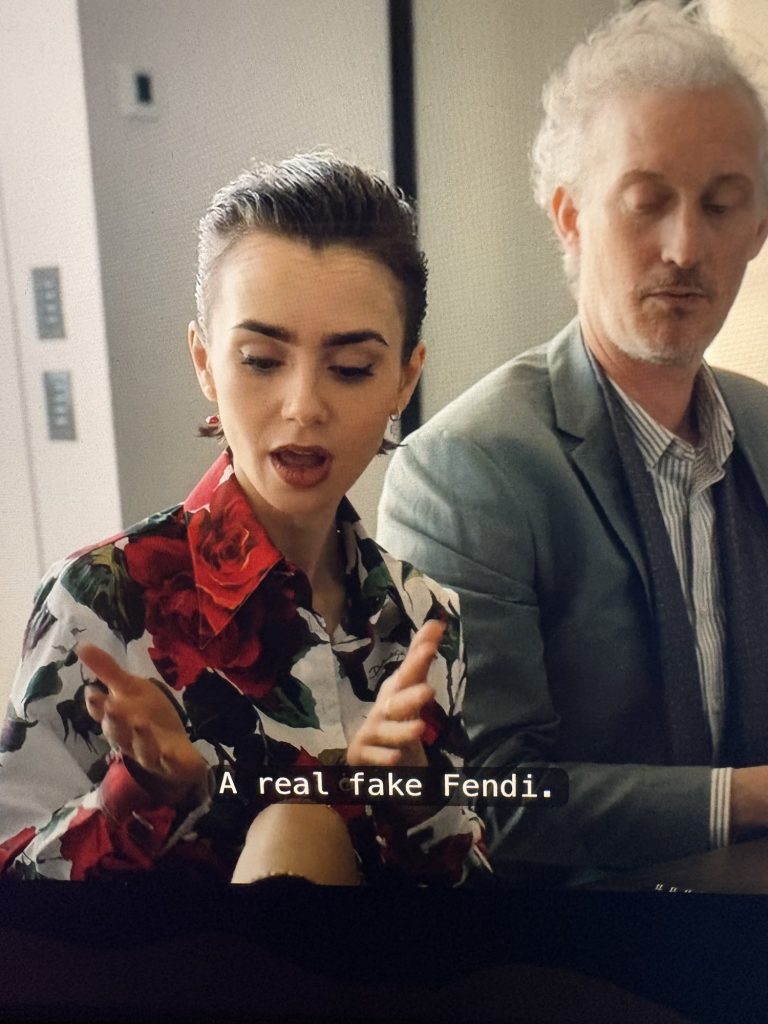
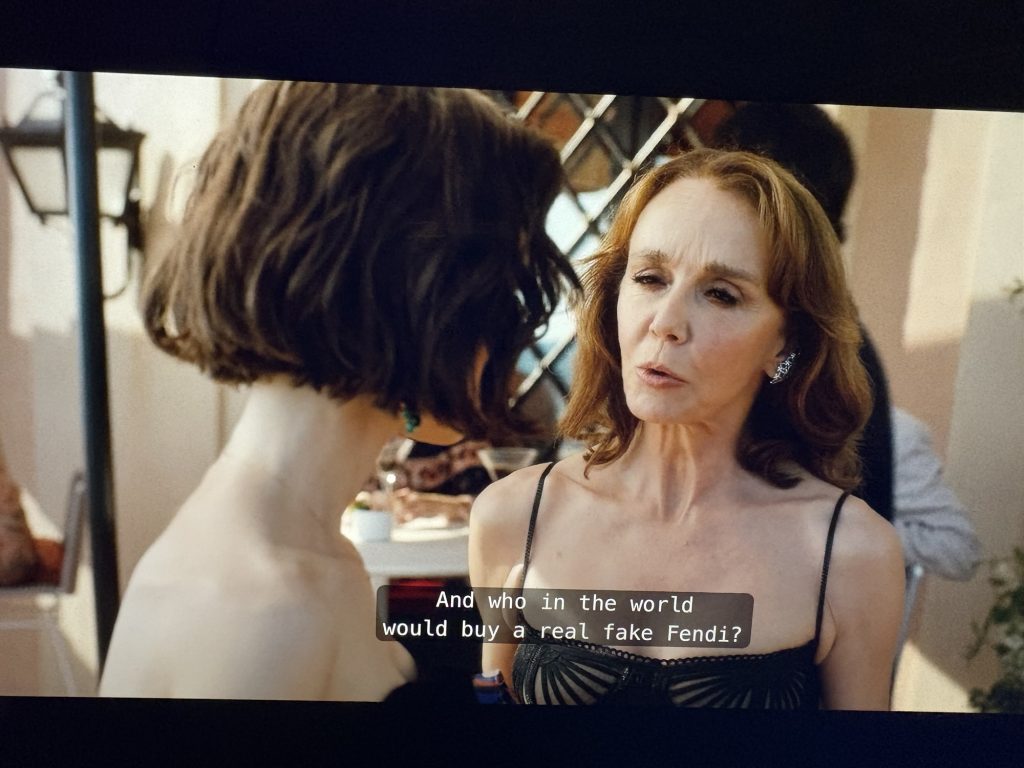
Emily in Paris wrote a plot-line into the current 5th season which appears to be riffing on one of my old blogposts “The Real Fake Fendi.” It is a true story & anyone who has known me awhile has heard me tell it.

I wrote about it in ‘21 on this blog five years long before this season premiered. I am on day 1853 day of writing a daily blog and published the story on Day 89 of my writing experiment though the actual experience took place sometime in the late aughts or early teens where I believe I first wrote about it on an old blog I took down.

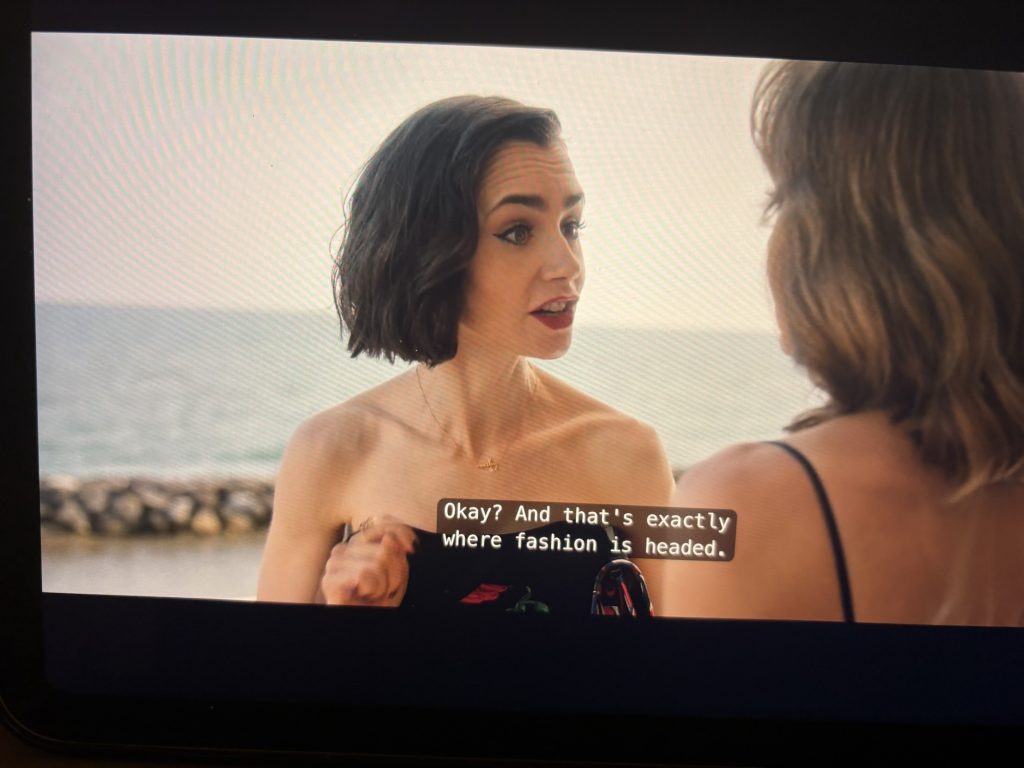
Emily pitches a campaign to Fendi for a “real fake Fendi” on Emily in Paris

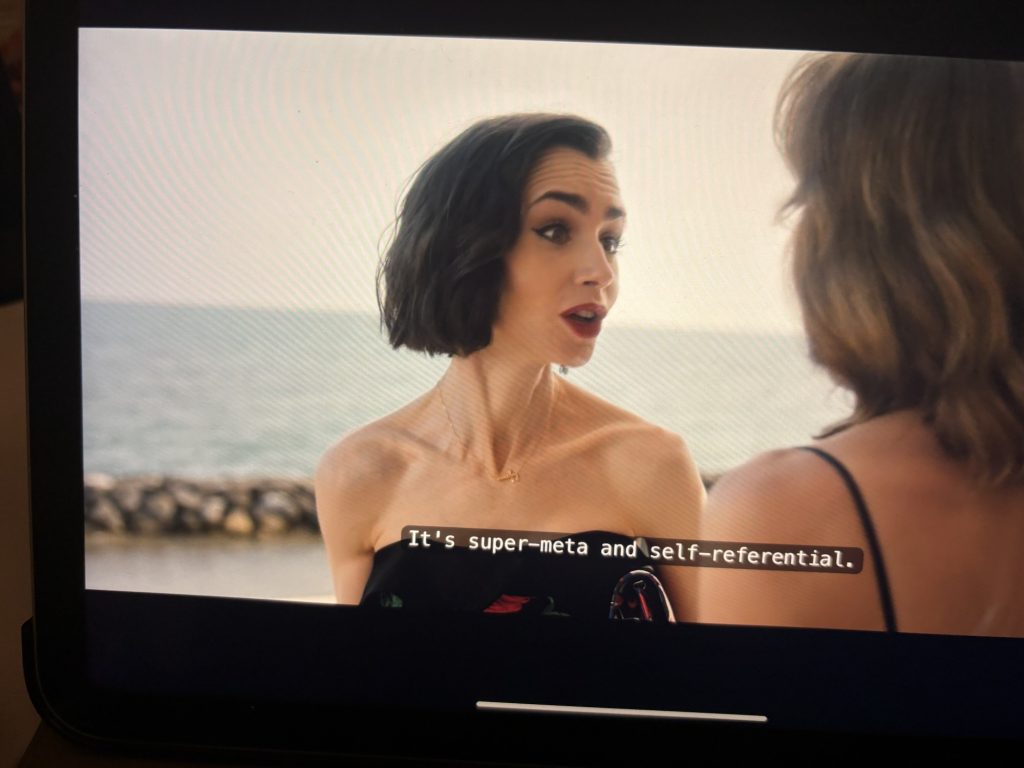
I suspect I would find earlier variants of this tale from my very first (somewhat popular) fashion blog as well. I suppose where fashion is headed is always where fashion has been. Or as they say on the show “it’s super meta and self referential”

The story goes like this. I was once was asked by a tourist for directions to find “a real fake Fendi” when I lived in Manhattan’s Chinatown.

I was honestly stumped by this inquiry. I didn’t answer immediately as my mind raced through the implications of their request. Imagine my mind retrieving.

Was there a fake that had inherent realness that other knockoffs did not possess? Was there a vendor who sold the most authentic mimicry of Fendi which the tourist wished to find? I had no clue how to answer.

Did they mean the realness one sees on the catwalks overseen by RuPaul? But which kind of realness? The creation that evokes the spirit of its inspiration? A realness so over the top and yet absolutely true to its essence?

Or perhaps the blunt direct feedback from being “read” by a drag artist that no construct, no matter how convincing, is the original artifact. Is is serving realness? I honestly didn’t know. I had Walter Benjamin’s The Work of Art in The Age of Mechanical Reproduction swirling in my head and still has no answer.

Apparently tourists looking for Canal Street want to buy the most authentic real fake Fendi

I just told the tourist that Canal was one block north and walked away. I don’t know if they ever found what they were looking for and I may have even given them the wrong directions I was so flummoxed.

Now can I really complain about someone taking one of my coinages and injecting it into a Darren Starr show about spunky brunette girl from heartland American who becomes a luxury fashion marketer by being good at social media. You see where I am going with this. That girl is me.

Perhaps my friend and fashion scholar Susan Scafidi of Fordham Law School’s Fashion Law Institute & author of “Who Owns Culture” would know who owns this cultural artifact. I bet I’ve told her this story too.

This life story archetype has been aspirational long before me. Murphy Brown anyone? It has been done in many different formats including Darren Starr’s best known work Sex and The City.

But it is my story too. So is Emily in Paris the real story of Julie in Manhattan? Is Julie in Manhattan the real Emily in Paris? Am I a retro causal multiverse prequel version of Emily?

Who is the real Emily? Am I the real Emily? Who buys a fake version of the real thing? Either way, I think Netflix owes me at a walk on spot. It would be very self referential. Or me-referential

Categories
Media

Day 1811 and Flakkity Flak

Maybe because the profession’s entire raison d’être is to engage you there is always a new name for people who are good at grabbing your attention.

I swear I’ve lived through half a dozen new names for the communications profession in twenty years of being paid, in one form or another, to get attention for other people. And I don’t even call myself a marketer.

Everyone on LinkedIn, and a few on Twitter have latched onto the latest buzzword: storyteller. Someone call Joseph Campbell and see if they can send him a residuals check beyond the grave.

The aversion to existing terms like marketing, communications, and public relations is endemic to the space. There is always the new hotness and thus always a new name. Crisis manager. Influencer. Honestly I miss socialite. That was a great term.

I had not intended to read the trend piece as it’s not news to me that we hire professionals to craft stories about brands and people.

Millennials were the original generation who experienced personal brand building as just one of those things required to get a job.

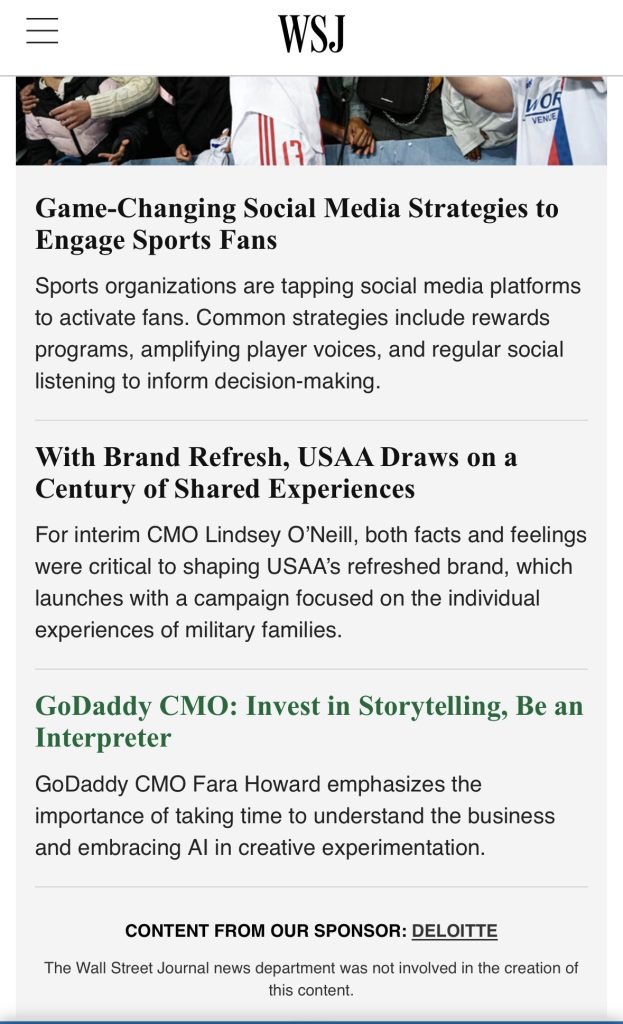
I am glad I opened it up though as I got to experience a pretty amusing bit of story telling inside the Wall Street Journals mobile application. A most unfortunate creative services choice to place storytelling sponsored content from consulting firm Deloitte.

Who knew that consulting firms final form would be not as management consultants but publicists? The remaining few journalists at the Wall Street Journal definitely were not involved in this.

Categories
Aesthetics Media

Day 1801 and Parked in Front of The iPad

My immune system must be reacting to something, be it travel and environmental factors or perhaps a bug I caught, so I’m in bed and trying to keep my body happy. That means catching up on a few Love is Blind seasons.

As the American seasons get worse and worse, the international editions offer up clues as to the politics and tensions that producers feel the need to offer up to international Netflix audiences.

I am an unabashed fan of the franchise and what it offers up as a cultural mirror especially as different countries try to show the ways their status, class, colonial and power structures impact marriage.

The United Kingdom had a Manchester season that was more commentary on the failures of the working class and the country’s immigration systems than it did romance. It almost hurt to watch.

France’s most recent cast was more pan-Asian colonial tensions at the forefront (with an Algerian or two) than featuring any continental or regional ties. The Italian season reflects a more United Colors of Benetton than Georgia Meloni’s. European franchise spin offs feature more immigration more than America.

While everyone is talking about Netflix acquiring Warner Brothers today, I wonder if Hollywood will drive new cultural directions or if the data driven Netflix will produce endless remixes of subgroups and niches so no matter your identity you too will have an avatar on a spinoff of a reality show. Love may be blind but the watching data sure isn’t.

Lest you think it is all fan service and showcasing different immigrant groups being absorbed into the wider national identities of their former colonial governments, you do see the occasional fusion of sanded off styles meant to appeal across strange niches.

I love watching the style of the country doing offs as it is both globo-homo any and everywhere while still targeting very identity driven and place specific people.

Some make no sense. Who doesn’t love seeing a bizarre fashion choice like a Prada bolo ties at a French wedding? Unless you are an Italian getting married to a Texan girl at Marfa, it’s odd to pick 2020’s most viral celebrity accessory to get married in France on a 2025 reality show.

Sure still see some aesthetic choices you expect for both local and global reasons. Like the Italian party planner with the Gucci bee broach. That seems culturally appropriate with a cast that was variably actually Italian despite their their aesthetics

Long burgundy blazers and Gothic Bulgarian girls could work in any country this year. That’s simply globally appealing in the now in any country. Warner Brothers should be taking note.

Categories
Aesthetics Internet Culture

Day 1797 and Last Minute Cyber Week Shopping

Shopping in a highly bifurcated consumer market is an unpleasant experience. No more so than over the great shopping holiday that has become Cyber Season.

Regular consumers feel gaslight enough as it is by smart pricing strategies and persistent inflation. Their trust that they can make a better purchase is at a low. Their Black Friday looks very different than it did during the ZIRP years.

But many brands are battling it out for the ten percent of consumers that do 48% of the spending. And that is a brutal business. I can’t spend time on image or video social networks for fear of triggering some kind of shopping allergy. Being in that group of consumers makes you a target.

And very few of them are battling on the merits of their products. I went brand by brand through my usual suspects of Black Friday brands and found better deals and less to like.

I bought cashmere and skincare and I still don’t know if I got scammed on the cashmere. Ironic as I’m buying seconds of items I already own hoping the sourcing didn’t change in the intervening seasons.

I genuinely miss the Ann Taylor of 2010 when I worked there. You wouldn’t think it would be a glory year for the brand but there was hope. It was still publicly traded American brand. And it had a real estate portfolio of stores to envy from Madison Avenue to the Magnificent Mile.

Imagine an American brand like that now. It had strong supply chains, good relationships with vendors and it had just hired a hot new young executive with a hot new designer.

This was when you could imagine an MBA reinventing a brand’s look for a new generation of working women. Millennial feminism was on its way up, a blonde Gen X feminist beauty from Harvard led the charge and everyone believed. Heck maybe we’d even see a female president who wore our pants suits.

And we know how that broader cultural story turned out. We made pant suits cool for a brief moment in time and private equity ate the brand and now it’s shit. But I know we did good work and I’m glad our MBA leader landed on her feet at Amazon.

I just look at where I shop now and I look at Ann Taylor and the prices are roughly the same but it’s not the same cashmere sweater for that $200 absolutely anywhere. And if you want that sweater be prepared to spend over a grand.

So while I did a little shopping I think maybe I’ll get lucky. Maybe I’ll get a good batch. But it’s not always a sure thing. I got my replacement retinols. And I finally found my old Mansur Gavriel tote (going on year 12 or so) for roughly the same price as I bought it.

I’ll use my beat up on still but I thought hey maybe they still make good bags. But I don’t know if their private equity guys are any good. Fingers crossed as it’s a great tote.