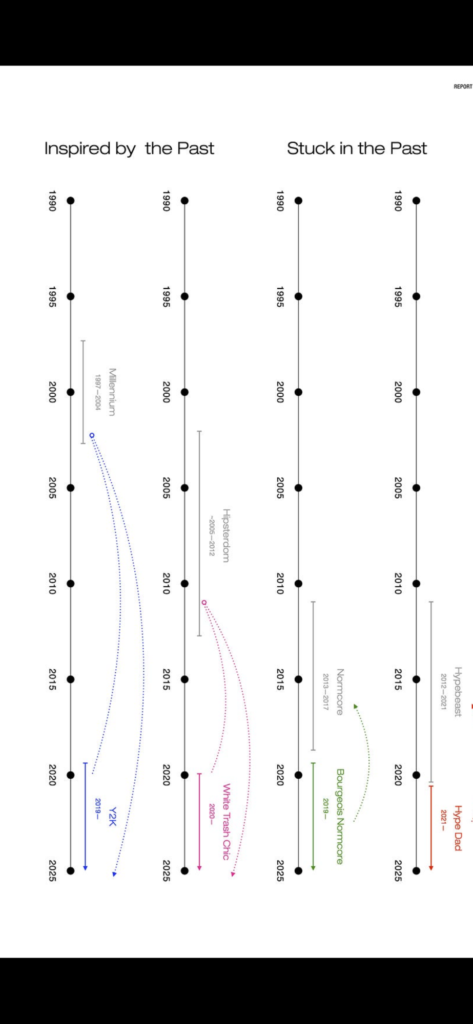
The ChinaTalk Substack has an excellent analysis of the “Net Left” (wang zuo, 网左). A group of young Chinese yearn for the cultural revolution era.
Accordingly to the essay, the “Net Left” traces its earliest roots to a niche group on Weibo between 2011 and 2015 known as the “Franco Left” (fa zuo, 法左).
An American social media user might notice these dates as being concurrent with the stirrings of the Great Awokening whose murky protean identity played out across Tumblr beginning in 2011-2015 as well. Oppressor and oppressed was the narrative for the identity politics which was nouveau chic branding on Marxist capital versus labor.
This simplified narrative attracted a massive influx of young people who were frustrated with their poverty and pressure but struggled to find an answer. Suddenly, the solution was no longer buried in thousands of pages of Deleuzian tomes. Everything was reduced to a single, omnipotent, and evil symbol: “capital.”
Even the struggles of Chinese youth sound like American Gen Z’s struggles. American youth were once pushed toward upward class mobility by The Sort.
Now they critique the high costs of that expensive competitive credentialist systems who put them in debt. Youngsters just starting out see its current failure as a mechanism for training and selecting talent and are opting for new solutions.
China has “small-town test-takers” (xiaozhen zuotijia, 小镇做题家) who don’t have the social capital to make the leap. Sounds familiar doesn’t it? In their case it is strongly gendered, which mirrors some red pill and incel culture on the American web.
Just as in America, many Chinese youth blamed capital and its elite power holders. Who needs to read dense critical theory when the warmth of collectivism is easier to understand than the Frankfurt School or Continental Marxist philosophy.
It seems all great powers are experiencing flavors of third worldism where all is “the oppressed ” and those with capital & power are oppressors. And yet Europe, ever the laggard, is trying “almost revolutionary ideas” to make them more like nimble capitalist powers.
The Europeans must be scared of the tractors I saw protesting the Mercosur trade block deal even though ironically German-Italian initiative claim their goals are making “the European Union less susceptible to pressure from trading partners and global powers” after a week of embarrassing news.
They wish to boost economic growth, calling for “an emergency brake” and a revamp of the EU budget to focus resources on making companies more competitive. I wonder who they think will run and staff these firms?
Just as the rest of the world nostalgically looks back for a leap backwards, Europe says “we want to have a fast, dynamic Europe.” Good luck with that based on the protests I saw.
At least Europe, like the Net Left and the Tumblr DSA crowd, are basing some of this on a misty eyes interpretation of a past that once was but was never quite this. The first year of Davos emerged in similar situations
Well, it goes back to 1971, which was actually another year of trans-Atlantic tension. Nixon left the gold standard. The dollar fell. The U.S. imposed tariffs on European imports. And the Europeans were totally blindsided. This German economist, Klaus Schwab, convenes this gathering of politicians and academics and business people in Davos. It gradually grows into this giant business conference that’s also an exercise in virtue signaling.