Categories
Community Culture Finance Travel

Day 2012 and World Maps and Network Nodes

A long block of travel to sync in person with diverse nodes in my network has been invigorating but also exhausting. I’m sure some of the travel looks quite glamorous, but it is always in service of furthering my longterm goals.

Venkatesh Rao published an essay today suggesting that the dark forest theory of the Internet is over. Our digital public commons has been in retreat

For a decade, we have explained the retreat from the public internet using Yancey Strickler’s Dark Forest Theory. People withdrew into smaller, quieter spaces because speaking in public became dangerous…

The resulting cozyweb—private group chats, Discords, Slacks, newsletters, encrypted messaging groups, invite-only communities—was understood as a strategic adaptation. The public remained a single connected univers

Dead Forest Theory

The ecosystem of private spaces were connected, but as they accreted power these cozy web communities saw their gravity increase. Eventually some collapsed in on themselves. And thus we have black holes of public collapse in the dark forest; out of which none of us are able to escape.

What Rao calls “inaccessible interiority” traps some of us. We may have visibility to other communities through the byproducts of our niches but that does not mean a shared reality where we can reach consensus with others outside of our space.

My strong fear is that without a possible consensus reality for larger groups like nation states citizens, we lose the basic capacity for productive interactions that move us forward. Only inside a community that has swallowed us whole can we progress. And if we find something novel inside those gravity sinks we have no way of sharing it. Only some of us enjoy progress.

Which might be fine for those who wish to live lives quietly out of sight. But it isn’t a world that enables strangers coming together through public global communication in a shared commons.

And this has serious consequences for investing, and especially so in venture capital where a diversity of worldviews is precisely what allows for uncorrelated returns.

Novel worldviews emerge from genuinely new observations of reality. If we all live in disconnected realities of collapsed worldviews what happens?

This is why, as an industry, venture capital is uniquely vulnerable to the seductive coherence of simple ideas, rather than complex truths. That’s unfortunate, because venture capital is also uniquely dependent on intellectual diversity, as evident in the damage done by group-think versus the extreme profitability of contrarianism

This stacks on existing research which illustrates how social media creates echo chambers that amplify consensus ideas while filtering out unconventional or contrarian views — which in turn builds on existing theory that describes how individuals self-censor opinions when they suspect they are in the minority.

Dan Grey “The Venture Capitalist Worldview” in Odin Times

When the dark forest was scary but still possible to traverse, we still had a chance to explore and find reality, even if we lived in a consensus bubble most of the times. Dead forest theory means we are past the event horizon, from which we cannot escape. We are locked in whatever consensus reality emerged inside the event horizon.
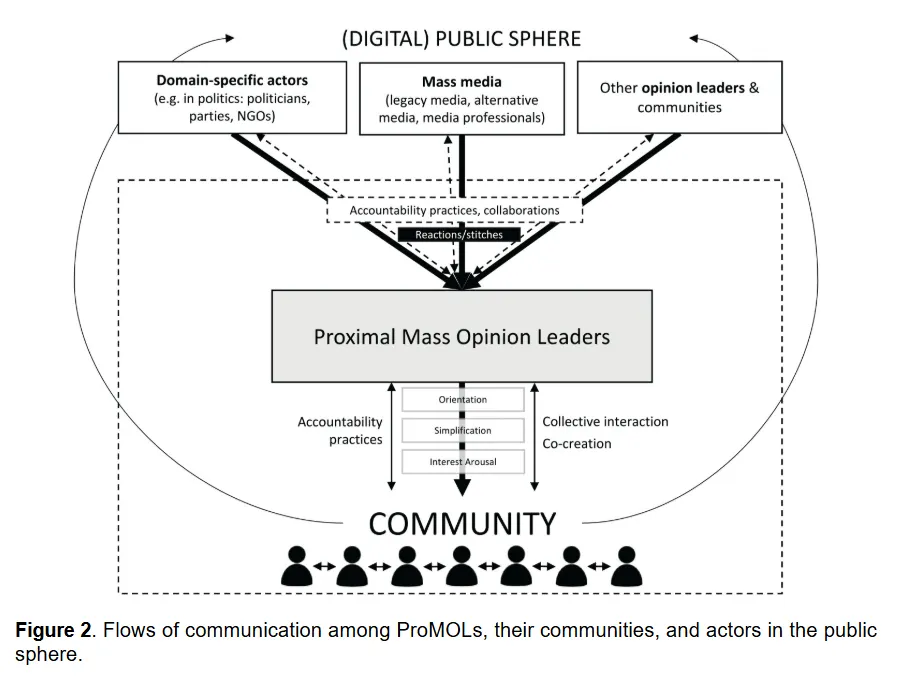
Digital Public Sphere and the gravity of mass opinion leaders from Odin Times

And so despite its expense, its troubles and its costs, I still push my work into the public commons with the hope that I’ll circle the accretion disks but can fight against falling into one forever with a steady acceleration to preserve a visible orbit.

What both Venkatesh Rao and Dan Grey posit in different ways, is that it is worth understanding where we might be cut off from reality.

Further, who knows what new kinds of horrors we will endure as we lead separate lives online without any contact with real life and real people. We crave community with those whom we can maintain consistent context and contact. That’s why I still get on the airplane, or get in the car, or hop on the bus and show up. I want us to share reality.

Categories
Community Politics Travel

Day 1840 and Firm Planning Over An Abstract Constantinople

A friend of mine James Pogue published an opinion piece long in the making about a new kind of Democratic. He deeply investigates the subtly misunderstood Representative Marie Gluesenkamp Perez of Washington.

I was really moved by his sincere engagement with a new kind of Democrat who is really an old kind of Democrat who spoke to America s who lived closer to the land and took pride in a type of communal and conservative stewardship of our country.

I felt it very deeply as someone between two worlds. I sense the grief and loss I carry everyday. If the nation had chose a different path, I wouldn’t have been shunted up and out in The Sort.

Maybe I’d have married to my high school sweetheart. He’s an EMT, didnt go so far from home and is a passionate outdoorsman. We were on different paths as is clear from where I landed but my respect for the life he leads endures.

I live an amazing life with a loving dedicated husband with whom I pursue a deeply aligned set of life goals. The blessings that have been showered on me by the Sort have been substantial. We we have almost maximum freedom to pursue our lives while.

I thank God that despite the changes that have ravaged much of the America, I grew up in most of what I know is incredible agency and comfort.

But there are other Americas who are not so lucky. I hold that William Gibson saw Cyperpunk as science fiction rooted in Appalachia. I see how he writes the near future and it’s one where the past still exists but some of us have been sent forward to the future.

In his almost present maybe I’d have in-laws I grew up with and maybe I’d have my parents nearby because we’d never have lost the house in Boulder and staying close would have made economic sense. Hippies really did want that world.

Maybe a world where “right to repair” has been enshrined would have allowed me to build and own the work I could do on the farms that surrounded our defense industrial focused land grant university. It’s hard to imagine what I would do in that other America.

I’d manage the organic school farm I worked to gain permits for that my mother built from the first year. It mostly existed to produced fruits and vegetables for those who worked it. Itd a fantastical idea that has little basis in economic reality but it’s a life that would make sense to almost anyone.

But instead I was off to acquire an enormous debt that was hard for me and my family to fathom to take huge gambles that I’d be a winner. And I was.

But I’ll never have my family, childhood house, or my town back. That America is gone. And when I wanted the pickup truck of the past I had to import it from the fucking Balkans. It’s expensive to be able to repair what you’ve got.

I’m writing this from a hotel in a trade capital where Alex and I are working while doing our yearly “firm” planning for the family because it was the best place to meet up based on his travel and mine as we run the ancient trade lines that have always ruled the world. That we can plan is a dream.

We aren’t aristocracy but agents of them. And if they ever tried to take our trucks or our guns what else would we have left but being “in service” and tut tutting over a lie of moral superiority for having achieved high rank by serving our betters.

I’ve never felt more America than in this moment, even though I’ll never ever get back the American whose logic forced me into achieving a bigger life than I’d ever imagined.

I just happen to know that it was achieved at the expense of my home and my family and a future that would have also been a life of beauty and meaning close to the land and a town that has benefited from an American government that worked a little bit more for the people around me.

Just because I have thrived doesn’t mean the cost wasn’t great. That would be a dismissal of the material reality that I know to be true. But isn’t it nice that I will be treated as a respected trader representing capital interests in some great capital. It’s freedom most certainly, but not the freedom that America promised. That one might be a little less grand. It’s a little bit firmer. And I am in the realm of the abstract.

Categories
Internet Culture Startups

Day 1239 and @ Consensus 2024 Next Week

I’ll be in Austin Texas next week for Consensus 2024. I’ve really enjoyed my last couple of years attending. The entire crypto industry gathers for it giving it a summer camp feel. Or as Coindesk says “10 years of decentralizing the future” which undersells their role in reporting the industry.

The conference coincided with the annual Coincenter dinner which is an industry wide non profit effort to work towards policy goals for decentralized computing like Bitcoin & Ethereum and the wider cryptocurrency.

Our mission is to defend the rights of individuals to build and use free and open cryptocurrency networks: the right to write and publish code – to read and to run it. The right to assemble into peer-to-peer networks. And the right to do all this privately.

In that vein, I’ll be discussing the intersection of artificial intelligence as the #FreedomToCompute at Consensus as this is THE issue for everyone who uses compute as a tool to solve problems.

It’s an opportunity to discuss the big public goals around the future of machine money and machine intelligence.

I’d argue this includes the entire software industry and by default anyone who is reading this post. Our most important rights will be decided by how we handle policy on these issues. Math is leverage.

One of the town halls I’ll be participating in at Consensus (a format I love to dig deep into topics) is about how artificial intelligence can be a tool for our efforts to decentralize and not end up as a master of big government or big tech.

Crypto has the basic problems facing artificial intelligence. Both spaces rely on open, available and trustless compute. Both are under intense scrutiny and face significant regulatory capture risks.

It’s never been a better time to get involved in these topics. We need open protocols and interoperability standards far more than we need fretting about safetyism and hysterics about science fiction.

Doom solves no problems but software does. We need safe harbors and policy sandboxes so we can continue to nurture algorithmic innovation for us all.