Categories
Community Culture Finance Travel

Day 2012 and World Maps and Network Nodes

A long block of travel to sync in person with diverse nodes in my network has been invigorating but also exhausting. I’m sure some of the travel looks quite glamorous, but it is always in service of furthering my longterm goals.

Venkatesh Rao published an essay today suggesting that the dark forest theory of the Internet is over. Our digital public commons has been in retreat

For a decade, we have explained the retreat from the public internet using Yancey Strickler’s Dark Forest Theory. People withdrew into smaller, quieter spaces because speaking in public became dangerous…

The resulting cozyweb—private group chats, Discords, Slacks, newsletters, encrypted messaging groups, invite-only communities—was understood as a strategic adaptation. The public remained a single connected univers

Dead Forest Theory

The ecosystem of private spaces were connected, but as they accreted power these cozy web communities saw their gravity increase. Eventually some collapsed in on themselves. And thus we have black holes of public collapse in the dark forest; out of which none of us are able to escape.

What Rao calls “inaccessible interiority” traps some of us. We may have visibility to other communities through the byproducts of our niches but that does not mean a shared reality where we can reach consensus with others outside of our space.

My strong fear is that without a possible consensus reality for larger groups like nation states citizens, we lose the basic capacity for productive interactions that move us forward. Only inside a community that has swallowed us whole can we progress. And if we find something novel inside those gravity sinks we have no way of sharing it. Only some of us enjoy progress.

Which might be fine for those who wish to live lives quietly out of sight. But it isn’t a world that enables strangers coming together through public global communication in a shared commons.

And this has serious consequences for investing, and especially so in venture capital where a diversity of worldviews is precisely what allows for uncorrelated returns.

Novel worldviews emerge from genuinely new observations of reality. If we all live in disconnected realities of collapsed worldviews what happens?

This is why, as an industry, venture capital is uniquely vulnerable to the seductive coherence of simple ideas, rather than complex truths. That’s unfortunate, because venture capital is also uniquely dependent on intellectual diversity, as evident in the damage done by group-think versus the extreme profitability of contrarianism

This stacks on existing research which illustrates how social media creates echo chambers that amplify consensus ideas while filtering out unconventional or contrarian views — which in turn builds on existing theory that describes how individuals self-censor opinions when they suspect they are in the minority.

Dan Grey “The Venture Capitalist Worldview” in Odin Times

When the dark forest was scary but still possible to traverse, we still had a chance to explore and find reality, even if we lived in a consensus bubble most of the times. Dead forest theory means we are past the event horizon, from which we cannot escape. We are locked in whatever consensus reality emerged inside the event horizon.
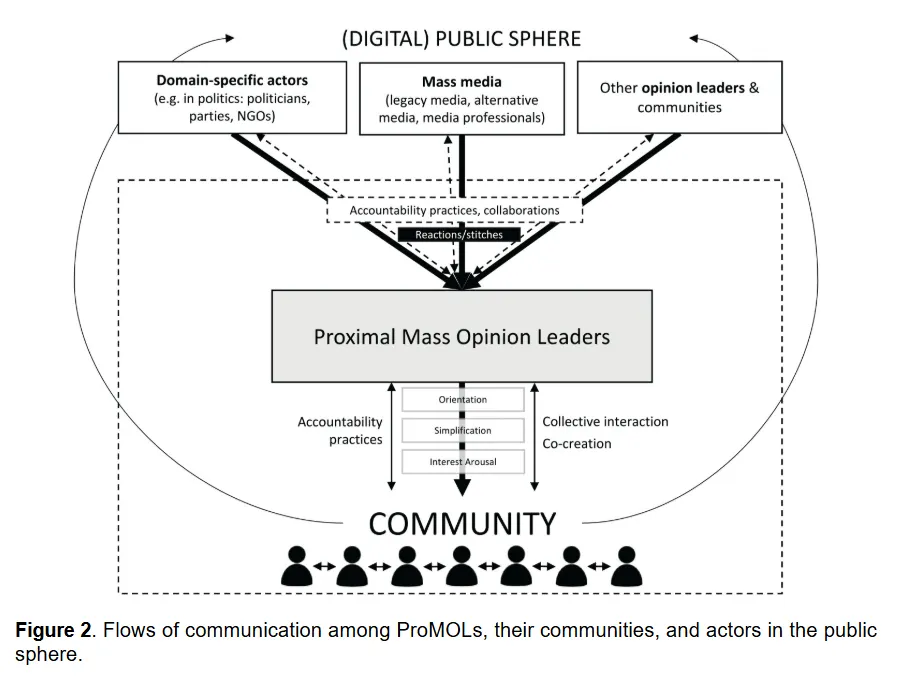
Digital Public Sphere and the gravity of mass opinion leaders from Odin Times

And so despite its expense, its troubles and its costs, I still push my work into the public commons with the hope that I’ll circle the accretion disks but can fight against falling into one forever with a steady acceleration to preserve a visible orbit.

What both Venkatesh Rao and Dan Grey posit in different ways, is that it is worth understanding where we might be cut off from reality.

Further, who knows what new kinds of horrors we will endure as we lead separate lives online without any contact with real life and real people. We crave community with those whom we can maintain consistent context and contact. That’s why I still get on the airplane, or get in the car, or hop on the bus and show up. I want us to share reality.

Categories
Aesthetics Travel

Day 1861 and Mispricing The Market

I’m sure most of the world will be fixated on various financial corrections in global markets but I spent a chunk of my day dealing with currency changes (that will be 7% of your withdrawal thank you) that reflect nonsense from monetary arbitrages, regulatory graft and foreign exchange transactions so I’m in absolutely no mood.

Then I went to what counts as the diplomat and foreign money mall and got Pizza Hut, frozen yogurt and Korean skincare. I don’t even like Pizza Hut but I was so sick of managing dislocations and figured I’d rather send it back to America. My patriotic consumption for the day.

I don’t know if it’s an urban legend that our military can deploy food franchises in twenty four hours in a conflict zone but we sure seem to figured out emerging markets.

It’s a shame we won’t let some markets emerge and be shaped by pressures. The vape kiosk was doing a brisk business and I was frustrated to see the owner of the favored electric vape was based in Shenzen. What an opportunity lost for American brands.

I’d say half the parking lot was Mercedes and the other half was BYD if that counts for anything. I haven’t seen an abundance of American cars and I think we all know why.

But then my savior was found in a brightly colored kiosk with no customers at all. A swath of Korean skincare brands that proved to be authentic. Blessedly many global K beauty brands have adopted QR codes to manage the misuse.

I am adapt at spotting packaging dupes and frauds thanks to the de minimus years importers of fakes flooded Amazon, eBay and other retailers with third party resellers.

Everything was half off as at their full retail price they were still not moving. I scooped up $30 bucks of masks from brands like Mishha and Some By Mi. My skin was fully irritated by smog, stress, and wider disappointment. The globalization era is in full swing in plenty of markets but everyone gets their cut. If a brand doesn’t command a local market then an enterprising consumer can enjoy a temporary mispricing. Sometimes this mispricing last for far too long.

Incumbents have strange advantages they are loathe to give up. I came out angrier at banks than usual, as angry at central banks as ever, and very pleased that the local consumer base wasn’t yet wise to the benefits of a product that commands a premium elsewhere. I might go get more.

Categories
Aesthetics Internet Culture

Day 1797 and Last Minute Cyber Week Shopping

Shopping in a highly bifurcated consumer market is an unpleasant experience. No more so than over the great shopping holiday that has become Cyber Season.

Regular consumers feel gaslight enough as it is by smart pricing strategies and persistent inflation. Their trust that they can make a better purchase is at a low. Their Black Friday looks very different than it did during the ZIRP years.

But many brands are battling it out for the ten percent of consumers that do 48% of the spending. And that is a brutal business. I can’t spend time on image or video social networks for fear of triggering some kind of shopping allergy. Being in that group of consumers makes you a target.

And very few of them are battling on the merits of their products. I went brand by brand through my usual suspects of Black Friday brands and found better deals and less to like.

I bought cashmere and skincare and I still don’t know if I got scammed on the cashmere. Ironic as I’m buying seconds of items I already own hoping the sourcing didn’t change in the intervening seasons.

I genuinely miss the Ann Taylor of 2010 when I worked there. You wouldn’t think it would be a glory year for the brand but there was hope. It was still publicly traded American brand. And it had a real estate portfolio of stores to envy from Madison Avenue to the Magnificent Mile.

Imagine an American brand like that now. It had strong supply chains, good relationships with vendors and it had just hired a hot new young executive with a hot new designer.

This was when you could imagine an MBA reinventing a brand’s look for a new generation of working women. Millennial feminism was on its way up, a blonde Gen X feminist beauty from Harvard led the charge and everyone believed. Heck maybe we’d even see a female president who wore our pants suits.

And we know how that broader cultural story turned out. We made pant suits cool for a brief moment in time and private equity ate the brand and now it’s shit. But I know we did good work and I’m glad our MBA leader landed on her feet at Amazon.

I just look at where I shop now and I look at Ann Taylor and the prices are roughly the same but it’s not the same cashmere sweater for that $200 absolutely anywhere. And if you want that sweater be prepared to spend over a grand.

So while I did a little shopping I think maybe I’ll get lucky. Maybe I’ll get a good batch. But it’s not always a sure thing. I got my replacement retinols. And I finally found my old Mansur Gavriel tote (going on year 12 or so) for roughly the same price as I bought it.

I’ll use my beat up on still but I thought hey maybe they still make good bags. But I don’t know if their private equity guys are any good. Fingers crossed as it’s a great tote.