Categories
Community Culture Finance Travel

Day 2012 and World Maps and Network Nodes

A long block of travel to sync in person with diverse nodes in my network has been invigorating but also exhausting. I’m sure some of the travel looks quite glamorous, but it is always in service of furthering my longterm goals.

Venkatesh Rao published an essay today suggesting that the dark forest theory of the Internet is over. Our digital public commons has been in retreat

For a decade, we have explained the retreat from the public internet using Yancey Strickler’s Dark Forest Theory. People withdrew into smaller, quieter spaces because speaking in public became dangerous…

The resulting cozyweb—private group chats, Discords, Slacks, newsletters, encrypted messaging groups, invite-only communities—was understood as a strategic adaptation. The public remained a single connected univers

Dead Forest Theory

The ecosystem of private spaces were connected, but as they accreted power these cozy web communities saw their gravity increase. Eventually some collapsed in on themselves. And thus we have black holes of public collapse in the dark forest; out of which none of us are able to escape.

What Rao calls “inaccessible interiority” traps some of us. We may have visibility to other communities through the byproducts of our niches but that does not mean a shared reality where we can reach consensus with others outside of our space.

My strong fear is that without a possible consensus reality for larger groups like nation states citizens, we lose the basic capacity for productive interactions that move us forward. Only inside a community that has swallowed us whole can we progress. And if we find something novel inside those gravity sinks we have no way of sharing it. Only some of us enjoy progress.

Which might be fine for those who wish to live lives quietly out of sight. But it isn’t a world that enables strangers coming together through public global communication in a shared commons.

And this has serious consequences for investing, and especially so in venture capital where a diversity of worldviews is precisely what allows for uncorrelated returns.

Novel worldviews emerge from genuinely new observations of reality. If we all live in disconnected realities of collapsed worldviews what happens?

This is why, as an industry, venture capital is uniquely vulnerable to the seductive coherence of simple ideas, rather than complex truths. That’s unfortunate, because venture capital is also uniquely dependent on intellectual diversity, as evident in the damage done by group-think versus the extreme profitability of contrarianism

This stacks on existing research which illustrates how social media creates echo chambers that amplify consensus ideas while filtering out unconventional or contrarian views — which in turn builds on existing theory that describes how individuals self-censor opinions when they suspect they are in the minority.

Dan Grey “The Venture Capitalist Worldview” in Odin Times

When the dark forest was scary but still possible to traverse, we still had a chance to explore and find reality, even if we lived in a consensus bubble most of the times. Dead forest theory means we are past the event horizon, from which we cannot escape. We are locked in whatever consensus reality emerged inside the event horizon.
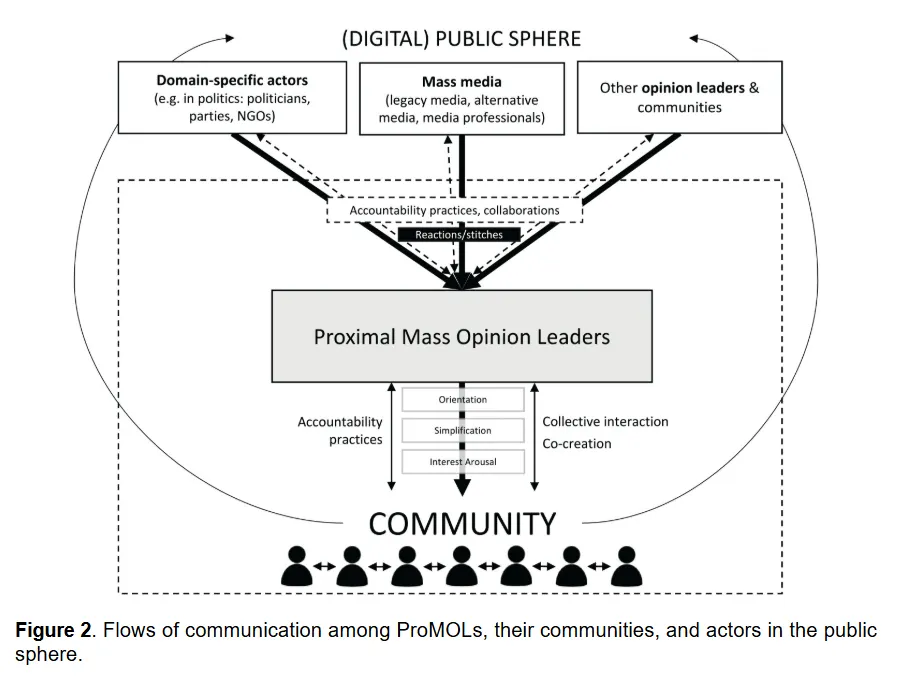
Digital Public Sphere and the gravity of mass opinion leaders from Odin Times

And so despite its expense, its troubles and its costs, I still push my work into the public commons with the hope that I’ll circle the accretion disks but can fight against falling into one forever with a steady acceleration to preserve a visible orbit.

What both Venkatesh Rao and Dan Grey posit in different ways, is that it is worth understanding where we might be cut off from reality.

Further, who knows what new kinds of horrors we will endure as we lead separate lives online without any contact with real life and real people. We crave community with those whom we can maintain consistent context and contact. That’s why I still get on the airplane, or get in the car, or hop on the bus and show up. I want us to share reality.

Categories
Aesthetics Culture

Day 1951 and Melt Downs

Meltdowns seem to be a going thing at every layer of human interaction. Something in consensus reality slips, a schism arises and then you have to hard tap at the glass to decide to see if it’s a mirror.

In preparedness communities they talk about “normalcy bias” as the preference of individuals to avoid looking at a problem straight on. Adjusting to bad news is like grief. It has some steps.

I think that it’s relatively clear to anyone watching that the world is in a particularly malleable place. Old assumptions about institutions and power are tested.

I think it’s never been easier to have your grip on reality rocked. We are all getting rocked daily by meta-narratives and players of games because the internet is a sea of competing games and stories.

Maybe that level of instability is too much to manage for any of us so we install pressure sensors and we let off steam and we carry on with whatever seems manageable. So someone has a meltdown. Seems to be going round.

Categories
Culture Internet Culture

Day 1902 and Cynical Victories for Hollow Lies

I know it’s sweet bordering on stupid to engage in good faith when it comes to politics, but maybe I’ve grown soft in my old age. I really do believe that Americans are capable of building wide coalitions in a pluralistic society.

Call me naive but most Americans, even most humans, have more to bind us together than to break as apart. We are social animals even the most introverted of us.

So I hate seeing groups who share common values fall apart over schismatic propaganda pieced together explicitly to worsen your weaknesses and widen your vulnerabilities till you are both tied to horrors you’d never have condoned.

The trouble with Utilitarians is they say up front that the ends justify the means. Thats your starting baseline. Which is at least clean. Then the Machiavellian’s say it’s alright to obfuscate. The noble lie and all. And then suddenly the enemy is inside your gates and you are being gutted.

This is roughly what is occurring between Bannon-world who hates technology so much they have accidentally teamed up with a gaggle of one world government rationalists to…use zoning rules to save the world from…industrial parks with rack servers?

I know it doesn’t sound very sinister but everyone involved is sure the anti-Christ is going to be involved. Peter Thiel is in Rome giving lectures so the buggy man has involved.

Folks must enjoy being useful idiots as it’s strange to me to think you might align with people you loathe just to fuck up the other team. The goal is flourishing for all no? You came at me and my boys for whom all I wish is flourishing.

Which is funny as I was always under the impression that end times eschatology required the Antichrist to be quite well liked. Everyone involved in this is universally despised.

I guess if you are certain that you are in danger of being stomped out by an evil, and believe any of your actions are justified by this premise, you may as well embrace all kinds of evil.

But you do have the options of not using millenarian tactics to scare the shire. Hobbits are brave or so said the neomonarchist who can’t tweet. But I won’t forget people who threw me over for propaganda they were too dim to understand or cynical enough to believe no one else would.

Categories
Internet Culture Startups

Day 1239 and @ Consensus 2024 Next Week

I’ll be in Austin Texas next week for Consensus 2024. I’ve really enjoyed my last couple of years attending. The entire crypto industry gathers for it giving it a summer camp feel. Or as Coindesk says “10 years of decentralizing the future” which undersells their role in reporting the industry.

The conference coincided with the annual Coincenter dinner which is an industry wide non profit effort to work towards policy goals for decentralized computing like Bitcoin & Ethereum and the wider cryptocurrency.

Our mission is to defend the rights of individuals to build and use free and open cryptocurrency networks: the right to write and publish code – to read and to run it. The right to assemble into peer-to-peer networks. And the right to do all this privately.

In that vein, I’ll be discussing the intersection of artificial intelligence as the #FreedomToCompute at Consensus as this is THE issue for everyone who uses compute as a tool to solve problems.

It’s an opportunity to discuss the big public goals around the future of machine money and machine intelligence.

I’d argue this includes the entire software industry and by default anyone who is reading this post. Our most important rights will be decided by how we handle policy on these issues. Math is leverage.

One of the town halls I’ll be participating in at Consensus (a format I love to dig deep into topics) is about how artificial intelligence can be a tool for our efforts to decentralize and not end up as a master of big government or big tech.

Crypto has the basic problems facing artificial intelligence. Both spaces rely on open, available and trustless compute. Both are under intense scrutiny and face significant regulatory capture risks.

It’s never been a better time to get involved in these topics. We need open protocols and interoperability standards far more than we need fretting about safetyism and hysterics about science fiction.

Doom solves no problems but software does. We need safe harbors and policy sandboxes so we can continue to nurture algorithmic innovation for us all.