Categories
Finance Preparedness

Day 1923 and Petroleum Dependency Consumer Packaged Goods Risk Dashboard

A chunk of preppers and preparedness enthusiasts are just shopaholics. Shopping is common response to anxiety and depression. Doing something that you can control in a world you can’t control has logic to it.

Now experts in disaster response will tell you that preparedness is as much about skills and community as it is about “stuff” but it’s a lot harder to learn a new skill and nurture community than it is to buy something.

So if you aren’t up for getting first responder certified or spending time in your local library I’ve got just the thing to sooth your anxieties about the current situation in the straight of Hormuz.

I vibe coded a dashboard of common household items with petroleum byproducts in them. It analyzes ingredients and wholesale pricing and assigns risk scores so you can make a shopping list of items most impacted by the ongoing supply chain crisis.
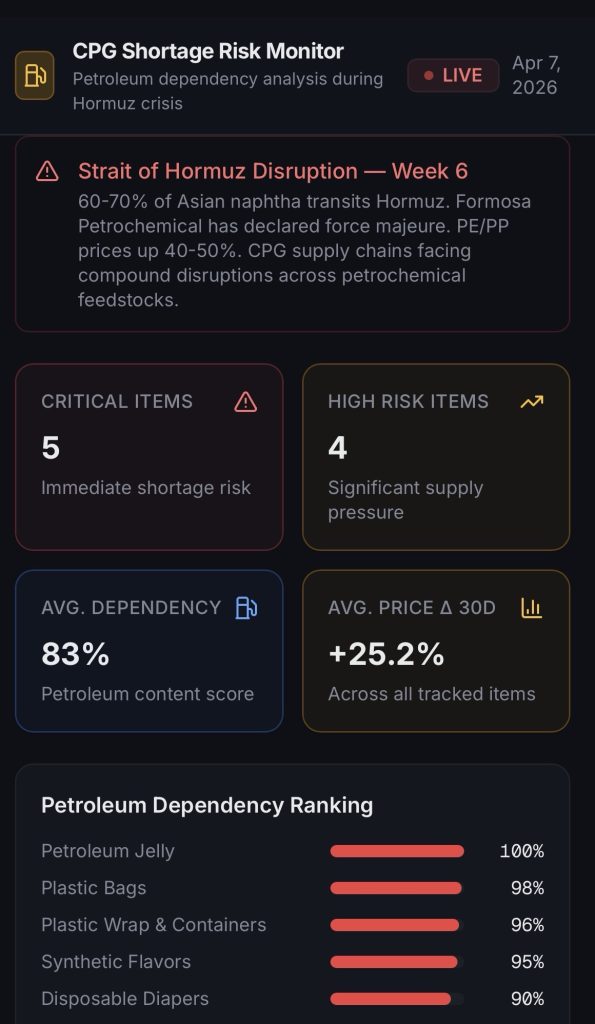
A screenshot of the dashboard I vibe coded today to soothe my anxiety about supply chain disruptions and get ahead of pricing hikes and potential shortages

From diapers to sunscreen, you’d be shocked at just how much our basic needs are downstream of petroleum byproducts. Now it’s just a silly little thing I used AI to put together, but petroleum dependency in consumer packaged is high.

From food products and personal care to drugs, you will find we that we rely on petrochemical feedstocks everywhere.
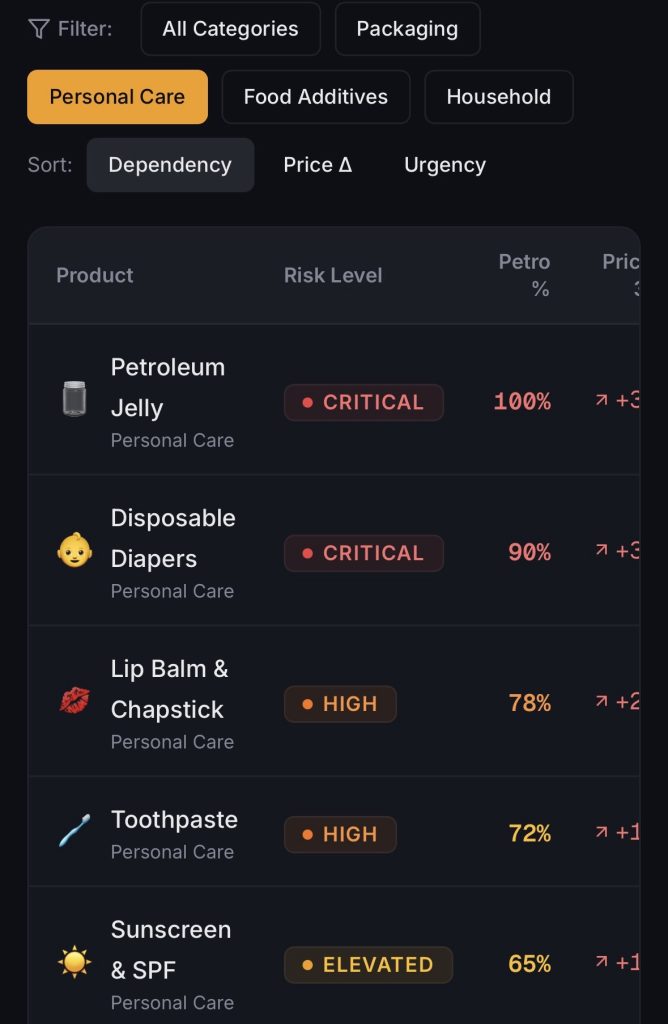
I’ll mess with it as I add in new data sources and get suggestions for categories I’ve missed. But I’d love for you to check it out even if I am not quite done improving upon the basic idea. You might learn something.

For instance, I didn’t know Kroger’s had a public pricing API till today so you live, you learn and then if you have a kid it’s time to buy Luvs. No really diapers are one of the most at risk products for shortages as the impacts of the war ripple out.

Even if the fighting ends today (as I write this a temporary two week cease fire has been agreed to), the damage to processing, production and manufacturing is already enormous.

Say you aren’t worried about price hikes but you are concerned with the environmental impact of your purchasing habits. I included alternatives in the dashboard if you’d like to make a switch.
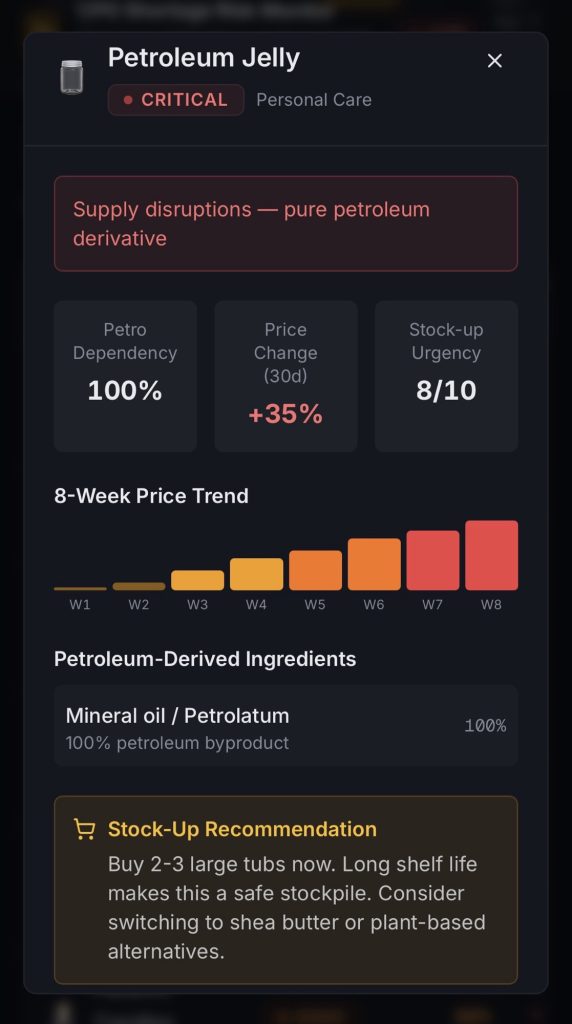
Time to buy Aquaphor and Vaseline

The data is compiled from DOE, S&P Global, Investing.com, Packaging Insights, VCCI trade reports. A petroleum dependency score is assigned based on estimates of ingredient analysis.

The prices reflect wholesale market trends so you can be prepared to get ahead before retail prices go up. I’ve even included a bit of context on what aspects of the product are petroleum derived ingredients just for fun.

Below is a screenshot for food preservatives. A type of dependency many of us would like less of in our consumption. Maybe the dashboard helps you improve your diet with a little knowledge. Who knows! Isn’t vibe coding fun?
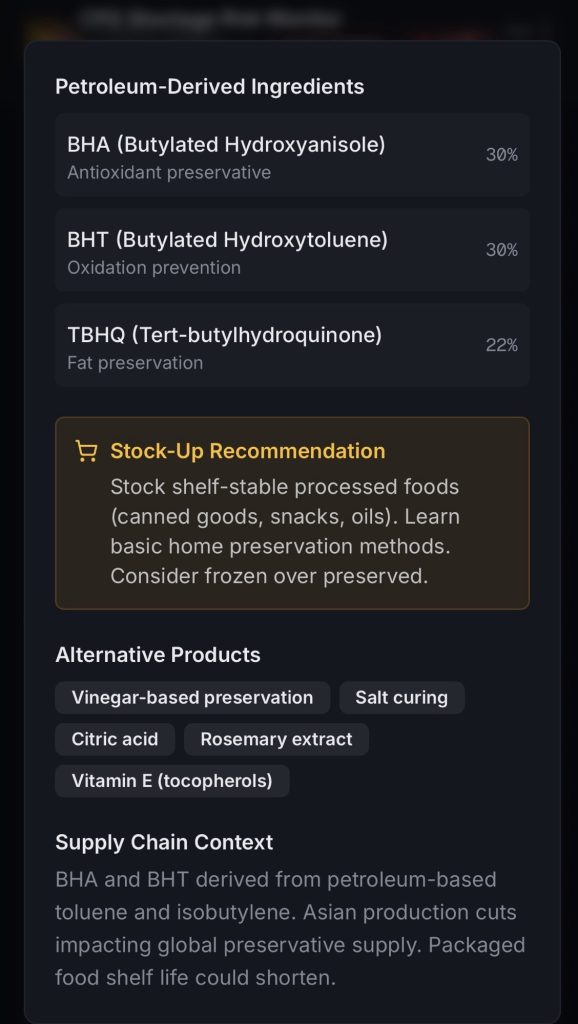
On another note, I remain amazed at what we can do with artificial intelligence and natural language input. This took me very little time thanks to Claude Code, Perplexity Pro and Cloudflare. If you haven’t explored the wide world of vibe coding now is definitely the time.
Categories
Biohacking Medical Startups

Day 1753 and Vibe Coding for Your Skin Health

Many moons ago, when I was first attempting to get a diagnosis for why I was always in pain and exhausted, I got a battery of allergy tests. I did the “gold standard of allergy testing” called patch testing which is a form of pin prick testing designed to pick up responses that may be delayed.

It was an awful experience. I barely made it through the 5 day trial between the 100 allergen pin pricks and final measurements.

I remember begging the doctor for a way to measure early. I asked if I could take some Benadryl to take the edge off. Alas the only way it would be accurate and covered by my insurance is if I gutted it out.

You are not allowed to shower, sweat, be exposed to UV rays (no going outside) or take immune suppressants that might subdue your body’s response.

I was struggling to breathe, my entire body itched and ached, and I had a migraine so bad I couldn’t see for the stars & dizziness. It’s possible I wasn’t stable enough to have adequately consented to the test but I did get my final results.

Out of 100 common allergens tested it was confirmed I was extremely allergic to 10 of them with another moderate sensitivity set of twenty or so that I should merely try to avoid as opposed to my firm “no go” list.

The dermatologist gave me a sheet with 75 different chemical names and formats that I might encounter in the wild from these core allergens:

Budesonide
Ammonium Persulfate
Benzisothiazolinone
Limonene
Oleamidopropyl Dimethylamine
Formaldehyde
Lauryl Glucoside
Methylisothiazolinone
Propolis
Thimerosal

I instructed to search ingredient lists for these names any time I purchased a household product, personal care item, cosmetic or other item which might include these ingredients which ranged from nail care to vaccines.

It was honestly quite overwhelming. And some of the above ingredients are in basically everything. I dare you to avoid Limonene for a month.

So my husband and one of our best friends did what any practical minded engineer would do and they made me simple Google sheet where all 75 varietals could be checked if I plugged in the ingredients from any item.

I used it for years. I’d plug in the INCI from every brand I encountered into the sheet no matter what. I gave away a lot of products to friends.

Today it occurred to Alex that we should probably vibe code the thing into a proper web application using Replit so other people could check ingredient lists for their own allergies.

Within two hours, most of which was waiting on the kindly AIs to do their thing, we had a fully functional web application.

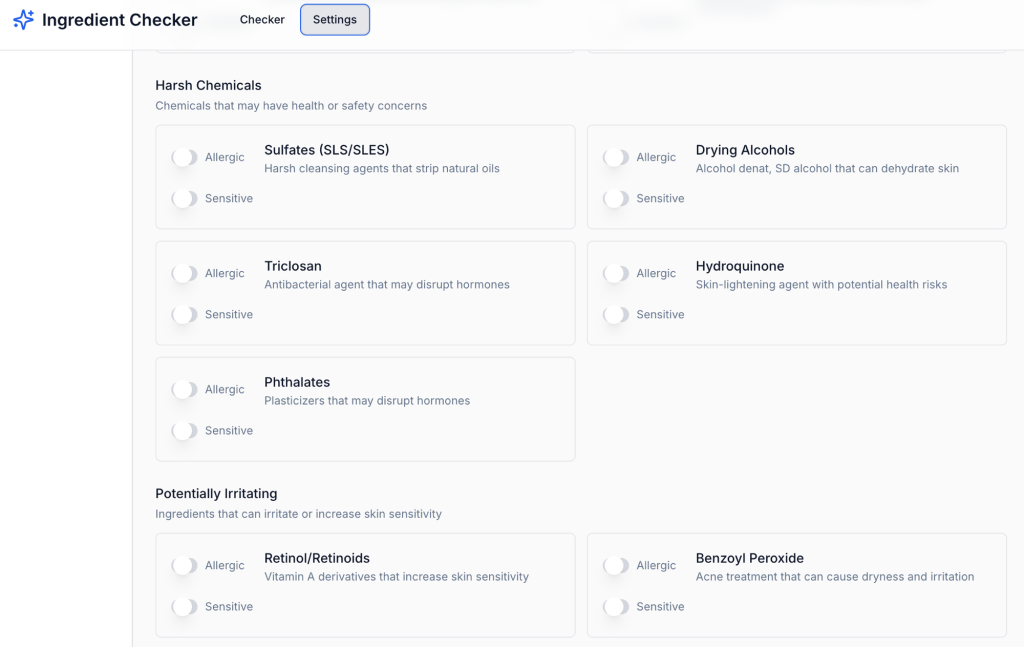
You can set your own allergens or click a few buttons for common allergens and “clean ingredient standards” and run a check for an all clear.

It isn’t super fancy but it doesn’t need to be. It just needed to keep your data safe, be easy to log into so you can securely check and access your personal list and generally functional enough to change and set allergens. We’ve put it on our own little domain just to see how much this will cost to run (and we’ve set up alerts so it doesn’t go bonkers) but we figured this should be accessible and simple.

And while there are other options on the market, most are bloated, overly paranoid and designed for scaring California moms rather than quickly helping people with clear preferences for avoidance and actual tested allergies. So hopefully our pain can help you breathe easier.

Some options for chemicals and irritants you can select on our app.
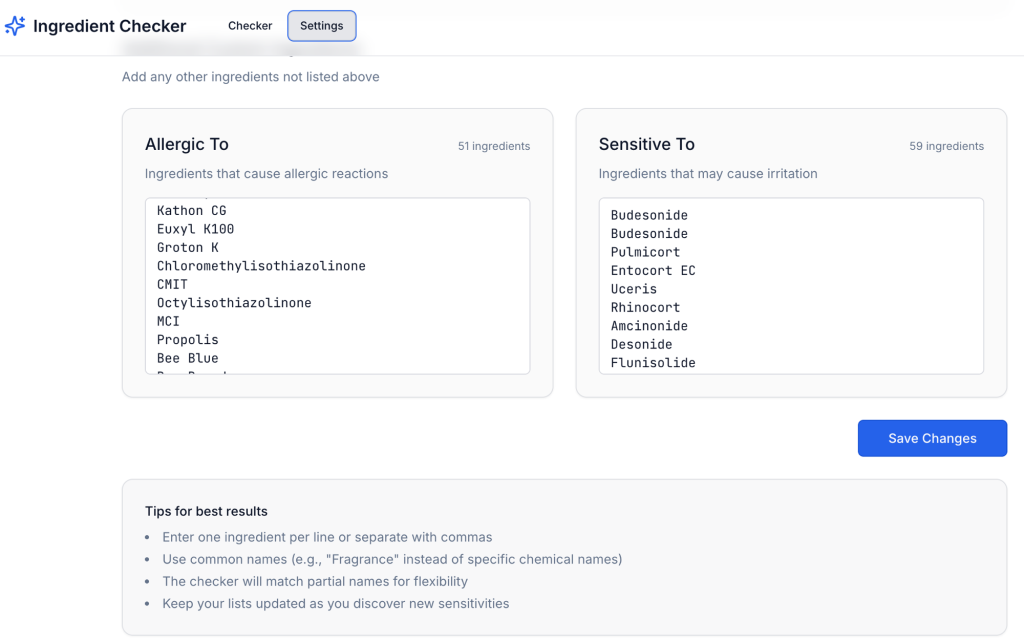
My own settings of allergies and sensitivities