I’ve got some travel coming up that I’m excited about. I’ll be headed to Europe and more specifically the Baltics. I’ve got plans for both Tallinn and Helsinki. If you are based there and want to hang out drop me a line and let’s get together.
It’s funny how longer trips act as a focus on what’s really crucial to get done. The care that goes into making sure your life (and the items in it) functional is constant.
I often put off errands and services with a “maybe next week” mentality. One week becomes one month and then suddenly I haven’t had my haircut since May and it’s October. So I’m packing a bunch of “to do” appointments to make care the care and maintenance of myself, my body and my belongings.
Even as I place orders for vitamins and find myself reorganizing the toiletries cabinet, I am reminded that the list of care and maintenance never gets any shorter.
There is always a dentist appointment or a salon visit. I’ve got a pile of clothes that need mending and tailoring that hasn’t been addressed since before the pandemic. Yes, I’m one of those types that thinks a tailor and a cobbler are crucial services for civilized living. I like to take care of what I own. That includes everything from my body to my boots.
In one of my group chats, I hang out with a bunch of rationalist machine learning engineers who are happily climbing the rungs of accelerating life.
I really love the energy of the community as it’s centered tangibly around making things. It’s a little less talk and a lot more action. It’s got a bit of a feeling of Stack Overflow’s early helpfulness but without the Hacker News nerd sniping culture. It’s like the best of a small Reddit thread but for dudes who want to make shit with artificial intelligence.
Now, of course, every community finds itself with disruptive members and turf fights over social mores. Virtual spaces are notorious for clout chasing and personal dramas. Veterans of green text wars are familiar with Geeks, Mops and Sociopaths in Subculture Evolution.
I spent an hour watching it play out last night and then went back to reading before bedtime. I’ve got some personal investment in the space and it’s people, so of course that’s what I’m doing on a Friday Night.
But as I got up the next day and saw everyone going back to work, a insightful lowbie named bmorphism (slang for smaller anon accounts on Twitter within subcultures) introduced me to a term I’d never heard before. Autopoietic Ergodicity. Or how do multi-actor dynamic systems self regulate?
He introduced me Autopoietic Ergodicity via a link on PerplexityAI which seemed appropriate. And it got me thinking about how we as individuals interact on a much wider system and how it interacts with us.
The term combines two ideas by positing that complex adaptive systems (like living organisms or ecosystems) exhibit self-regulating behavior that enables them to maintain persistent patterns while also experiencing change from external influences. These systems are capable of minimizing changes caused by random factors, ensuring their essential dynamics remain stable without needing to undergo a complete reset or cycle back to the initial state. It’s like having a dampening mechanism that continually adjusts for fluctuations, allowing system resilience and long-term persistence in an ever-changing environment.
It’s my suspicion that something special is happening across portions of the fracturing social web as most of our platforms go back under more centralized control. The system is fighting back.
A meme using a Dune visual that originally has the elder Etreides saying to Paul “we need to cultivate desert power” with a substitution “autist power”
The grey tribes that have populated Silicon Valley have an opinion about the future. And it’s a positive one. We’ve got to find ways to be resilient in the face of memetic interference on our systems. There will be high energy distractions. We’ve got to be reminded that it’s a competition for efficient use of energy and we shouldn’t let it be drained. We’ve got to focus on making things that speak for themselves.
Originally published in 1934 and out of print for decades, this book by the Nobel Prize-winning Icelandic author is a huge, skaldic treat filled with satire, humor, pathos, cold weather and sheep. Gudbjartur Jonsson becomes Bjartur of Summerhouses when, after 18 years of service to the Bailiff of Myri, he is able to buy his own croft.
It was described to me as social realism as it follows the harsh reality agrarian Iceland, debt bondage, and the things that are lost in the quest to be free of obligation to anyone. Set across multiple vignettes of Iceland’s history it trace’s the family’s arc from servitude to owners of a sheep farm during World War 1.
It’s a sad story. The protagonist experiences loss after loss in pursuit of his independence. The dream of being indebted to no man comes up against the hypocritical fantasies of the upper classes and their own views of what constitutes a free life.
I am by no means living the kind of homesteading life of the rural agrarian Icelandic people. But the tragic losses that come as part of seeking to be less reliant on systems that enrich others (the church and local landed gentry feature) resonates. It is not easy to be independent people.
I’ve been giving a lot of thought to how we see risk the past few years. What is an acceptable risk? What are the boundaries of risk perception and how much variability is there between two people? How much of those tolerances are innate versus cultural? Can you consent to risks you don’t understand?
We have little coordination of acceptable risks at the individual, local, national, planetary and species level, just as we most need to understand if we can all collectively tolerate significant social, economic and political risks associated with new technologies.
We just don’t seem to have consensus on risk much beyond “don’t get someone killed.” Yelling “slow down” barely works with toddlers, so I don’t see how anyone considers it a viable tactic for coping with, let’s just say, artificial intelligence.
I don’t consider myself to be someone who takes a lot of unnecessary risks. I like to do my homework. While I was never a Boy Scout, I do subscribe to their motto. “Be Prepared!” But if you asked my friends and family they’d probably say I am a risk taker. Who is right? It’s clear that preparation and planning mitigate known risks. Beyond that it’s not up to me. It’s probably not up to you either.
I had a bad migraine over the weekend that simply took up all the space in my mind and body. I woke up with a break in the pain and a deep urge to throw myself into something that felt like momentum.
I found myself awash in sadness. I couldn’t stop myself from crying. It was as if my entire body felt despair. I’ve come to accept the value in embracing emotions as they come. “The only way out is through.”
I trust that my nervous system knows as much as my cognitive mind. I go so far as to say it knows more but that sounds a little woo to folks. And so I listened to my sadness. I cried. I rambled at the many problems large and small facing my corner of the universe.
It’s hard to understand how we came to this point across a generation. But easy to see why millennials are unsure if any of our institutions can be trusted. And I wonder what it’s like to have no memory of a time before 9/11.
I’ve been working on getting a deeper understanding of my hormone profile and where I can better support my cycle.
I’ve been surprised by just how little we seem to know about women’s health and the baselines that are considered ideal. Between the battles over health education in school (abstinence only) and the eagerness with which we put my millennial generation on birth control as teenagers, we’ve got both an under-informed and potentially over medicated population. Which wasn’t the case for our mother’s generation who went on birth control much later in life if at all.
I generally feel most energetic, pain free, and happy during my follicular phase. Despite knowing this I couldn’t tell you what an ideal FSH hormone level would be. I don’t know what balance of estrogen I should have at any given phase. I have no clue what my LH should be during my luteal stage either.
It strikes me that these levels should be taught along with implications for what it means and how to work with them just as we know our ideal blood pressure rage and resting heart rates. It’s some of the most crucial and basic self knowledge about our bodies.
When I think of how many other crucial biometrics I’ve got memorized (I track my SED rate and CRP quarterly for inflammation) it seems odd that something so crucial as one’s hormones wouldn’t be known, tracked and improved. I watch my heart rate variability like my recovery depends on it because it does. So do most serious biohackers.
Knowing more about own health is part of being a responsible adult. And I’m sad that we do so little to educate women on basic rhythms. I can’t tell if it’s a lack of interest from women or a dismissal from the medical profession. Women aren’t just small men.
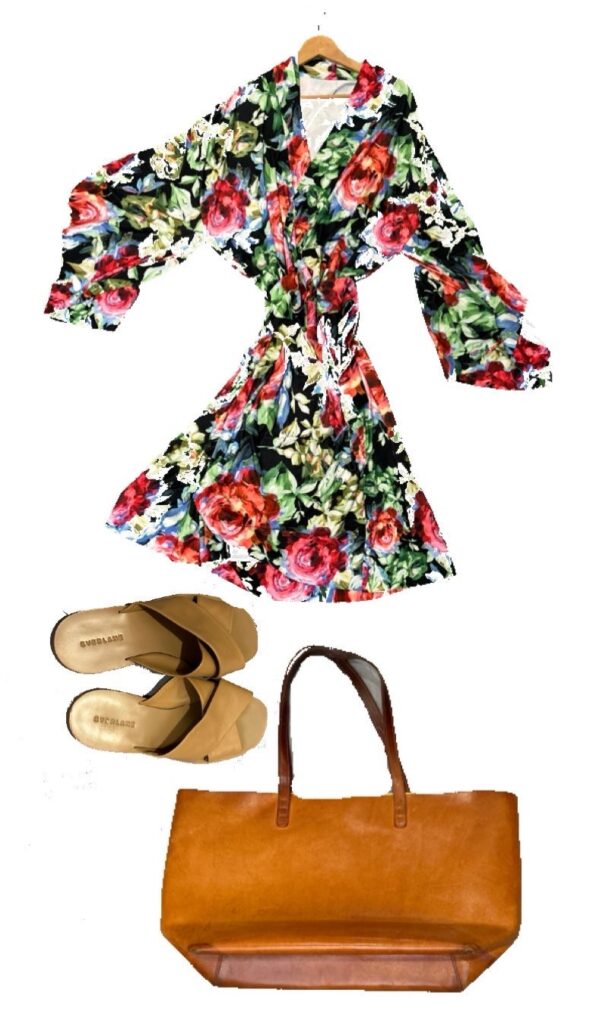
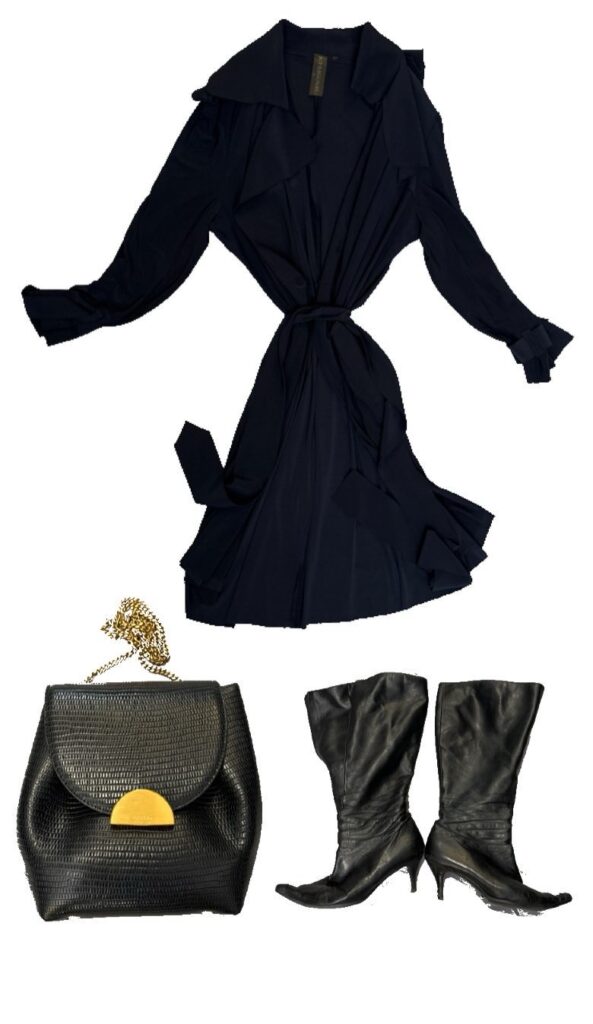
I was doing some fall shopping today. I’ve got upcoming trips for work in the next two months for which I am excited to dress.
In my past life I worked in fashion. While I mostly worked with luxury brands, I did a stint in-house at one of the heritage American sportswear brands Ann Taylor.
American Sportswear or the American Look doesn’t refer to athletic or athleisure wear. Rather it’s specific historical movement in which American fashion designers freed themselves from British and Parisian norms of Saville Row custom suiting and haute couture
Sportswear is an American fashion term originally used to describe separates, but which since the 1930s demonstrates a specific relaxed approach to design, while remaining appropriate for a wide range of social occasions. The American Look included garments whose modesty, comparative simplicity, and wearability treated fashion as a “pragmatic art” which was lived in.
Sportswear was designed to be easy to look after and an expression of various aspects of American culture, including health ideals, democracy, comfort and function, and innovative design.
You probably think isn’t this just how clothing is made? Not until the Americans democratized fashion. Easy to wear and simple to look after separates (as opposed to matched suits & evening gowns) which could be mixed and matched into many outfits was it’s hallmark. It includes items like dresses designed to be easy to put on and wear in many social situations
American Sportswear was a unique style born out of burgeoning middle class wealth and a desire for more active independent lifestyles that included leisure time, a concept previously reserved for the upper classes. No ladies maids or butlers are required for a Claire McCardell popover dress.
Ann Taylor become a dominant best selling brand in the American Sportswear style beginning in 1954 and rose to prominence in the 70s and 80s. Unlike other designer who went for a slightly pricier market like Donna Karen, Calvin Klein, or Ralph Lauren, Ann Taylor stayed true to the history of The American look by serving the aspiring middle class throughout.
It began by offering tailored dresses in its first store in New Haven. It’s name comes from the Ann dress which was its best seller. It eventually grew to become the choice for women balancing office jobs and home life.
When I worked there in house, Ann prided itself on quality fabrics in quality cuts. You could get fully lined wool suit jackets and silk blouses for under $250. A leather kitten heel could be had for $150. Those prices now recall fast fashion brands likes Zara and certainly wouldn’t involve cashmere or Italian leather.
But the great bifurcation of American classes had already begun. In 2010 when I was there a dwindling vestige of working girls and upward mobility demanded versatile clothing that still put quality fabric, pattern work, and cuts at the forefront.
There was demand for looking professional and not simply just being “trendy” as there were still professional women & financially secure housewives looking for polish over flash and seasonal novelty. Instagram was only just stirring and yes I was the one who put the brand on Facebook, Instagram and blogs.
I left for greener pastures. The pioneering brand president dedicated to revitalizing the brand was fired . Eventually Ann Taylor was bought by a private equity firm which just a few years later went bankrupt. The middle market of middle class women was dwindling. And hollowing out the margins for PE didn’t help much.
Now if you are looking for clothing in that price point of $150-$350 you will struggle. A suit jacket from other middle market brands like Theory now $850 for something with poor fit and no lining. You can pull off something that looks like a suit jacket from a fast fashion retailer but if you want natural fabrics like cotton, silk or cashmere the chances are good you have to trade up into the luxury market.
Fashion has bifurcated in the social media fast fashion age. And what constitutes a luxury brand isn’t particularly luxurious in its fabrics or patterns. Just it’s price points. You can go cheap or you can go for pricey but the struggle to find something that is actually a decent garment meant to last has become much worse.
I’d tell you where I did my shopping but I’m afraid the brand might not be long for this world just like Ann Taylor. It’s eponymous designer is in her seventies. And she prefers a technical fabric to a natural fabric so has been able to maintains her price points. If you DM in private I’ll tell you. If I needed a decent suit jacket I don’t think I could find one at a middle class price point anymore. The bifurcation is here with us to stay.
Humans are horny for hierarchy. We are eager to give our power away as a species. Please will someone else just be responsible for making our decisions for us? Can someone point me to the person in charge? “Take me to your leader!”
If someone seems smarter, richer, more capable, more aggressive, heck even if they have better taste than us, they become an instant candidate for us delegating our authority over to them. My most popular blog post ever was about dickriding. Yes it was about Elon Musk’s fans.
I’ll be the first to say that people who court you to gain power should be viewed as suspect. But someone who has power is not themselves always suspect by default. I know it’s a fine distinction. But people fall into positions of authority simply by going out and being competent. Competence is a fast route to power.
Sure being competent has a lot of downsides. Suddenly you’ve got power you maybe didn’t want. We have an incentive shunt power off to someone else as it generally sucks to be in charge. It’s energetically expensive to be responsible. Just ask one of your friends with a toddler.
Sometimes we have to wield power because it’s our job to take care of our corner of the universe. Again ask someone with a toddler. We are in charge of sustaining some portion of the grand experiment called life. Even if it’s just our own families. Even if it’s just yourself.
So why am I titling this post “I am Beff Jezos?” Right now online there is a movement gaining recognition for encouraging people to have agency and build for the future. It’s a movement that wants you to own your own power. And to help others get more power of their own.
One of the anonymous posters associated with it calls himself Based Beff Jezos as a play on Jeff Bezos the founder of Amazon and the meme “based” as in Lil B’s “based means being yourself.” It’s a silly joke.
It’s principles are simple. The future will arrive and we should build like it’s coming. Slowing things down, or even worse, going backwards, is not a solution to our problems. We can only go forward. If you’d prefer a driving metaphor, we should accelerate into the curve. Slowing down just spins out the car. Civilization is the car.
So what, you want to just uplift humanity, build AI and populate the universe with the maximum diversity and quantity of life?
The movement is more of a meme space than anything else. It is decentralized. I’ve not met anyone that runs it though I’ve spoken to many vocal supporters. And I’ve chatted with folks that are at the nexus of of its online presence. Everyone is positive and friendly. Most of them are anonymous. I’m not even of sure if some of the accounts are singular or plural. Which is pretty cool. It doesn’t have a president or a CEO or even a founder who owns anything with any amount of authority. It could be one dude or multiple dudes gender non specific.
It’s just a bunch of people who make stuff. It’s popular amongst engineers but it’s an ethos that to anyone who can make something. Even this blog post counts. I am e/acc as much as anyone.
Naturally if no one is in charge it’s a bit threatening. If there is no hierarchy how do we control it? If no one is in charge then what will we do if someone under their banner does something bad?
Such is the beauty of an idea. A meme can’t really be owned. A decentralized group of goofballs on the internet can’t really be snuffed out for bad think. Maybe a few nodes go down. They literally cannot kill all of us.
I Am Spartacus
The messages does seem to be resonating. I know being hopeful has improved my mood. A decent number of people who make shit want the future to come a little faster. They want more people with more ownership of the building process.
More complexity and more abundance is appealing even if it seems impossible to achieve. Don’t worry, just build for your corner of the world. Put power and responsibility in as many hands as possible. We can build it together.
You too can have a toddler and own the joy of being responsible for your corner of the universe. It’s dangerous for sure. Folks will tell you for your own good you need to have a hierarchy and someone responsible for the power.
But guess what? It can be you. And sure heads will get bonked. Crying will ensue. Remember I said ask someone with a toddler? What if you are the competent and in charge parent? Shit right?
We’ve got to go forward. I am Beff Jezos. You too are Beff Jezos. And they can’t stop us all from arriving at the future. Go ahead and accelerate into the curve.
I’m enjoying watching the fall social season kick into high gear. It’s much more enjoyable to take some many events remotely as so much signaling is done in real time. Between actual live feeds and television coverage and social media feeds you can take a lot in without exhausting yourself.
Burning Man and the U.S Open are the end of summer staples in Yuppieland though very different types of yuppies. And both events are showing us a lot about the current moment.
I’m sure Burners would insist that the experience is about the in person but so many social media influencers burn for content that you’ve got more visibility on the aesthetics and the vibes than ever before.
Tennis is more about strictly about the sport than Burning Man is about the art. But you learn as much from player style, who is sitting where, and what is being covered in the media. The stories behind the event are as important as the event. An outfit can dominate headlines for years becoming iconic.
And then of course we have New York fashion week. It’s an event that used to dominate my life. There was a time before social media at the tents. Women’s Wear Daily claims I’m the first person to have live-blogged a show. I’m skeptical it’s true but I do have the receipts. I snuck in with a photographer and made a whole business of making fashion shows a live social media spectacle before some of these influencers were out of Gap Kids.
So naturally as I age and race to exit my thirties into middle age I’m thrilled I don’t need to be at the shows to know what’s happening in fashion. We may no longer pour of Style.com shots the next day but we’ve got an infinite complex that has emerged to show you every kind of style that’s been imagined.
I’m grateful I didn’t need to go to any of these events. I keep my one on one time for founders and my investors. If I had the spare energy for any of these events I’d probably prefer to use it on one one time with folks. In the past I’d be missing out on all of it. Now there is no fear of missing out. Only deciding what signals you want to separate from the noise.
I spent serval hours today manually combing through everyone I followed on Twitter. I was following over 10,000 accounts. As I do not use the algorithm view “For You” tab, my feed was getting a bit out of hand. I knew something had to be done.
As Elonbucks (monetization for account with over one million impressions a month) have rolled out, it’s become harder to make sense of anyone’s feed. All the incentives for status and wit have been distorted by rage clicks and engagement bait. Everyone is competing to game the algorithm for maximum reach now.
I have fought the algorithms. I prefer to browse in chronological order. But as I follow all kinds of accounts the sheer volume was too much.
I don’t follow only people I like. I wouldn’t call it “hate following” but I keep an eye on unsavory types. When you combine the engagement bait with the exodus of professional and media accounts, you get a timeline that is tilted to scheming and grifting.
The confluence of factors means anything timely like breaking news is impossible to find. My capacity to extract sense or narrative from the platform has degraded to the point where I’m at the mercy of discourse.
So I started to unfollow. I began the day a hundred or so accounts over 10K. At the end? I got it down to 5,600 or so.
I followed a few simple heuristics. If I didn’t recognize your name and you didn’t follow me back it was an automatic unfollow. If I did recognize your name but I couldn’t remember the last time you interacted with me I also unfollowed.
The only exceptions to that were if you were a journalist I followed for news or a venture fund or LP I follow for work. I don’t expect random journalists who don’t know me or funds outside of my space to chat with me.
At first, my unfollows were a lot of anonymous and avatar accounts. I am active in TPOT and degen crypto which both have a culture of anonymity, so some of the accounts enjoyable.
But as I went further, I found a veritable deluge of NFT accounts I regretted following. 2021 Julie was far too forgiving of NFT content for 2023 Julie’s tastes.
A screen shot of me working my way through unfollowing a bunch of NFT Twitter accounts.
Because Twitter shows you who you followed chronologically, it was a bit like an archeological dig of my last decade on Twitter. I could see when I moved to Colorado. I could see when I was in Lower Manhattan. I unfollowed road condition, weather and emergency service accounts I did not need. Ditto local politicians.
I easily could see when I’m moved to Montana with a huge swathe of local news, local service, and local businesses all lined up chronologically to show we’d arrived in Gallatin County outside of Bozeman. I kept most of those except the local socialist club.
My local Montana layer from 2022. I kept them
As I dug, I found myself with plenty of people to unfollow. A shockingly large number of women had simply left the platform.
At first I thought they had just unfollowed me for being annoying (and I’m sure many did) but I kept encountering profiles that had tweets deleted and notes saying they were abandoned. Some were men, but it was dramatically more common with women and queer accounts.
I also noticed as I got to around the 2016 layers that my gender balance went from being 80% men to 20% women to being 50/50 as we traveled to the “Before Times” prior to the Great Weirding.
There was clearly a time on Twitter before Trump and the Resistance and the Pandemic had made the platform worthy of the nickname This Hellsite.
Andthat time had a lot more women on the website.There were marketing and PR chicks, Girlbosses, and mommy bloggers. All gone. That made me sad.
The most enjoyable part was seeing pleasant memories like when everyone was absolutely all in on Ted Lasso.
I followed the entire cast of Ted Lasso on Twitter in 2020
I also found evidence of many weird interests and hobbies. Like the time I got obsessed with algae. I didn’t figure I needed to keep a bunch of trade accounts and niche biology journals in my follow list.
It was also fun to see when I first followed my husband. I recalled it as his account was surrounded by a bunch of fitness influencers. It’s a long story involving Airbnb, a power lifting friend in from out of town and rent arbitrage
I also noticed that many of the venture capitalists I’d followed early in my career who I never imagined following were in fact all now following me. It was clear that over a decade I have gone from upstart founder to respectable (ish) member of the startup ecosystem. People I once viewed as aspirational were now people who treated me as a peer.
I’ve got no idea if this massive unfollowing will help my Twitter feed but I hope it will. And if I unfollowed you it was probably an accident. I was rapid fire unfollowing and scrolling and I had to go back to refollow folks when Twitter would get out of sync. But I’m sure I missed a lot. So please don’t hesitate to remind me to follow you back if I made a mistake.