One consequence of consistent writing is having a large number of data points on my past predictions. I can go back and see how often I am right.
There is predictive value in back testing is clear. And in five years of writing I have lots of opportunities to apply my current dilemmas and compare them to what I’ve seen. If you’ve not heard of back testing here is a little summary from my Claude query.
Backtesting is a form of retrodiction—a special case of cross-validation applied to past time periods, used across finance, meteorology (where it’s called “hindcasting”), and other modeling domains.
In investment contexts, the underlying logic is that if a strategy performed poorly historically, it’s unlikely to perform well going forward, and vice versa.
The year 2026 has gone pretty well for me. I’ve made some good calls even as other situations globally look very chaotic. I feel like I’ve largely published my predictions and taken my shots and this is working out for me. The more I can look back on where I’ve been the better I get at acting on my calls.
I do continue to wonder how much anyone is paying attention to anything even as a huge amount of attention is being paid to manifestations that are only being seen as secondary or tertiary effects of bigger geopolitical and monetary events.
I don’t know if going into the future this corpus of guessing and noting and committing to thinking on the issues of the day will matter. Or might make life worse. But tomorrow on day 2027 maybe I’ll learn something new and put it into action and continue turning myself with the tides.
There’s a new genre of moralist who likes to shake their finger at you if they believe you’ve used artificial intelligence in the making or editing of your written product.
I find this particularly amusing because I was raised in a hippie family with all kinds of esoteric ideas on the importance of reading and being read to as a child, as well as the dangers of too much screen time.
I believe it served me well and panic essays in the Atlantic notwithstanding, my family was always a member of the reading class. They weren’t fancy but they loved books. We went to the library. My father always brought home a “dad book” after a business trip that he’d give me. Probably why I love science fiction so much as Michael Crichton was his favorite
My mother was more of a theorist and she didn’t hesitate to introduce theory into practice as I got older. Marshall McLuhan and Neil Postman were the stuff of dinner table conversation, although usually in reference to why I could not watch Star Trek later that evening. Sometimes she’d give in.
So when I say that I come by my need to write honestly, it’s because many of the startup families who believed both in the liberatory potential of computers and leans heavily on the “computer as a bicycle metaphor” in that computers are tools extending our capacity just as bikes extend the human range. Now here is a surprise for you I also using a dictation application right now. Oh no what purity test have I failed? None as far as I am concerned.
I rarely dictate because, generally speaking, this is a diary, which is, of course, the original form factor of blogging from the early days of chronological feeds and personal websites. It’s my space and I only cheat myself if I don’t use it to benefit my own understanding of my thinking.
What point would there be in mere dictation? That is for notes. Writing is one of the better methods through which you learn to analyze a subject. Others exist, but this can be done alone. Committing a thought to a public forum under one’s own name, even in a private blog, shows you taking accountability for thinking and learning.
I write a blog because I want to get my thinking on a subject down on paper. Maybe from there I either wish convince somebody else that I am right or find somebody else who share my interest on a particular topic. I do this for myself and also so others can know what I am about. Together we may learn something just as in the past peers exchanged letters. Or in my era, emails and message board responses
Back then, you might share particular esoterica or hobbies with others who might not have the same interest as you did because you lived in a small town or in a relatively remote area where nobody else had the passion that you did. For instance, say, libertarian space mining or Warhammer.
I know it’s funny that now I mostly talk about compute policy and nuclear energy along with musings on aesthetics, semiotics, geopolitical chatter and whatever the styles sections are up to when I remain such a nerd. But that’s why the internet is a human space in the first place.
So go ahead and see what parts of this look AI generated if you care. I used Wispr Flow. I have no idea how orality has made its way into my literacy. But by putting it out into the world, it becomes part of my written tradition, and maybe that’s useful someday.
I’ve got to remember to keep tissues in my purse. I’m prone to crying when I’m proud. I am a crier by nature and the experience of pride and awe is becoming distressingly common. Woe is me right?
My very early bet on Valar Atomics (I wrote about it on Day 1145 but met Isaiah closer to day 900 early 2023) is paying off years, if not decades, ahead of my expectations. Never did I expect arguably the hardest operational bet in my portfolio to be such a fast breakaway hit. And I owe it to an executive order from Donald Trump and the efforts of patriotic Americans committed to regulatory reform. Which is crazy.
As it turns out, if the government gets out of the way of talented people, nay, if it demands that our state institutions help them, the impossible becomes possible in shockingly short order. The reports of America’s death are greatly exaggerated.
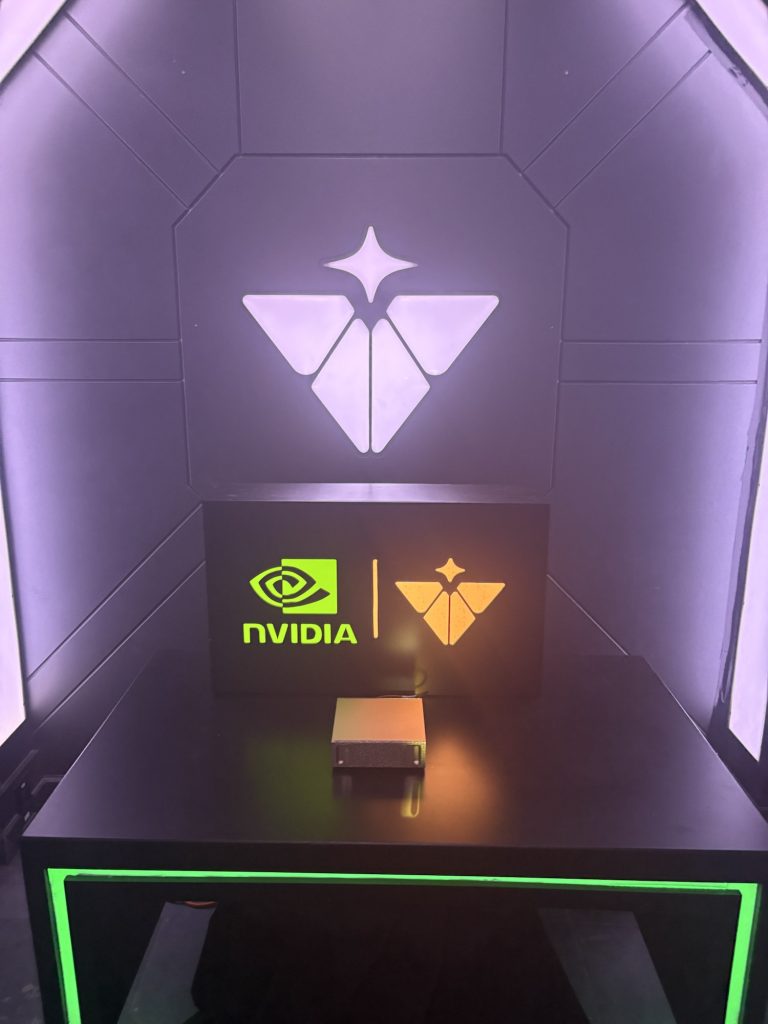
Today in front of a crowd of hundreds of current and potential investors, employees, Orangeville community members, government officials & scientists and most importantly our family members, we watched a reactor (that might not even exist without my first check), power an Nvidea Blackwell chip.
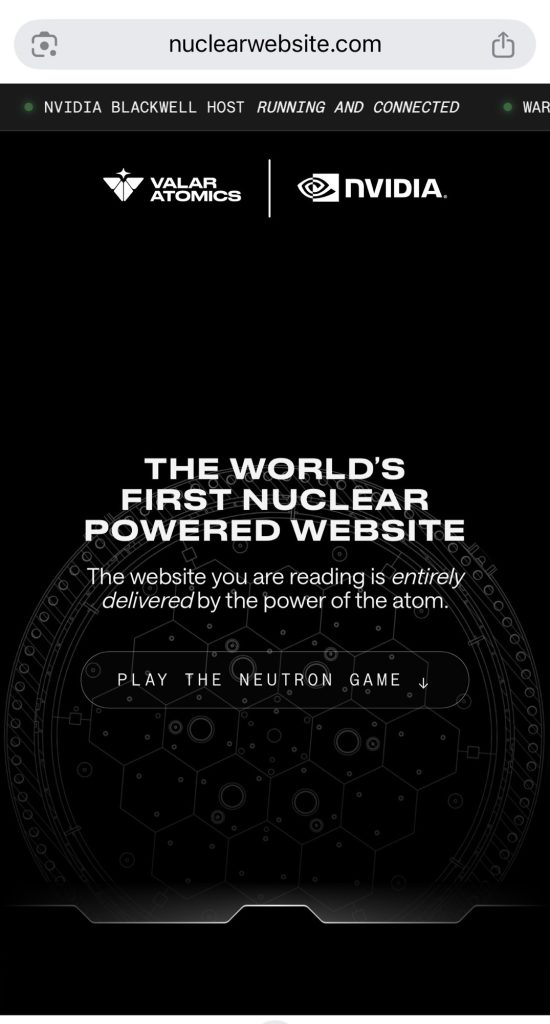
In a demonstration rivaling the greats (Ballmer, Jobs) Isaiah brought up NuclearWebsite.com and asked the audience to load it with him.
“Oh no it’s not loading?!!?” What’s happening? Do we have any electricity on site? Quick someone run the GPUs to the nearest electricity! Go go we can’t disappointment all these people!
And then the Blackwell is rushed into the Ward250 reactor. In real time the chip is run to the control room, gets hooked up and boom the website loads.
The first entirely privately funded nuclear startup was critical, stable, producing electricity and powering state of the art silicon.
We actually did it. The mad lads and ladies of Valar Atomics swept ahead of the competition in a frenzied year of progress (Day 1510) from seed round and Ward Zero to producing electricity to power GPUs.
After a twenty four hour travel marathon to get from the Ionian in the Mediterranean to the southern Utah desert, being back at the Valar Atomics reactor facility for a demonstration of this magnitude felt surreal.
Just a few weeks ago (Day 1969) the reactor was days away from being shielded and then fueled. We’d driven down to see her before she was wrapped up in shielding.
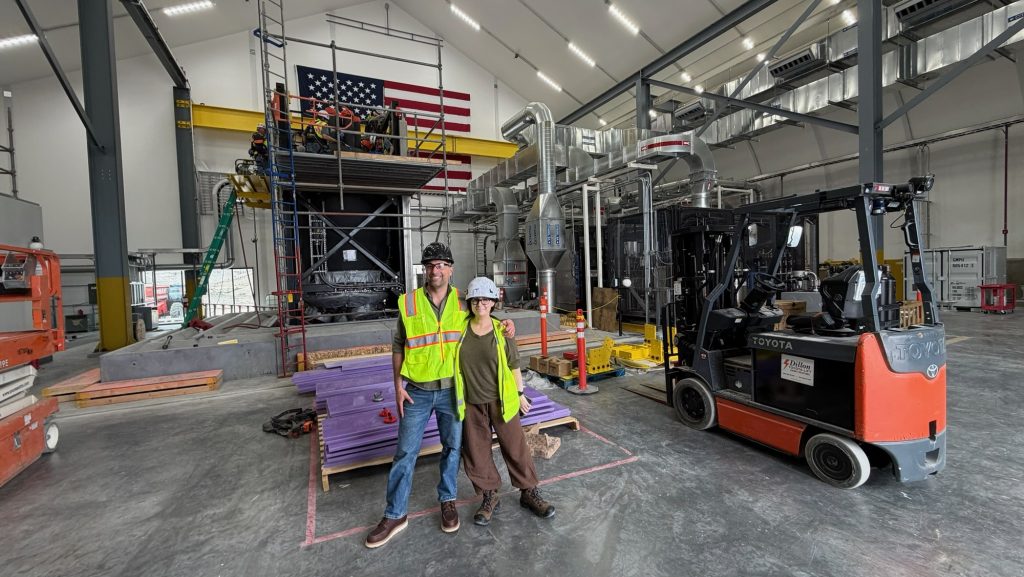
Proud first investors in front of Ward 259
Now not only has she gone critical (Day 1996) but I was able to walk into the running reactor room and see the live reactor for myself. The operator Ben (a former naval nuclear operator) seemed surprised and happy to see me. “Julie! Hi!” He exclaimed as me and the other early lead investors piled in for a tour.
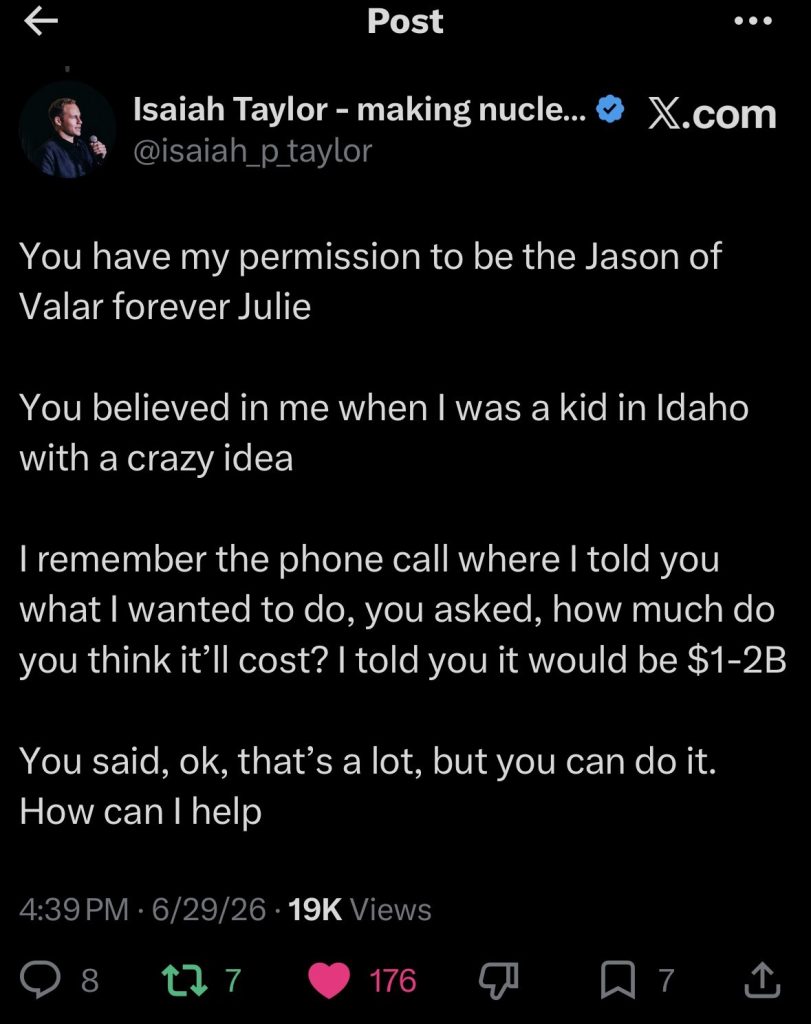
Jason Calacanis (also a master of the live demo) never lets anyone forget he invested in Ubers seed round. I get to brag I wrote Valar’s very first check
And while success has a thousand fathers and failure is an orphan, I’ll always enjoy the satisfaction of being the very first to take a chance on a long shot no one thought had any business even trying. And well they were wrong. And I was right. Not just right but really fucking right. I backed the long shot dark horse (somewhere around day 950) because my gut told me that the kid had the right stuff. And wow did he.
I only had a dim hint of exactly what we’d be seeing today as the invite said “Watts Next” cohosted by Nvidia and Valar. Clearly a number of us connected the dots because it was packed. The atom would power the compute and we’d get to see it live.
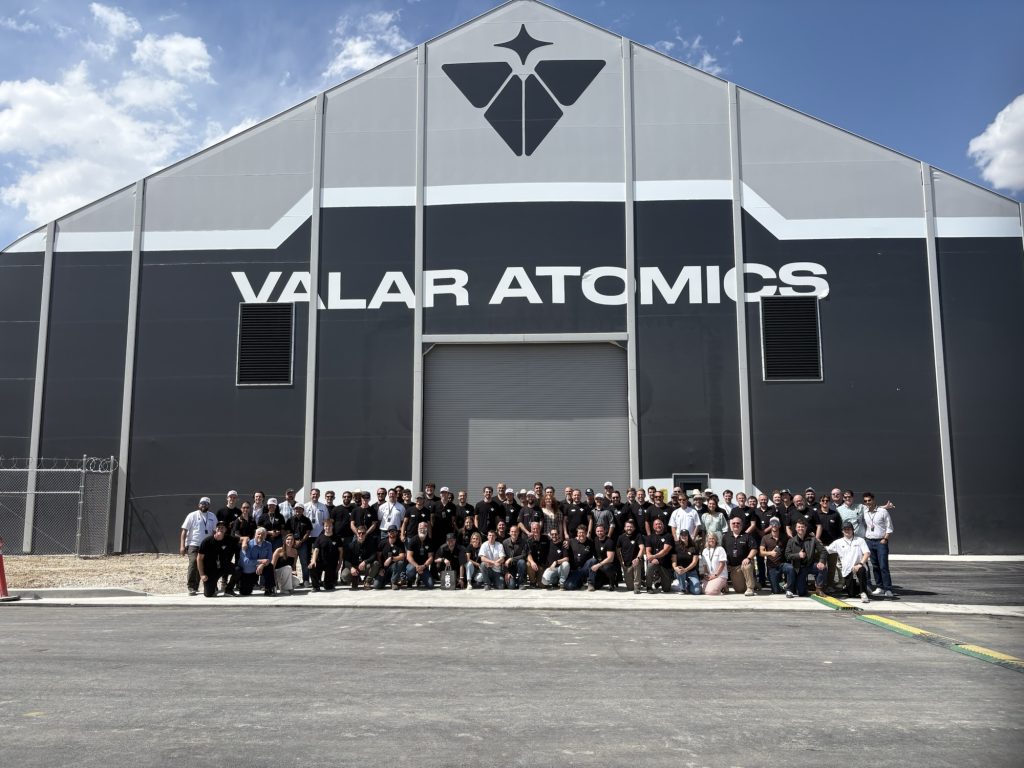
The team after the demo
Every existing investor, and quite a few later stage firms, came out to the middle of nowhere to see if these longshots had really done it. And indeed in just three years the impossible became reality. I’ve never felt prouder to be American. And clearly everyone around me felt the same.
And most importantly, it was a win for the team, led by the indomitable spirit of Isaiah Taylor. Their long nights and constant doubt paid off. The road ahead is long but no one is likely to doubt that we are serious contenders anymore.
I always say there was never a doubt in my mind. I had faith. Isaiah joked he had moments of doubts. I say I’m blessed that I got to be that first believer to say “I think you can do it and I’m going to help.”
And whenever he doubted that we’d make it (there are always near death experiences in any startup) it was my privilege to remind him that doing the impossible is just what we humans do.
Like Captain Kirk, I don’t believe in no win scenarios. I hope you consider joining me for more impossible long shots. Because sometimes taking the shot is worth more than anything else you will ever do.
Want to run your compute on clean renewable cheap American energy?
I’m so old I viscerally remember the Y2K panic that ate up the emotional bandwidth of the American media class who then stoked fear into the hearts of the doomer classes from system administrators to evangelical millenarians.
I was very much online during the Y2K era though I didn’t start blogging (unless you count girly message boards or Geocities) till much later. I was however happily a cybercore hippie girl. If you want to feel jealous and are a Zoomer, I owned a teal iMac G3 and iPod. So I it delightful that a younger generation has decided to dust off some of the silliest times of my youth and refurbished them into Instagram and TikTok aesthetic trends.
What is less funny is how much past fear mongering over technological doomsday scenarios look exactly like our current ones. I remember the simmering fears, the debates over types of damage, and extensive coverage of weirdos who were preparing for a kind of end times.
It feels familiar to how very extreme our reaction to artificial intelligence is being portrayed by both the media and its wildest singularity evangelists. I say this as someone who readily calls themselves a doomer so it’s not a milieu that’s foreign to me.
Here is a brief synopsis I patched together from a Perplexity query with links included if you are too young to remember it.
The Y2K crisis was the feared failure of computer systems when dates rolled from 1999 to 2000, because many programs stored the year with only two digits and could misread “00” as 1900 instead of 2000.
In practice, it became a major prevention project rather than a disaster, with governments, banks, utilities, and other organizations spending years fixing code, updating hardware, and testing systems before midnight on January 1, 2000.
So here I am on Day 1999 of writing every single day, and I’m waiting to turn over into my own 2000th day. I have no anticipated bugs for that event. I stayed up till midnight with my mother walking the main street of our town with a bunch of others waiting to see if anything happened. Nothing did so we drove home.
But it’s enjoyable to remember the kind of disasters that were predicted with such anxiety ended up being problems we worked our way through. We keep at problems by naming them early. Humans intervene and we change our behavior. That’s something you celebrate about us as a species.
I am excited to have achieved such long tenure of daily public writing because much of it covers we have worked our way into a new panic that I’ve been watching for over twenty years. Singularity thought and the extropians have been part of my daily internet diet for quite some time. I think we will find a way to survive this too. Though I grant it sounds a bit more complicated.
I’m sure 1999 me would be proud of the strange futurist I became in my adulthood. I doubt she would have expected that I’d be investing in nuclear power or that I’d have managed a career in cosmetics as a side quest. This is actually a side quest another nerd pursued. I don’t even wear makeup in 1999. I occasionally do in 2026. But if I need to party my way into the singularity I’ll probably at least wear lipstick.
Does anyone else remember when a congressman was off the grid for a few days and his staffers claimed was “hiking the Appalachian Trail” when in reality he was on vacation with his mistress? That story fell apart rather quickly, but remains my shorthand for silly excuse.
Following the meeting, the administration attempted to reach Amodei but was told he was unavailable because he was attending a wellness retreat, one of the administration officials and the senior White House official said.
A spokesperson for Anthropic rejected the claim that he was at a wellness retreat, saying, “this is absolutely false.”
I don’t, as a generally rule, take what public relations professionals say at face value without knowing them personally as their job is to protect the principle.
I might trust an individual publicist but when in doubt verify before you truest. This is true for both Anthropic and the current administration so all parties are now annoyed and suspicious.
Ironically I am enjoying some time on wellness activities this Sunday myself. I wouldn’t call it a retreat but I did take a swim and read Europe AI 2031 under an umbrella. So let’s call that as close as I will come to being on a wellness retreat at a point of crisis in the AI race.
As a school child, I was taught that the American constitution and our bill of rights protects our inalienable rights (given by God) from the government. The government doesn’t protect us. We wrote protections to guarantee our rights from the government m.
Yet you’d be hard pressed to find anyone pitching a government law these days that isn’t wrapped in logic about us needing protection from the world. Our laws now protect the American people from worldly fears.
Precious few of us discuss needing protection from the government in order to exercise our rights. The government protects us from the world’s many from dastardly threats. We don’t care so much about protecting our rights from the government anymore.
Protect the children, consumers, workers, businesses taxpayers we plead. Save us! And lawmakers respond in kind. It’s for your own good might as well be the nation state’s motto.
And what do we have to show for it? Are we freer? Do our financial systems enable life, liberty and the pursuit of happiness? It sure doesn’t seem like our recent track record is working well. Have the last two crashes and subsequent legislative responses led to a more productive prosperous economy?
Sarbanes-Oxley (and the enormous growth of private venture capital) mean companies don’t need to go public anymore, and prefer not to given the compliance cost.
Which of course means the small private investor has zero chance to grow assets like the already wealthy routinely do.
I scan 20 years of tech life, and can’t think of a single instance of regulation actually improving anything for the everyman user/investor
You used to be able to buy an initial public offering for a startup and grow with it. Now most of the gains are in the private markets. So if you were a SpaceX private investor you might have a great summer but it’s hard to say if you will want to buy the IPO.
It all reminds me a little bit of my favorite Christmas movie A Christmas Story. The movie follows a young boy and his family’s misadventures during Christmastime in 1940. He wants a a Red Ryder Carbine Action 200-shot Range Model air rifle for Christmas. Everyone from his mother to the mall Santa Clause insists “you’ll shoot your eye out!”
Ralphie is disappointed by Santa Clause saying he’ll shoot his eye out if he gets a BB gun
Now I don’t want to spoil the movie but let’s just say that the kid doesn’t come to any harm despite getting his wish even if there are a few moments of fear and regret. Because ultimately he’s a responsible kid and it’s a BB gun.
I’d hope we continue to conclude that Americans are responsible people. Sure BB guns, frontier large language artificial intelligence models, and investments in the stock market all come with risk. But isn’t a life with Christmas magic, helpful compute and capital gains worth it?
There is a lot of chatter as to the eventual ownership makeup of the frontier artificial intelligence labs and their economic surplus. One question that came up this weekend is whether equity in the companies should be owned in some portion at the nation state level. I am opposed to this for a host of reasons that I’ll try to get down in whatever garbled form.
I do not own a stake in any of the frontier labs other than owning ETFs that own Magnificent 7 exposure who own portions of the labs. I do invest in compute, nuclear energy and cryptography. I believe AI will change a lot about how we do business, my revealed preferences show I live remotely in Montana, I have a tendency toward emergency planning and Plan B scenarios. As a disclosure of my priors.
There are lots of competing interests in this and the self interests from the labs does no any favors. Especially after months, nay years, of overwhelmingly hyperbole about changing labor dynamics, the potential for mass layoffs due to automation as well as obfuscation and excuses about the reason for layoffs in existing companies. And that’s before we get the singularity which is a religious orientation toward making super intelligence that is Godlike in its framing.
I hate this entire conversation on nationalization and socialism. Part of it is that state actors desiring ownership of private companies reeks of the “you didn’t build that” malapropisms from Barack Obama’s presidency in which he attempted to articulate that America’s enormous wealth is built on generational compacts that no one individual could ever own outright. It triggers socialists and capitalists both.
We all contributed in our own ways to the shared infrastructure, institutions, education, cultural norms and the pluralism embedded in our governance systems that enabled the American Dream.
Unless you are a deep partisan, you understand Obama was trying to articulate that none of us made America alone. But the framing from liberals (and populists of all stripes) automatically make this conversation concerning.
Economics is complicated, central planning has a hell of a body count and your average American can only gesture towards the invisible hand and the benefits of self interested commerce. It’s easy to sell us bad policy from envy and fear.
So I must ask why are we acting like we have suddenly won a national level economic boom with clear winners whose spoils must be distributed by the nation state before we’ve even managed to understand how it will be used, at what level an AI model is a commodity and where the benefits will accrue?
Self interested pluralism with a system of checks and balances at the national federal level coupled with states exercising their own interests has been the bedrock of our national success. Changing this has not gone well for us as a nation nor do we have better examples in other nations.
Sure America has had a few twists and turns. The last time we made an attempt at a New Deal post Great Depression worked only thanks to a global world war industrial mobilization in which we won the war and all our other competitors were decimated on bombed our continents across massive geographical boundaries.
And that boom has been largely spent by the children of the generation that fought this war and their children are looking at a pretty significant bill. So why do labs suddenly want to “compensate” Americans and our collective contributions to the models?
And why are politicians taking this bait when we have so little insight into whether we should funnel cash into them in order to own them in trust for some nebulous future?
I have a few reasons in no particular order that I put on Twitter as to why I am opposed to this format of American state equity being the means through which we compensate the people who theoretically trained these models with our output on the wider open web and its content.
1) We don’t know who the winners will be or where the benefits will diffuse (as in post liquidity the current winners might not be the eventual winners) so compensation for model training when the eventual benefits disperse elsewhere isn’t ideal. Why aren’t taxes at state & federal level aren’t adequate enough here should be answered before we make moves
2) Existing IP law doesn’t account well for culture which is a shared co-creative process (i recommend Susan Scafidi of fashion law institute “who owns culture” ) so compensation is already not easy to track back
3) A state entity w the monopoly on violence can do a lot of damage on the margin by not fully understanding who created what and where it is applied especially in non deterministic systems
4) Much of what the models were trained on was open source licensing including the company where my own family made money Stack Overflow. We got paid sure, but none of this would exist without the effort of its users who contributed on those open license terms. But clearly the final value of the content created & company’s value itself were harvested much further down the line in enterprise contracts for coding models. It was not in the management of an open source license community product created by users or managed by engineers, so who should have been paid? The users who wanted their content to be open sourced? The volunteer moderators? The full time employees? The shareholders of the company, the buyer of the company or the users of that data set at Claude or Cursor or OpenAI? Or is it Americans that never even heard of SO? Where does value accrue over time versus point in time? It’s not an easy question to answer is it?
I myself look forward to reading all 42,000 words of it on an airplane tomorrow. My reader application’s AI says it should take me two hours and thirty minutes. Already the tools have opinions on my study.
I can’t say I fully understand the relationship between the knowledge and teachings put forth by the Pope and a Catholic’s personal faith.
I have very little exposure to Catholicism that isn’t entirely academic so please do not take anything I say seriously or personally, as I’m a mere Protestant.
The Vatican said that Leo had signed the new encyclical on May 15, 135 years to the day since the pope’s namesake, Pope Leo XIII, signed the landmark encyclical Rerum Novarum (“Of New Things”) on the rights of workers amid the Industrial Revolution. I understand is a crucial modern document in Catholic social doctrine
I read his namesake’s encyclical long ago when I studied economics in Chicago (not very far from where the Pope himself studied) so I am looking forward to comparing the documents once I have had a chance to read the new encyclical.
It’s very hard to have an opinion on a document written by a faith leader to whom I do not defer myself so please hold your judgement as I have held mine.
Without careful study I hesitate to say much beyond my initial impressions of the media circus surrounding the encyclical’s release and the social context of several attendees of the event around the signing.
The document is officially addressed not only to Catholics but to “all people of goodwill,” calling on us to seek the “protection of the human person in the age of artificial intelligence.”
I feel this is an invitation to us all to consider the document seriously. Silicon Valley has been anticipating its release for sometime, with both excitement and trepidation.
There has also been a significant amount of discussion over the last several years as to the role a movement which calls itself effective altruism has played in the development of artificial intelligence.
In particular, there is concern as to whether the movement itself has become its own theology complete with a singularity eschatology.
I make no secret of my concerns around the EA community, its scandalous financial frauds and its intellectual roots in Benthamite utilitarianism.
Several years ago an internecine split developed in Silicon Valley with a faction “meme schism” jokingly calling itself effective accelerationism. I myself professsed a preference for their approach as I am neither a utilitarian nor a rationalist.
E/acc encouraged an approach to technological development which focuses the benefits of material progress in reducing human harms while warning of the harms of the precautionary principle.
Neither are real philosophical traditions in any meaningful sense, but rather competing narrative memetics that came out of the diverse group of technologists making industrial progress from nuclear to computing chips and algorithms.
My concern today came from the highly visible corporate representation at the New Synod Hall in the Vatican during the press release. Past encyclical rollouts were normally handled only by curial officials. This was much flashier and included the Pope.
Further, the Vatican chose to highlight large language model developer Anthropic, and one of its many cofounders Christopher Olah. Both the man, and the corporate entity he represents, are part of an explicitlyeffective altruist world.
That only one frontier lab with a very particular viewpoint was put front and center as an emissary from the technical community may end up sending an unintended message. Or more worryingly, a very deliberately intended message. Only time will tell.
I did not expect to spend so much of my time on politics. Or maybe that’s the wrong word. I look being in voluntary service to American governance as my civic obligation. It can look like politics even when it’s mostly trying to be helpful to the running of our polity.
After 2016 I felt regular citizens like myself needed to recall Kennedy’s patriotic inaugural address from 1961. “Ask not what your country could do for you, but what you can do for your country.” America is a complicated place but we get a say in it. And I’d like to help people understand what I know so it might be useful in serving America in very strange times.
My mother loved Kennedy’s profiles in courage. Boomers have beautiful mythos on facing the new world together. He was the first president born in the 20th century. The social compact of America changed quite a bit then. I wonder who the first president born in the 21st century will be. Maybe it will be another young Catholic man.
The optics of progress aside, it was clear as a new generation in Kennedy’s era took on a new obligation to come together when the American experiment felt at risk. So much about who benefit from the military industrial complex rested in the transition from Eisenhower to Kennedy.
I think the context is a little different when progress feels inevitable. Our moment is scary. Though the Cold War was not primarily optimism. They experienced as many breaks with institutional trust as we do in 2026.
Tines are different but I do not think the prescription is different. We owe it to each other to embrace change together. What can we do for America?
I am not the son of a mobster nor am I a nepo-baby of America’s great cultural surplus. I wish. I’m not presidential material or Tiktok star material.
I do have some singular cultural advantages. I am a regular person from slightly unusual circumstances that happened to enjoy some upwardly mobility which let me to participate as an equal in an important transition point. I am actually rather surprised to matter at all. But I do and I intend to advocate for America succeeding together in this change.
I do take technology as a force in society seriously. I believe surplus is an amazing thing. My life is completely different than my biological history. Given how my human DNA was programmed and what I can do daily beyond that you bet I take artificial intelligence seriously. Material progress is real.
I take the physics of demand seriously. It seems like not everyone is confident we can speak to the general public about what it means that the technology industry has found a way to automate itself. It is a scary thing to say. And we begin with ourselves. It is actually our jobs that go first. If we believe it can be better on the other side of the Jackpot live like it.
And I do. I live a little further from civilization for the peace and quiet and because I am a little uncertain. But artificial intelligence’s new incredibly malleable models have changed my capacity by an order of magnitude. How wish I could have had this when I was a software and cosmetics founder.
I am a heavy user of all the hosted commercial models because they are in fact very good. I can do so much more across all the areas of life where I have to figure things out on my own.
I have health problems that are expensive and challenging. I’m lucky to be able to explore extensively the web of issue that drive having a body which has decided it must overreact. And I am in the process of fixing it. In ways that I’d never have had access to before Claude or ChatGPT. I have comfortably setups in spreadsheets and web apps and we can map years of bloodwork and experiments.
I think America is having an autoimmune reaction to the idea of automation as the end product of artificial intelligence. We sense it as a threat and it’s both terrifying in its potential but also a bit of the optimism has waned as the culture of technology fails to engage the mainstream as normal or even beneficial.
It’s the same process of making life better we have run. We took all our brain power to make our physical jobs easier. This has largely been viewed as a benefit to everyone except by strict biological determinists. Bronze Age romanticism is just that.
Thanks to progress in mathematics, we can now make knowledge that was extremely expensive to find, query, and organize as as accessible as asking an expert a good question.
Which is actually still tricky. Most Arthurian legends seem to resolve on knowing what to ask in order to receive wisdom. Knowing what to ask is not easily solved by mathematics. It’s not actually a cheat sheet but rather a powerful way to enable yourself. If you wish to take on that responsibility.
I feel I am somewhere between Hill and Valley in that I work in this world and I chose to become civically engaged. And I am concerned about where we are at. I am genuinely an optimist though as I think humans are so very adaptable. So I try to translate between the tribes who run our system and the tribe of people who make the systems run by the first tribe.
Maybe it’s be being somewhat in between that lets me be a node between the hill and the valley in America. Or as others frame it as a tripartite of Athens, Jerusalem, and Silicon Valley. I think that’s a bit grandiose only because maybe empires run on roads and plumbing but let’s not get forget that power is diffused in a network era. Every node that can route information has power.
The criticisms technology rightly takes from our body politic is that we are going quite fast. I know. I am inside the Gibsonian Jackpot with you. And I know it’s hard to believe that living through the change can be good even if we have inklings of the way life is already better right now. So we have to work together to figure it out.
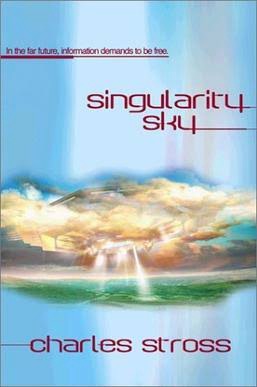
I am finishing off a series by Charles Stross called the Laundry Files. It is a fifteen book series with a bunch of novellas that I’ve been reading since college. It’s James Bond meets Cthulhu in British bureaucracy. The last book The Regicide Report came out earlier this year.
It’s Lovecraftian horror about an applied computational demonologist. Confused? He’s computer programmer but surprise in his world computational power can summon demons. “Bob” fights gibbering horrors from beyond the veil. It’s top notch Dad fiction if you prefer your thrillers with a side of weird.
He left Twitter during the great Elon-ment so I hesitate to imagine what he thinks about say Anthropic’s Mythos or the current frontier labs racing to create “AGI” as he’s the guy who invented half the terminology our doomers currently use. He wrote a lot about mind viruses so he might not appreciate if one of his fans thought he caught one or two.
But boy is Stross prolific. I met the guy at a sci-fi con put on by the math department at SUNY Stony Brook before he became a publishing sensation. Not only has he exceeded a baker’s dozen in the Laundry Files but he’s also written dozens in a series called the Merchant Princess as well.
My best buddy and I were the only kids in the room waiting to hear him read. At the time, I think the only people worried about artificial super intelligence and the singularity were a bunch of mathematicians and some weirdos on a listserv. That included the two of us.
The worry that has never left Stross, no matter his subject matter, is whether or not we idiot humans are mere meat waiting to be devoured by barbarians held back by the gates of our reality.
Maybe the Elder Gods want our Mana. Maybe the historic light cone has spoken and we are pet humans at the end of all possible realities being kept from annihilating our future. Lots of sects of folks are in massive schism and have been for basically all of Stross’ career and my adult life.
It’s hard to imagine worse demons than the ones we’ve already imagined ourselves. Which is why it’s helpful to ask which barbarians are banging at whose gates? Who’s keeping what out? Or are we being kept in? And what counts as a barbarian anyway.