I’m deeply in the red on my energy stores. All my dashboards are flashing warning signs that I need to get in a good recovery.
I’ve up all my reserves to get myself to Utah and make a good showing to support team Valar Atomics. Ironic that I’m energy poor as all my effort posting (both online and in real life) is about a vision of cheap abundant safe and clean energy for all mankind.
What a privilege to say that Valar Atomics has been my everything for the last forty eight hours. Everyone is running on so little sleep but the outcome is a success that is undeniable. There are so many exciting interviews about our reactor and Isaiah’s from Ti Morse at Relentless (here on YouTube) to Sarah Guo at No Priors that you could spend a happy afternoon getting up to speed on the nuclear renaissance.
I hope to watch them all soon as I need some rest. So does the team. At team party after the big Nvidia event, much of the conversation turned to where everyone planned to enjoy their well deserved 4th of July break
Having served our nation by reaching criticality and generating electricity as ordered by the executive branch, this team as earned some leave. Hundred hour weeks have been the norm for many of them. This crew knows hard work. One former navy nuclear engineer joked that while the navy was tough, booting up a reactor from scratch was much harder.
Most just want some sleep but the diversity of plans was exciting. From touring Spain’s Catholic cathedrals to hiking in Alaska clearly a few had some energetic plans. But there was a lot of life basics like setting up new apartments and sleeping off an accumulated sleep debt.
I’m in camp sleep it off. Whoop is sure I’m either dying or super sick my metrics are pretty bad. Thankfully I’m going to be enjoying our nation’s birthday in the mountains with my husband and our friends. I will go from in the red to red, white and blue.
I’ve got to remember to keep tissues in my purse. I’m prone to crying when I’m proud. I am a crier by nature and the experience of pride and awe is becoming distressingly common. Woe is me right?
My very early bet on Valar Atomics (I wrote about it on Day 1145 but met Isaiah closer to day 900 early 2023) is paying off years, if not decades, ahead of my expectations. Never did I expect arguably the hardest operational bet in my portfolio to be such a fast breakaway hit. And I owe it to an executive order from Donald Trump and the efforts of patriotic Americans committed to regulatory reform. Which is crazy.
As it turns out, if the government gets out of the way of talented people, nay, if it demands that our state institutions help them, the impossible becomes possible in shockingly short order. The reports of America’s death are greatly exaggerated.
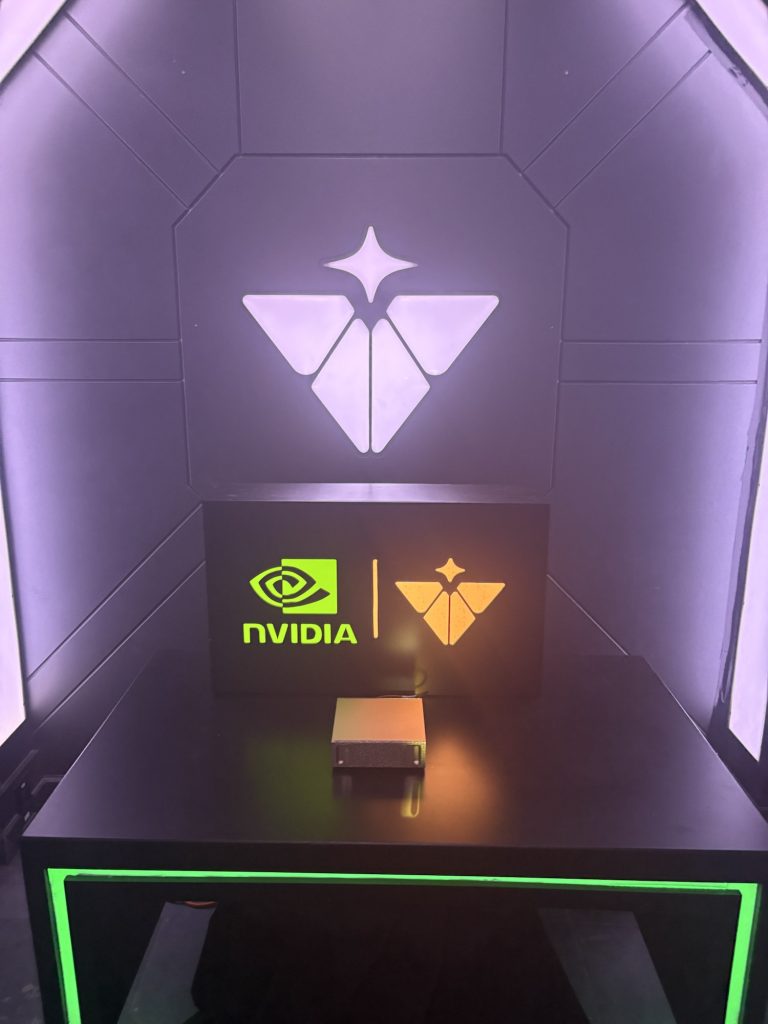
Today in front of a crowd of hundreds of current and potential investors, employees, Orangeville community members, government officials & scientists and most importantly our family members, we watched a reactor (that might not even exist without my first check), power an Nvidea Blackwell chip.
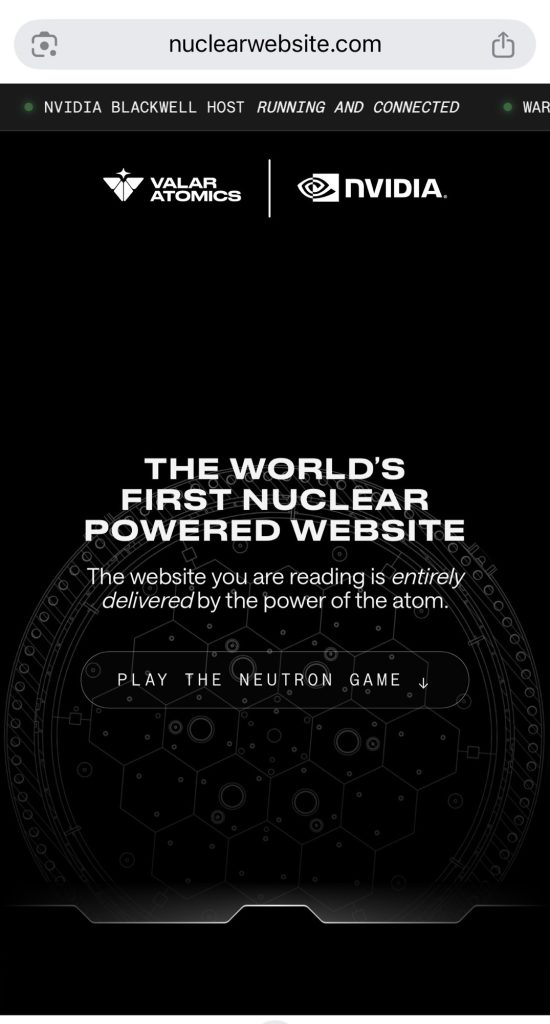
In a demonstration rivaling the greats (Ballmer, Jobs) Isaiah brought up NuclearWebsite.com and asked the audience to load it with him.
“Oh no it’s not loading?!!?” What’s happening? Do we have any electricity on site? Quick someone run the GPUs to the nearest electricity! Go go we can’t disappointment all these people!
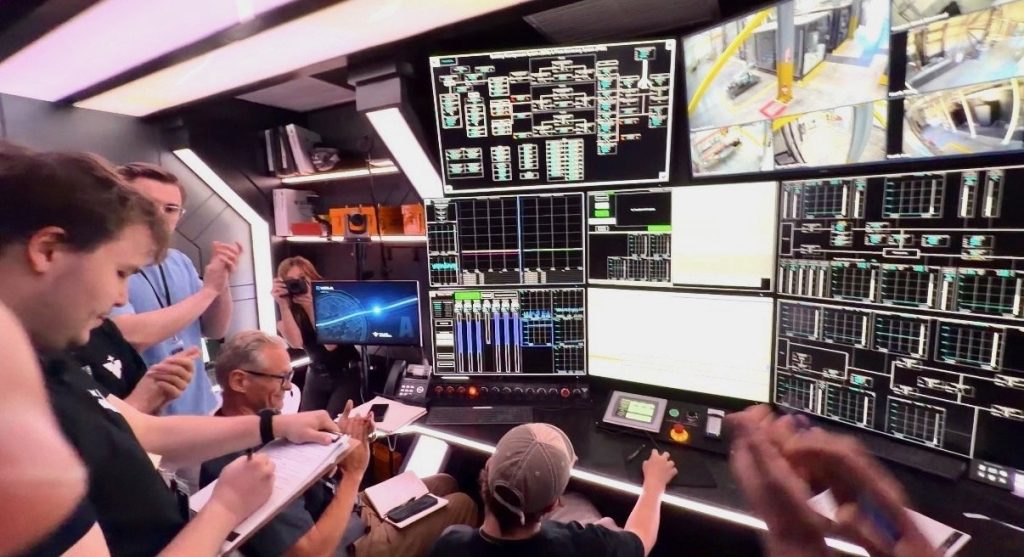
And then the Blackwell is rushed into the Ward250 reactor. In real time the chip is run to the control room, gets hooked up and boom the website loads.
The first entirely privately funded nuclear startup was critical, stable, producing electricity and powering state of the art silicon.
We actually did it. The mad lads and ladies of Valar Atomics swept ahead of the competition in a frenzied year of progress (Day 1510) from seed round and Ward Zero to producing electricity to power GPUs.
After a twenty four hour travel marathon to get from the Ionian in the Mediterranean to the southern Utah desert, being back at the Valar Atomics reactor facility for a demonstration of this magnitude felt surreal.
Just a few weeks ago (Day 1969) the reactor was days away from being shielded and then fueled. We’d driven down to see her before she was wrapped up in shielding.
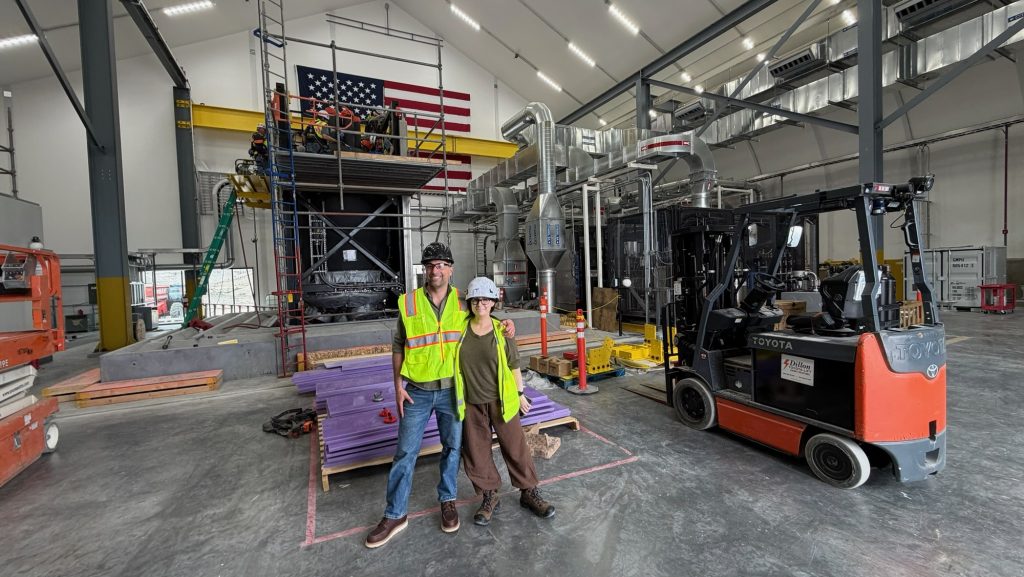
Proud first investors in front of Ward 259
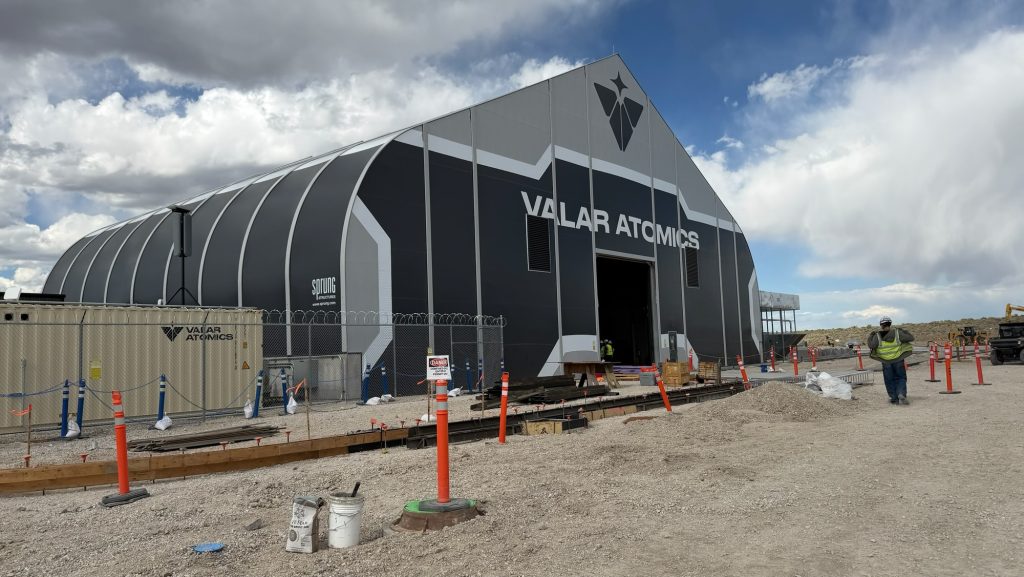
Now not only has she gone critical (Day 1996) but I was able to walk into the running reactor room and see the live reactor for myself. The operator Ben (a former naval nuclear operator) seemed surprised and happy to see me. “Julie! Hi!” He exclaimed as me and the other early lead investors piled in for a tour.
Jason Calacanis (also a master of the live demo) never lets anyone forget he invested in Ubers seed round. I get to brag I wrote Valar’s very first check
And while success has a thousand fathers and failure is an orphan, I’ll always enjoy the satisfaction of being the very first to take a chance on a long shot no one thought had any business even trying. And well they were wrong. And I was right. Not just right but really fucking right. I backed the long shot dark horse (somewhere around day 950) because my gut told me that the kid had the right stuff. And wow did he.
I only had a dim hint of exactly what we’d be seeing today as the invite said “Watts Next” cohosted by Nvidia and Valar. Clearly a number of us connected the dots because it was packed. The atom would power the compute and we’d get to see it live.
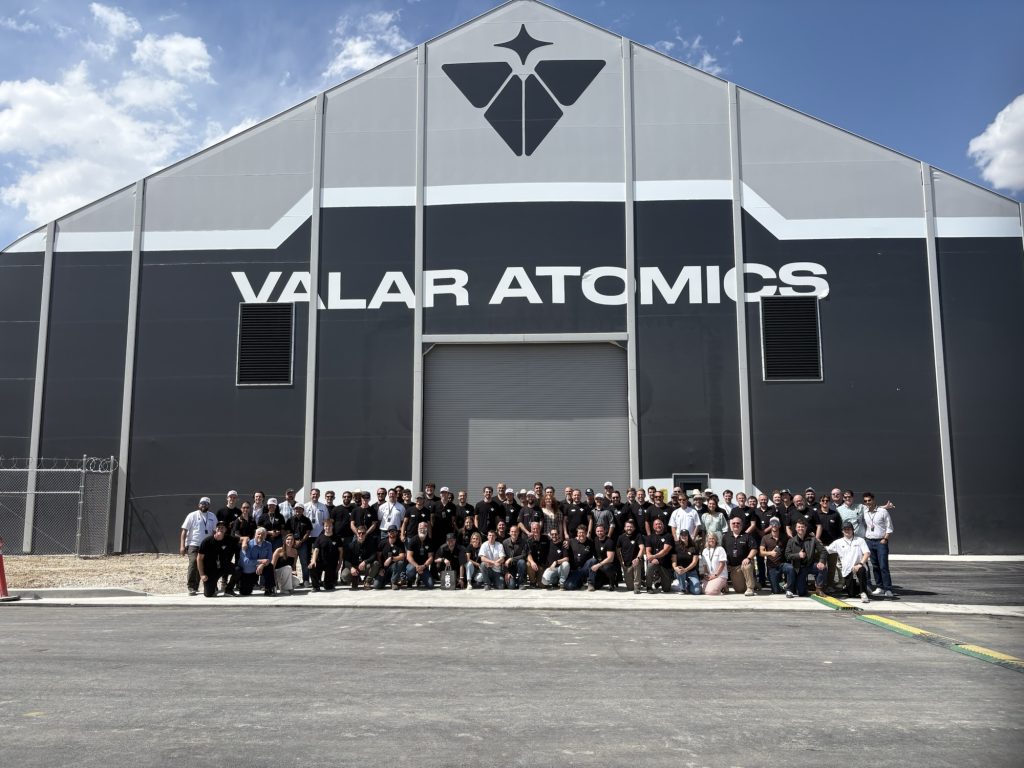
The team after the demo
Every existing investor, and quite a few later stage firms, came out to the middle of nowhere to see if these longshots had really done it. And indeed in just three years the impossible became reality. I’ve never felt prouder to be American. And clearly everyone around me felt the same.
And most importantly, it was a win for the team, led by the indomitable spirit of Isaiah Taylor. Their long nights and constant doubt paid off. The road ahead is long but no one is likely to doubt that we are serious contenders anymore.
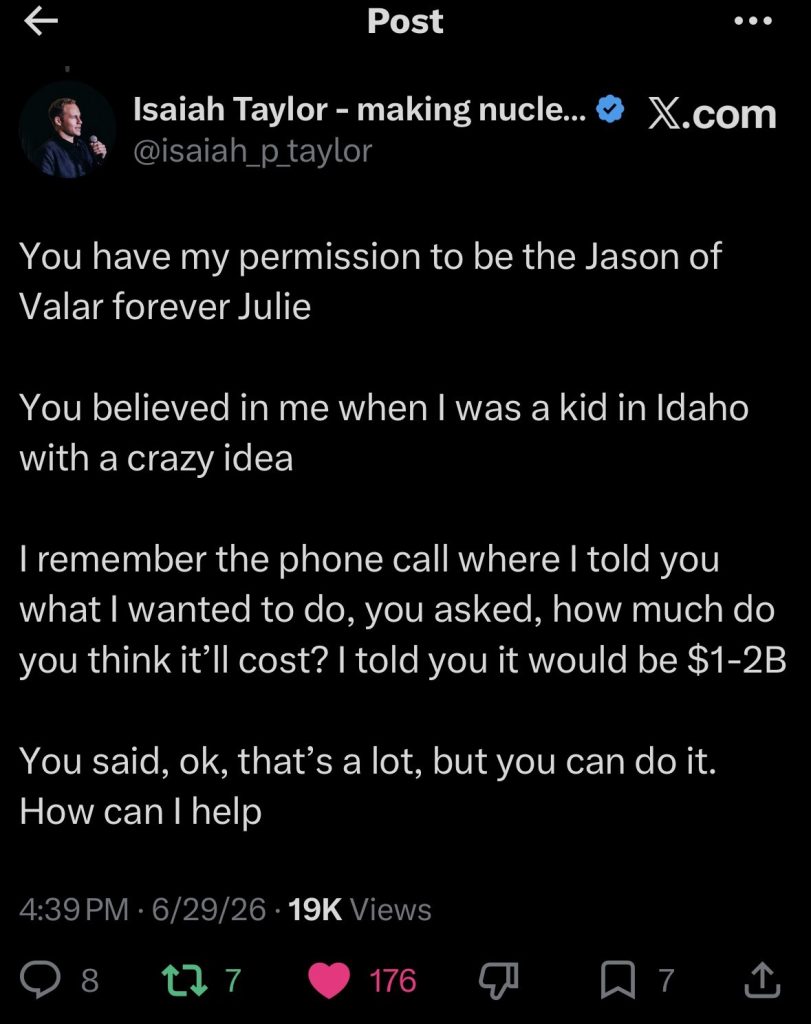
I always say there was never a doubt in my mind. I had faith. Isaiah joked he had moments of doubts. I say I’m blessed that I got to be that first believer to say “I think you can do it and I’m going to help.”
And whenever he doubted that we’d make it (there are always near death experiences in any startup) it was my privilege to remind him that doing the impossible is just what we humans do.
Like Captain Kirk, I don’t believe in no win scenarios. I hope you consider joining me for more impossible long shots. Because sometimes taking the shot is worth more than anything else you will ever do.
Want to run your compute on clean renewable cheap American energy?
I’m in a private terminal in a tier three European capital, as I begin the long transit back to the remote regions of America’s effort to reboot our lost industrial capacity. I am ready to celebrate our 250th birthday.
All this can be yours if you pay a few backs to cut the line in the former eastern block
You will find me in the desert trying to convince anyone who will listen of the many industrial and environmental benefits of nuclear energy. Might you be interested in particular of the learning we gain from repeatedly making thousands of small modular nuclear reactors? Scale baby scale.
I’m team Valar Atomics or bust, but I know it won’t be a bust as we have just had a race to criticality that half a dozen companies will meet for July 4th. And what better birthday present to give Lady Liberty?
“When you have the will of federal policy and the will of the people, these things can absolutely happen.”
The artificial intelligence intelligence revolution pretends we still have the height of America’s wartime Industrial & Management Revolution capacity for the build out still available within America’s heartland.
We don’t but I believe despite the bread & circus it might be possible. Lord knows we are trying to get back up and going. Just look how quickly we got our nukes back up in just one year.
Yes we got algae bloom sabotage on the bloom in DC, UFC fights on the White House lawn and some bizarro corruption but at least we aren’t having a Flamingo Revolution of Zoomers rebelling against oligarchs skimming too much from corrupt socialists who need to revamp their attitude. The Geopolitical Cousints get what I’m saying right Marko?
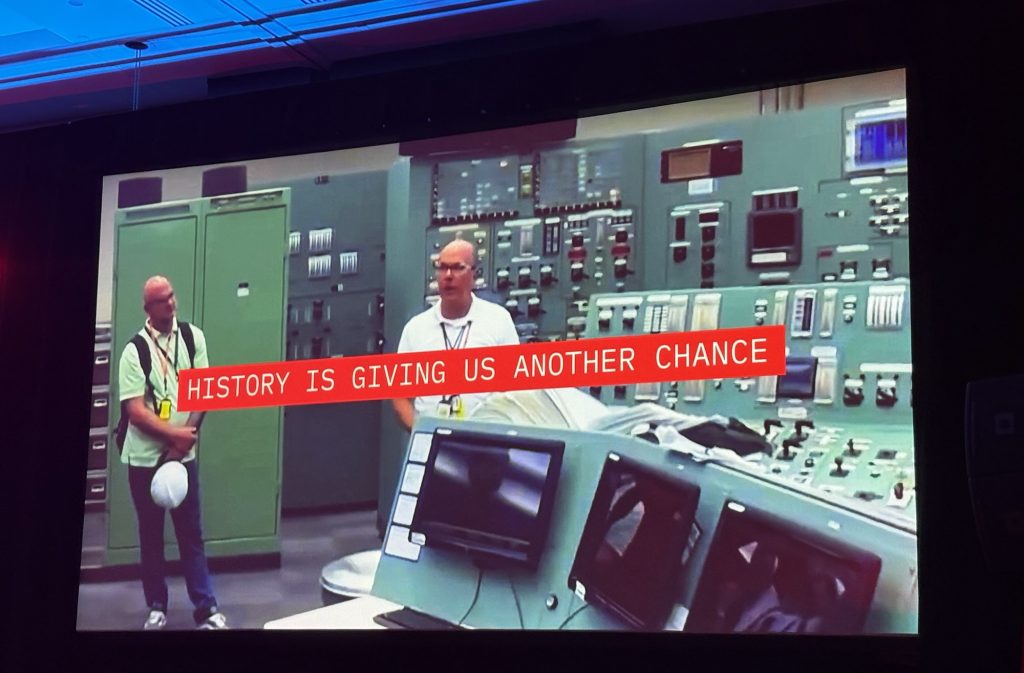
I rewatched season three & four of Apple’s For All Mankind alternative history of the space race as a hype effort to remember that we did indeed have other options for our near future and as the Abundance Institute reminded us all mere month’s ago history is giving us a second chance.
The Blue Sphere Transmission” is an electronic, modern-disco track by MelodiZenith that blends nostalgic 80s Eurodance rhythms (reminiscent of Bad Boys Blue) with deep house and synthwave.
Line dancing Euro-Disco Italian Pop on Mars? Now that’s a future I can get behind powering with SMRs by Valar
A vast somewhat intimidating vista is stretching ahead of me between two thousand days of writing every day and the possibility of reaching three thousand days of writing every day. One day and one post at a time right?
So like any sane woman setting out on a long journey, I ate a salad, had some protein and checked myself into a spa for a massage. No reason to start a long journey exhausted right? I need to pace myself.
I got a pedicure to immediately turn restoration to grooming necessities, but one can’t keep pool blue toenails all summer. Not every day is spent on the Ionian. Some days are spent at nuclear facilities in steel toed boots. Other days are spent in kitten heels inside conference rooms.
Just in case anyone does need to see my toes after those scenarios, I try to maintain a tidy nude set of nails. Isn’t it strange what expectations we have for women?
I may work remotely, at odd hours and in odd locations that allow the occasional eccentricity, but at any moment I might need to be on an airplane headed to parts unknown. You only get to be so weird when you have big goals.
In this case, next week I’m headed to a desert town and then a state capital. That’s state is becoming a more regular occurrence in my life. That’s a pretty big privilege for me.
Being a supporting player in a number of larger endeavors gives me the chance to add additional gravity if and when I might be useful. Even if it is just showing up as a cheerleader. I love trying to convince smarter, better capitalized and better connected players than me that indeed it is my startups are the winners in the grand game of macro-cycles.
I wrote that the world was getting to be a lot more chaotic when I first started this writing journey. Now that’s common knowledge. Then and now, I care about adaptability to this increasing complexity. This has turned out to mean compute, energy and decentralization.
The strength of your network is in the flexibility and foresight of its nodes. And I hope I remain a trusted node at the forefront of our long journey as a species for as long as I serve us well. I’ll carry on this Odyssey till then.
Well I’ve done it. I have written and published to the internet a blog post every single day for two thousand days in a row. So I am going to toast myself to a job well done.
In earlier milestone posts, I was always surprised I’d made it, but now the harder thing to decide is if or when I’ll stop, not if I’ll keep going.
Half a decade goes by a lot faster than you think. The accomplishments actually do add up if you keep yourself pointed in the right direction.
In a personal capacity, we got ourselves to Montana, set up a life that let us live the way we’d always dreamed and invested in the future we wanted to see.
From a civic perspective during that time we helped pass meaningful reform in housing, testified for crypto rules of the road and worked to ensure Montanans have a right to compute.
From an investing perspective, we have been first in Solana’s most crucial infrastructure player Squads. Because yeah crypto is going to matter a lot in an artificial intelligence age. We have stuck to our core mission of adaptation by backing the tools needed to benefit from our new AI speed run.
And yes we care about open source. From vector databases to inference labs to experimental dueling models, we have snuck into some strange experiments. And oh yeah we were the first check in a small modular nuclear reactor that is winning the atomics renaissance race (at least this week having achieved criticality).
There have been a lot of failures in those years though oddly not investments or policy. I have battled health issues and fought to not just maintain working capacity but to gain back the capacity I thought I’d lost forever.
I did woo woo whacky things from PEMF and HBOT to peptide stacks and traditional biologics. Thanks to the horrors of hormones and steroids I was early to GLP1s and made some good investments there too.
Maybe I’ll tag all of this more cleanly later but I do think it’s important to remember the days are long but the years are short.
Get on the airplane. Go meet up in person. Buy that dream house. Build a solar array and a sauna. Do wildly romantic things and go to galas. Say yes to more.
And open your heart to the heroic efforts others are also putting into making our lives and our world better. We live among every day heroes. And yeah lots of bad shit has happened in this time too. My father died. We failed for five years straight at getting a visa for a close family friend.
I am aware of the shitty compromise we all make to survive. But you have got to hold on to that feeling. So yeah on day 2000 I think I’ve earned the right to be corny as hell. Don’t stop believing.
I am going to be scattered and long winded so please excuse my exhaustion and joy, as I have used up all of my focus in the excitement of a truly incredible moment that represents years of work.
Moments ago, Valar Atomics took Ward 250 critical for the first time. This fulfills President Trump’s EO 14301, which called for 3 advanced reactors to go critical by July 4th.
This is our second criticality as a company, and an important step toward our goal of power by July 4.
This is a historic moment and the culmination of two years of work on the part of the Valar Atomics team. This is the most hardcore, intelligent, and driven people I’ve ever had the privilege of working with; which will be seen as we begin power ascension in the coming days.
Our mission at Valar Atomics is to make abundant energy for all mankind. The best way to make energy 10x cheaper today is to mass-scale nuclear fission. We began our mission by creating WardZero, our fully functional thermal prototype. Next, we took the NOVA core critical.
Today, we took the next step: criticality in the Ward 250 test reactor. Ward 250 is a TRISO-fueled High Temperature Gas Reactor (HTGR) designed for simplicity and scale, and is the first nuclear reactor ever air-lifted by a C-17.
We’ve been honored to be become part of the community in Orangeville, Utah, the home of Ward 250. Many thanks to all of our government partners who made this possible: hundreds of individuals across the Trump administration, the DOE, the DoW, and the government of Utah.
The list of individuals who have spent their time and energy and talents to accomplish this feat is too long to list in one post, but I am incredibly grateful to all of them.
I am one of those individuals who spent their time, energy, talents and capital to accomplish this incredible feat. Investing in Valar may well be the greatest accomplishment of my life.
You see I am Valar’s very first investor. Yes I mean I wrote the very first angel investment check from my small venture fund.
Crazy but possible makes complete sense to me. So I said he’s. And we chewed glass for a few years working towards the possible, while everyone told us it couldn’t be done.
Through the magic of Twitter DMs, I met Isaiah before he had even started Valar. He was working on another startup I didn’t love but I knew immediately that I loved him as a founder.
I was so impressed with his intelligence and his capacity to learn quickly. He had that ineffable “it” quality that all founders possess in some measure. He took feedback well but had a firm backbone. He listened to one piece of advice I gave him and based on that decision alone, I told him I’d back anything he did in the future and I meant it. I’ll admit I didn’t expect it to be “I’m building a nuclear reactor” but I am true to my word.
We’ve been there for every step of this amazing journey. It was an objectively insane thing to invest in. Yet the more time I spent with Isaiah the more convinced I was that he was a generational talent. The best part of being first is the opportunity to spend lots of time with a founder before anyone else learns of their genius. I learn as much from them as they do from me. And Isaiah is a quick study.
I wrote the check and went about the long grueling process of convincing others they should invest alongside me. It wasn’t easy. We got told no a lot. Failure lurked around every corner. People ranged from outright hostility to tempered skepticism. There were moments when defeat felt very close.
There were hard times. A lot of glass chewing. I never wavered in my belief that Isaiah would get it done. Alex and I were blessed with the opportunity to invest more and gladly wired in additional capital when others couldn’t see as far as we did. This may well be a career defining investment for me. I intend to keep putting in whatever Isaiah will allow us to invest.
And to everyone who said it couldn’t be done, or that it was too early or too risky to invest in something as crazy as nuclear, please let me invite you to join us now. There is much more to be done. We will need all the talent and capital we can get to win this bright future for America and for humanity.
I have really had a busy spring. I was across the country from Utah to Washington DC and back to Montana with an outing to San Diego. Montana did not get much of a winter which is always a disappointment.
I never expected to spend so much time on policy issues. It has unexpectedly taken over a a real portion of my time.
The nature of my portfolio investments has slowly taken me across every issue from banking’s relationship to crypto to the nuclear renaissance to artificial intelligence. American needs a lot from its younger generations and we need to support them.
I feel an obligation to bring my full self to the issues as it gets to the heart of what could change the nature of assumptions of costs and access in meaningful ways.
I do however need a break from all of this as I am quite tired from all the back and forth. I need to take a little break and get some off grid time on another continent. I need to get some perspective before celebrating America’s 250th. There is a lot happening.
So if all I wrote about is makeup and skincare and some science fiction for a couple weeks I hope no one minds. I need a break. I need some Netflix even.
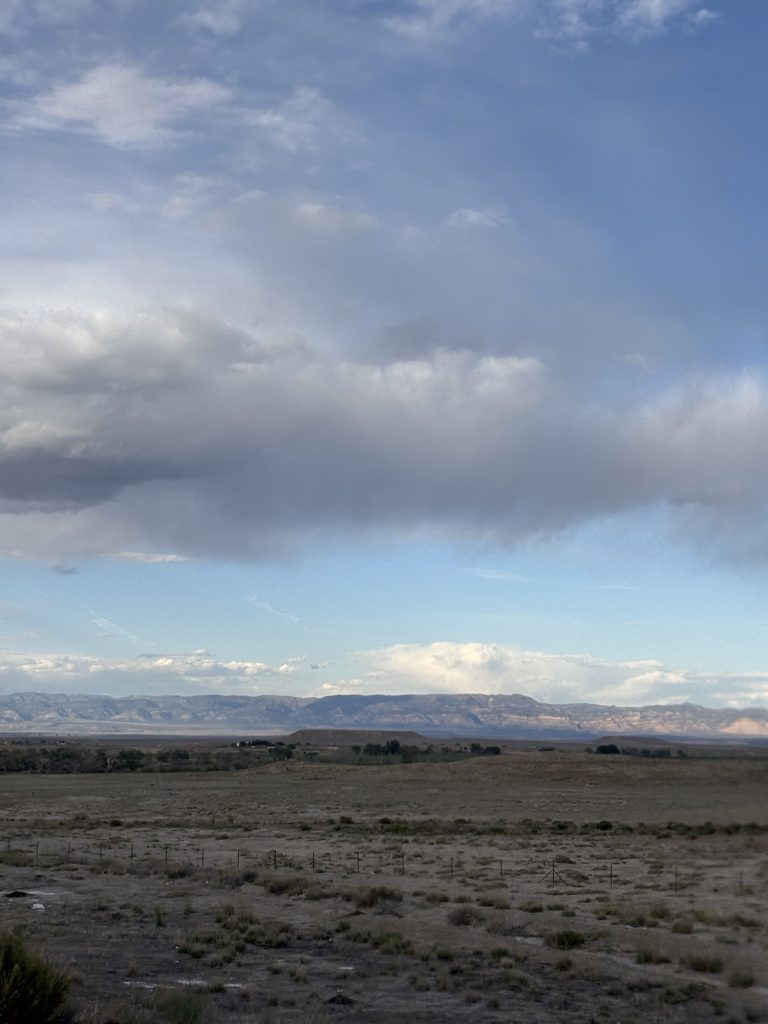
I am in the middle of the Utah desert returning from a site visit to Valar Atomics. If you have the means to tour a nuclear facility I highly recommend it. It is so choice. That’s Ferris Bueller for the Zoomers.
I’ll use another choice line from the John Hughes classic to illustrate how gratifying it has been to drive a remote Utah town for a chance to see our investment in action.
Life moves pretty fast. If you don’t stop and look around once in a while, you could miss it. – Ferris Bueller’s Day Off
We hadn’t planned to drive down to the Ward 250 facility after Abundance Institute’s Operation Gigawatt. Life is busy, it’s a holiday weekend, I’m flying out to part unknown from Montana in two days.
But what’s another three hours on the open road when there is one of America’s sustainable energy labs and a tour from your favorite engineers on offer? Yes they are all working this weekend. They have a deadline for July 4th that’s pretty important. It’s crazy that this wasn’t in my itinerary in the first place if I’m honest. What a way to kickstart the summer.
Getting up close to “our” reactor is a privilege I never conceived of experiencing. I’ve been lucky enough to invest in some very cool things over the years, but to actually place a bet on a serious industrial effort and have my choice end up at the forefront of a major national push for nuclear energy? Not a thing I saw coming.
So in the hustle of the moment, I am glad to slow down and admire that it is actually possible to do things. That’s a very nice day to have. Yes that’s a Day 69 joke.
I’ll treasure this moment forever. Even if we fail, at least we tried. And who wouldn’t want to put yourself on the line and try when it’s something that matters this much? So we speed up to slow down and see. Because it’s true if you don’t you might just miss it. So yeah it was a nice day.
I’m in Utah with some of the most optimistic people I’ve ever encountered. And it feels so good to be amongst others who believe our problems are tractable, it is our responsibility to solve them, and that we all win when we pursue a positive sum approach together.
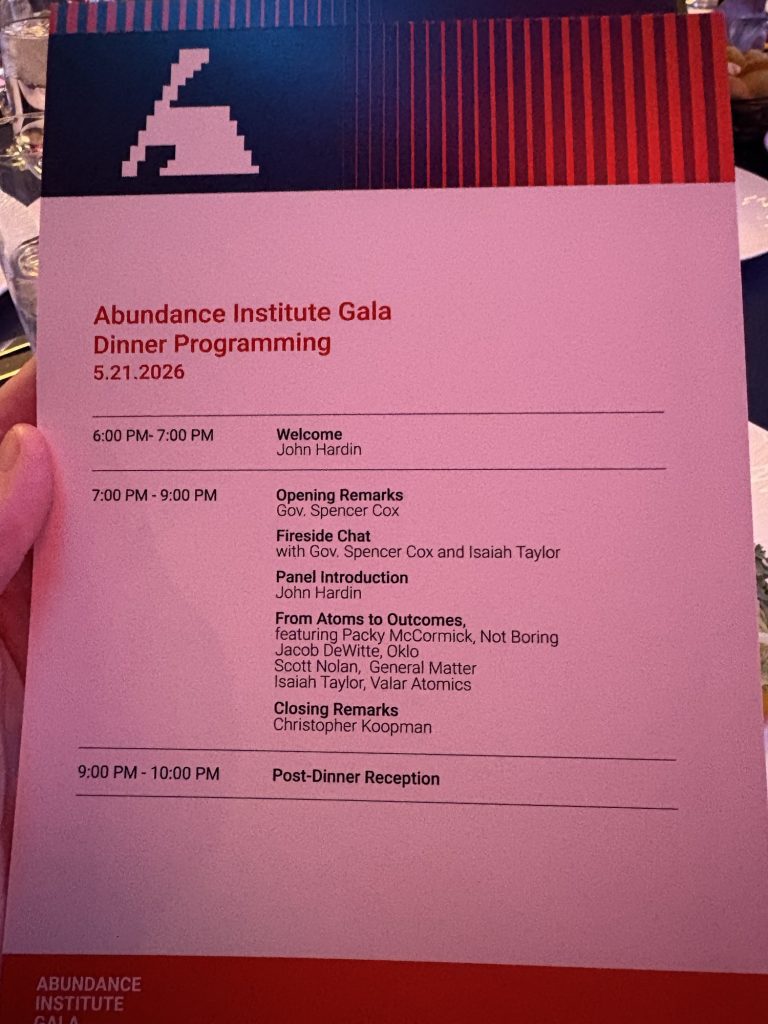
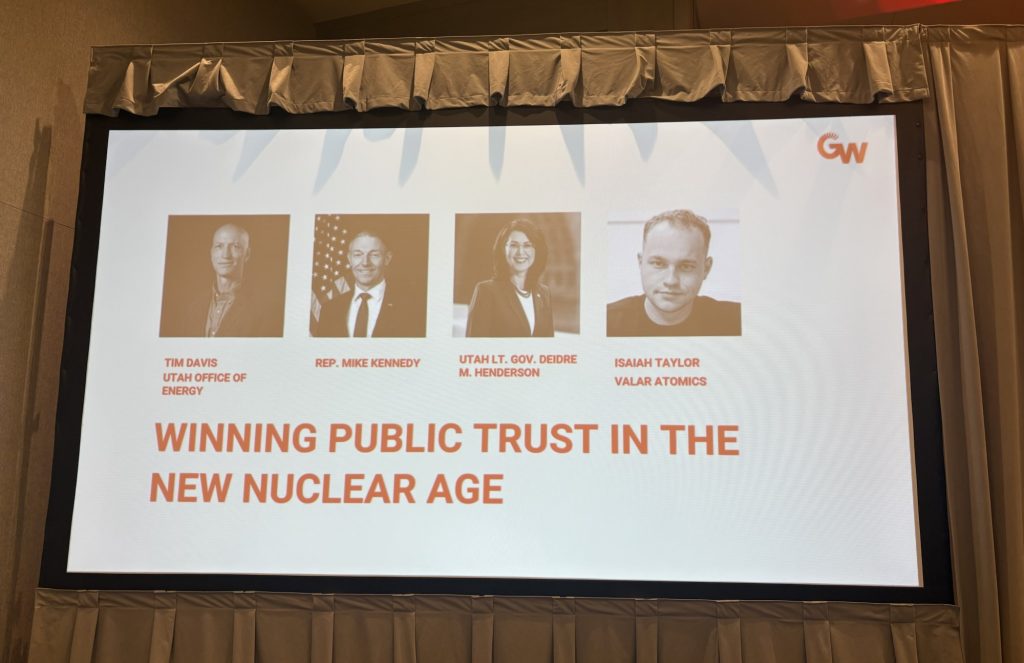
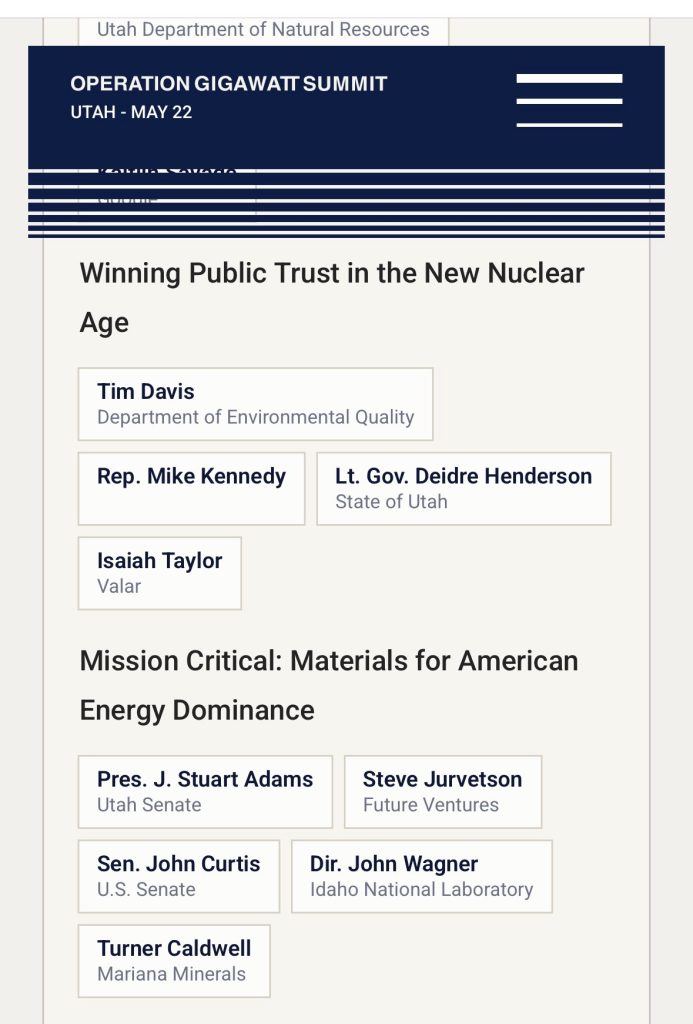
The Abundance Institute hosted the Operation GigaWatt Summit in Park City to bring together entrepreneurs, engineers, financiers, legislators and policy experts to discuss America’s energy needs.
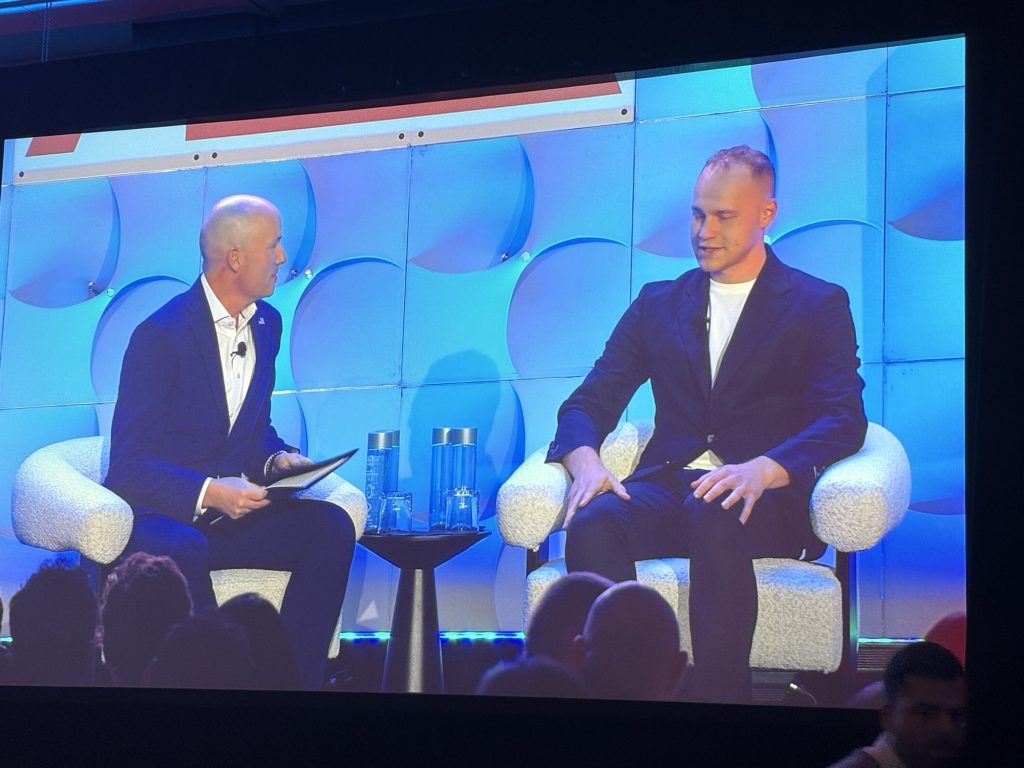
I was lucky enough to be invited to the gala where one of our founders Isaiah Taylor gave an incredibly uplifting fireside chat
As some of my longtime colleagues know, I was the first check into Valar Atomics. It was a leap of faith to invest. At the time, we were in the doldrums of negativity towards capital intensive industrial efforts, from both state and capital.
Yet I saw in Isaiah a force that neither leviathan nor fund manager would wish to hinder. I also happened to believe that every other technological trend that was booming rested on our capacity to power it. So I did everything I could to support him in his efforts, including write few more checks. And thank goodness I did as my what a difference a few years make.
Utah’s Governor Cox and Isaiah Taylor of Valar Atomics
To see Isaiah on stage with Utah’s Governor Cox amongst a crowd of hundreds speaking on a vision that a mere three years almost no one thought was a good idea (well except us) is testament to the work and faith of hundreds of men and women.
Many other amazing companies are pursuing a vision to produce abundant clean fuels and I myself believe we will need every one of them. I’m just glad that my crazy bet happens to be running full steam ahead in front.
From artificial intelligence & medical research to new home construction and industrialization, all our biggest opportunities will win on energy costs. Regular people need cheaper, cleaner, more sustainable energy. Our needs can’t be met with what we’ve got. We need nuclear in that mix.
And it is a choice to embrace abundance and not scarcity. A zero sum mentality will not get us where we need to go. Not in America, not on our home Earth, and certainly not in the stars. I believe with effort and ingenuity our best days are not behind us but can, indeed must, be ahead of us.
Utah is focused on delivering to the public by gaining its truth through transparency and accountability.
I’ve come out of the last two days refreshed and filled with positivity as I’ve seen sincere people dedicate themselves to finding solutions to our pressing problems. I was able to see much beloved friends, treasured colleagues, and it was family friendly so I brought along my husband too.
If you care about a future that’s not fighting over what’s left, but building something that makes more for all of us, I hope you consider supporting the work of the Abundance Institute.
And also Montana’s right to compute law.
Oh and if you have a chance to invest in the future of nuclear energy I hope you pick Valar. As we are fond of saying in El Segundo circles, we are going to win.
It’s hard not to feel like you are drowning when you open up a newsfeed. Every day you are watching people on tilt across every topic and demographic. Is this the singularity?
The doomers and Luddites are being courted by money with shadowy religious grants to “prepare for the dangers of super intelligence.”
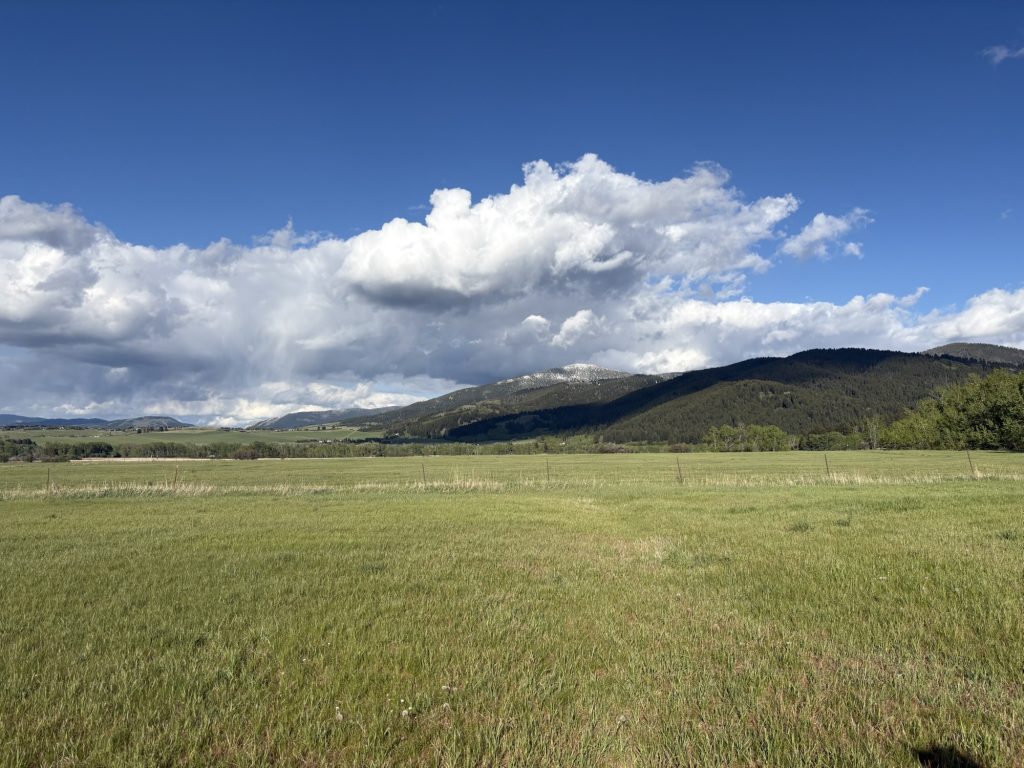
I go outside and I breathe in the cool Montana air and I am settled by the almost impossible beauty of the mountains out our pasture. If you hike out to the public fields before the canyon you can see the whole valley spread out before you.
Public lands out my backdoor that look like a Microsoft Windows Screen saver
After a weekend snowfall, the grass is coming in spring green and the sky is as bright a blue as a screensaver. The resolution of reality has yet to be surpassed but I don’t know for how long that will be true and if it’s even true for most people.
It’s impossible not to feel as if one is being torn apart as each successive wave of new information comes at you. It’s all on tilt. It’s all faster. It’s all getting better. Or is it all a horror? It depends on the wave.
If you refresh at the wrong moment it’s all getting worse. What about the Vatican and their new encyclical from Pope Leo? Industrial Revolution Leo? Nah Intelligence Revolution Leo. Anthropic is sending a vegan atheist as their emissary.
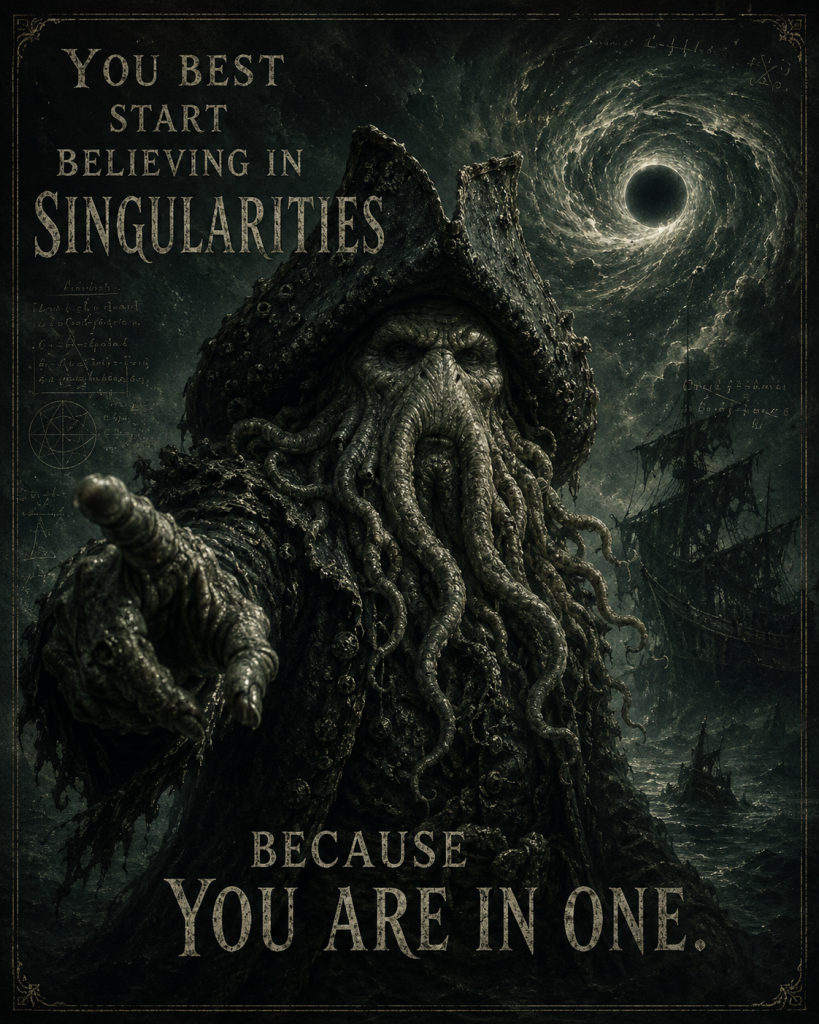
“You best start believing in singularities!” Cthulhu Dread Pirate by way of ChatGPT Image 2.0 reminds us as we just might be in one. Do we dare laugh back? “This is the day you will always remember as the day you almost caught Captain Jack Sparrow (in a Singularity).”
In other house keeping news, I’ll be driving from the mountains to the desert to participate in the Operation Gigawatt Summit in Park City Utah later this week. If we are accelerating into a new future of intelligence, someone has to provide the power and the compute. And that’s my crew. Lots and lots of white boys apparently.