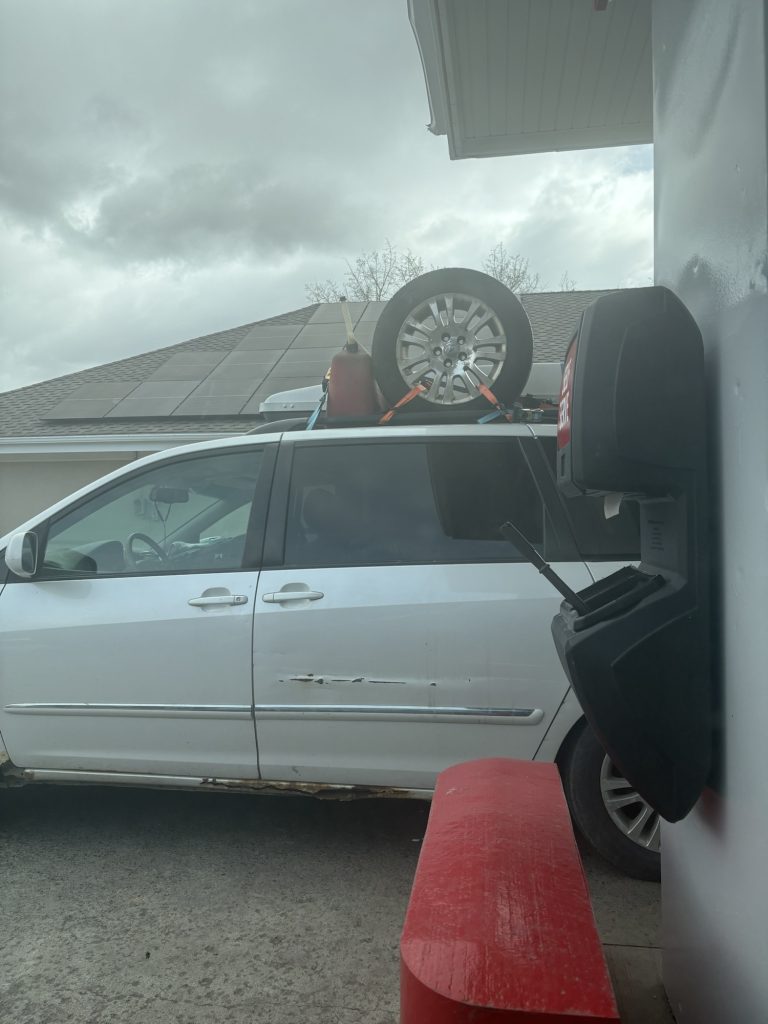
A chunk of preppers and preparedness enthusiasts are just shopaholics. Shopping is common response to anxiety and depression. Doing something that you can control in a world you can’t control has logic to it.
Now experts in disaster response will tell you that preparedness is as much about skills and community as it is about “stuff” but it’s a lot harder to learn a new skill and nurture community than it is to buy something.
So if you aren’t up for getting first responder certified or spending time in your local library I’ve got just the thing to sooth your anxieties about the current situation in the straight of Hormuz.
I vibe coded a dashboard of common household items with petroleum byproducts in them. It analyzes ingredients and wholesale pricing and assigns risk scores so you can make a shopping list of items most impacted by the ongoing supply chain crisis.
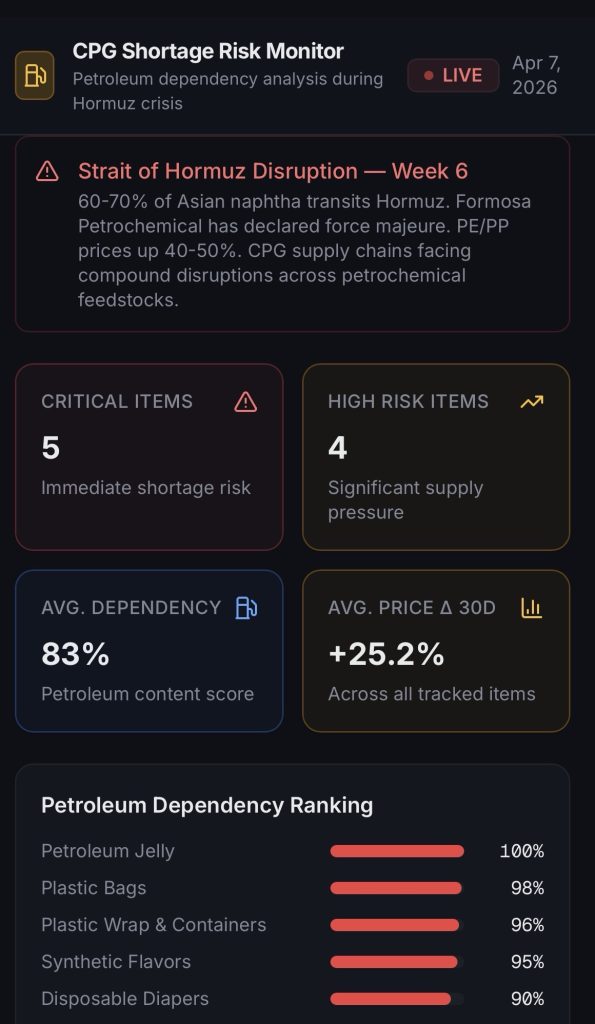
From diapers to sunscreen, you’d be shocked at just how much our basic needs are downstream of petroleum byproducts. Now it’s just a silly little thing I used AI to put together, but petroleum dependency in consumer packaged is high.
From food products and personal care to drugs, you will find we that we rely on petrochemical feedstocks everywhere.
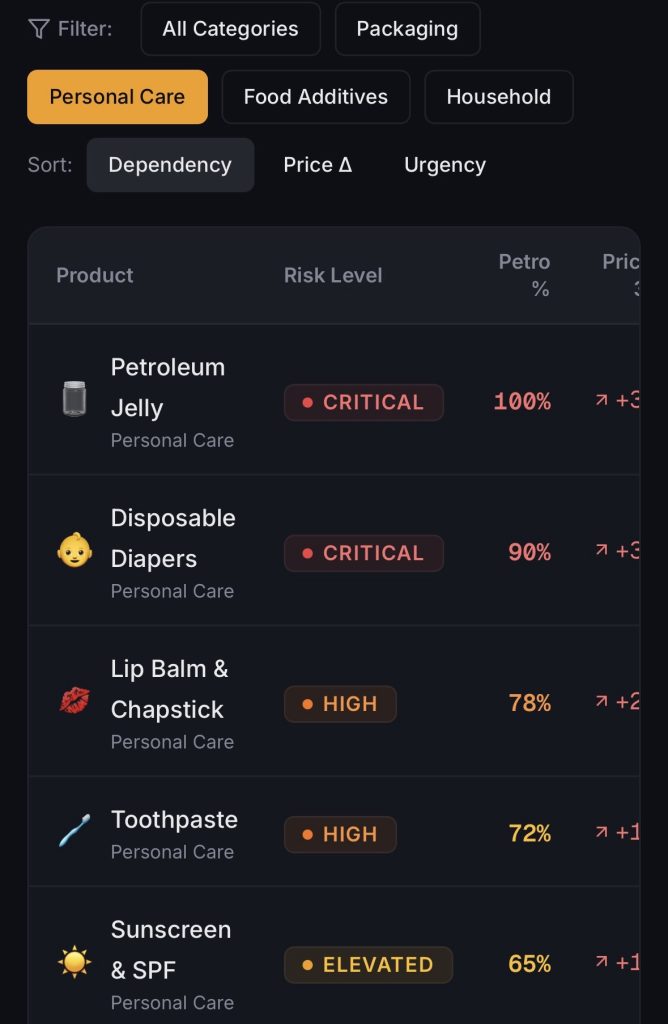
I’ll mess with it as I add in new data sources and get suggestions for categories I’ve missed. But I’d love for you to check it out even if I am not quite done improving upon the basic idea. You might learn something.
For instance, I didn’t know Kroger’s had a public pricing API till today so you live, you learn and then if you have a kid it’s time to buy Luvs. No really diapers are one of the most at risk products for shortages as the impacts of the war ripple out.
Even if the fighting ends today (as I write this a temporary two week cease fire has been agreed to), the damage to processing, production and manufacturing is already enormous.
Say you aren’t worried about price hikes but you are concerned with the environmental impact of your purchasing habits. I included alternatives in the dashboard if you’d like to make a switch.
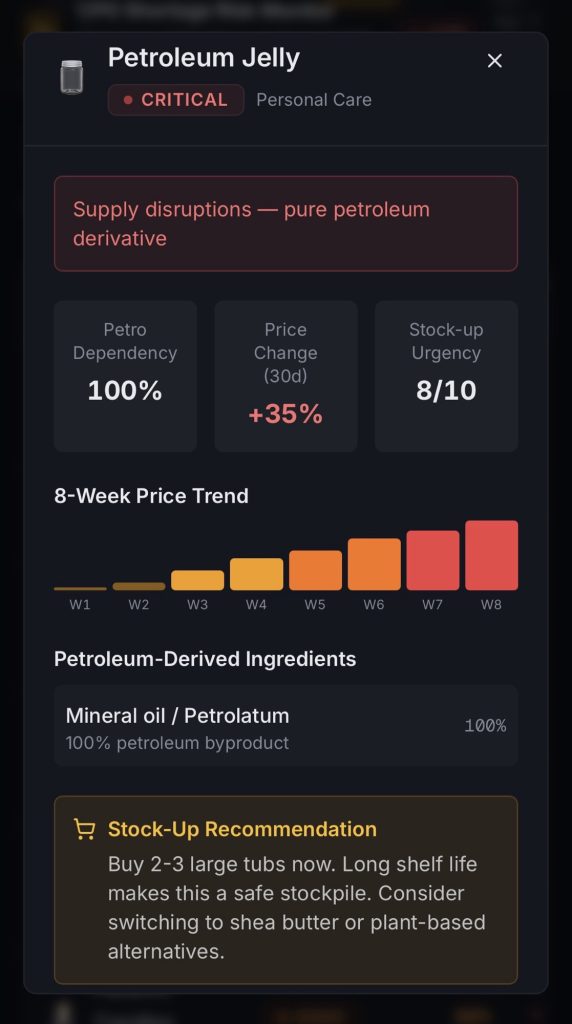
The data is compiled from DOE, S&P Global, Investing.com, Packaging Insights, VCCI trade reports. A petroleum dependency score is assigned based on estimates of ingredient analysis.
The prices reflect wholesale market trends so you can be prepared to get ahead before retail prices go up. I’ve even included a bit of context on what aspects of the product are petroleum derived ingredients just for fun.
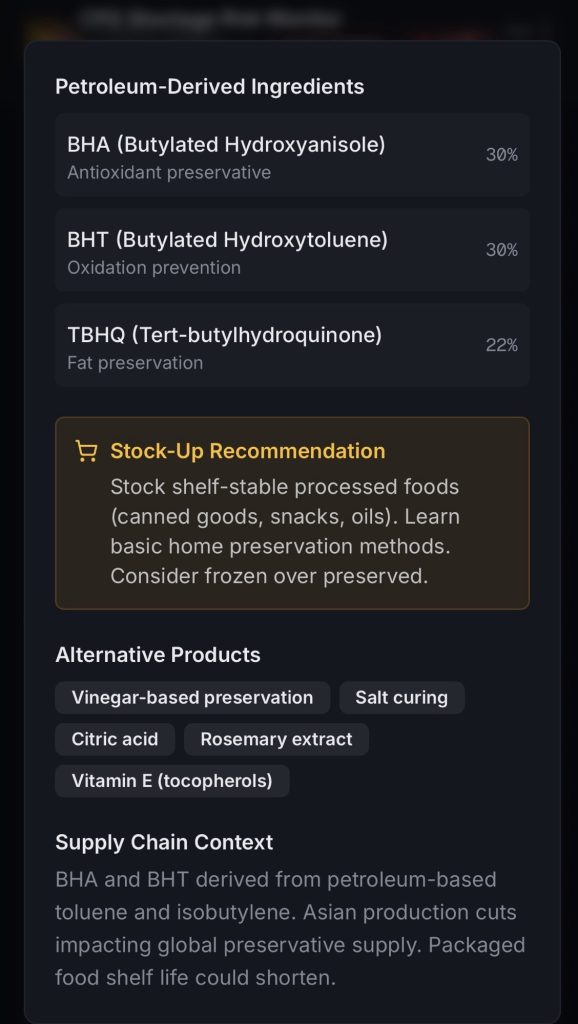
Below is a screenshot for food preservatives. A type of dependency many of us would like less of in our consumption. Maybe the dashboard helps you improve your diet with a little knowledge. Who knows! Isn’t vibe coding fun?
On another note, I remain amazed at what we can do with artificial intelligence and natural language input. This took me very little time thanks to Claude Code, Perplexity Pro and Cloudflare. If you haven’t explored the wide world of vibe coding now is definitely the time.