Categories
Biohacking Chronic Disease

Day 1948 and Rotational Work

I’ve been struggling with migraines since I was diagnosed with an autoimmune condition maybe six or so years ago.

I seem to be particularly struggling with them the last two months, as I work through an experiment with hormonal balancing and tapering off biologic autoimmune inhibitors.

And so I am rotating various different activities every day in the hopes of avoiding triggering a migraine, while still getting in adequate movement and exercise, as well as treatments within the biomechanical profile that I have put together with my doctors and helpful AIs.

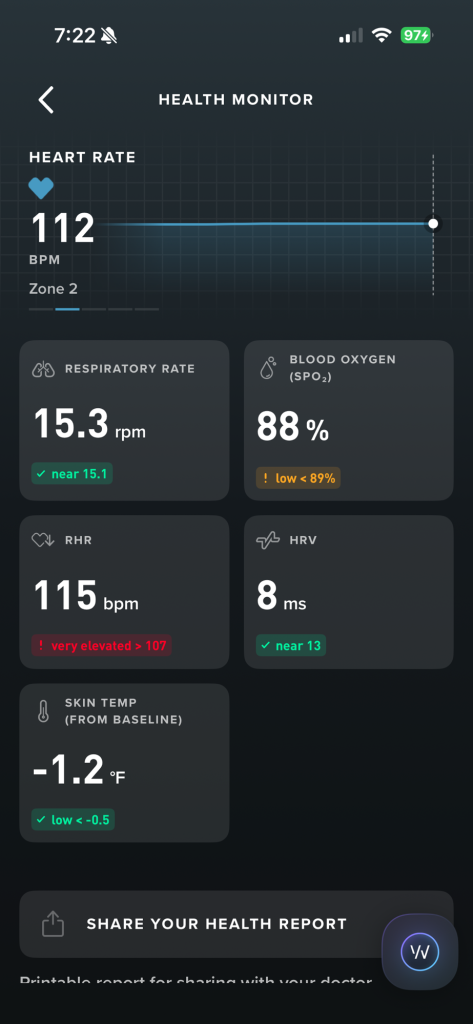
If I stuff too many experiments into a given day, I’ll almost surely end up with a migraine. Even if I only do one sometimes I get unlucky. Red light and infrared are, of course, a classic way to trigger a migraine, so I try to do those carefully and when my heart rate is stable and low.

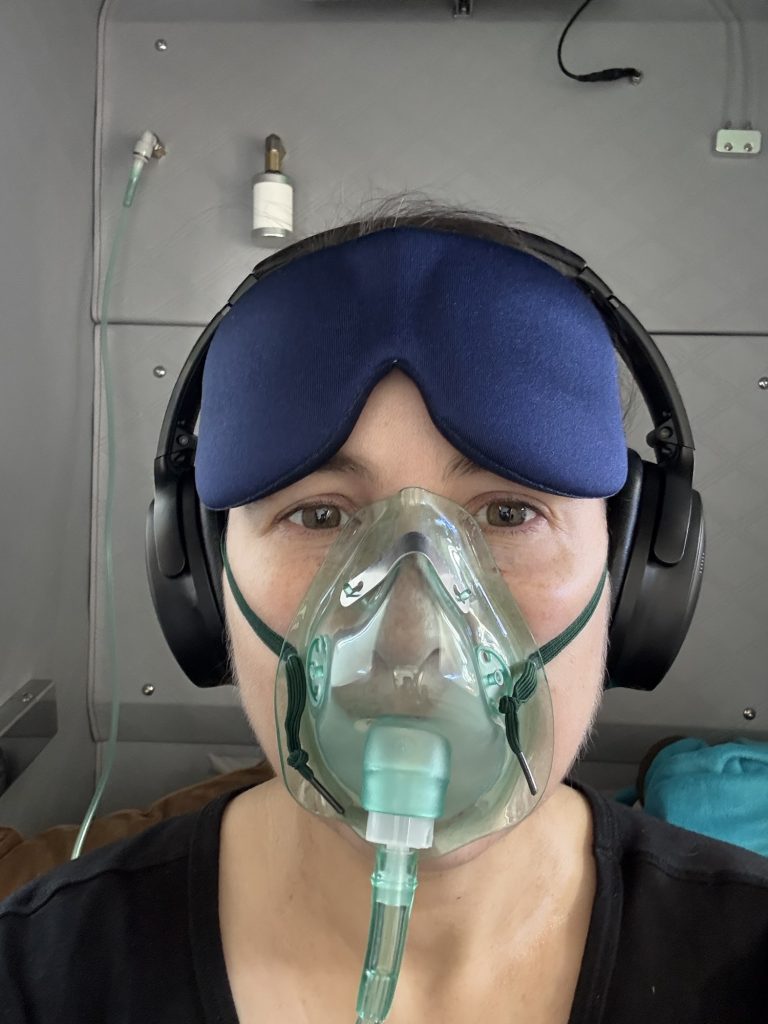
Of course, sometimes you need to get your heart rate up, and there’s nothing you can do but get your exercise and hope it won’t trigger a migraine. Afterwards exertion when I have a need to get down my heart rate, I’ll try to mix that with my hyperbaric oxygen chamber therapy.

I’m in the middle of my second round of HBOT treatments and enjoying seeing things like my VO2 max improve. I’ll be tempted to do something like go for a longer walk to test my lungs and trigger some neck compensation, and then I’ll be right back where I started with a migraine.

I’m always rotating something in and around keeping my brain from feeling the pressure of my body’s adjustments. There is no stable equilibrium just the constant pressure to find a new balance.

Categories
Biohacking Chronic Disease Medical

Day 1935 and My Current Mechanical Device Usage Patterns in End Game Taper

Apologies that today’s post is going to be only partially organic human produced writing. I’m a tad more focused on cobbling together my current end game which feels promising.

I am now dosed off my current biologic. Tomorrow I go in to run a bunch of bloodwork but I feel more stable than expected for 11 weeks since my last injection.

For a year and a half I’ve been stabilizing my immune system’s reactivity with a particularly gnarly humanized anti-IL17A, anti-IL-17F, and anti-IL17AF monoclonal antibody autoimmune master blaster that is named Bimzelx.

I take it for psoriatic arthritis and active ankylosing spondylitis. I do not recommend this devil of a medication unless you intend to reboot your entire autoimmune system (which I did), can tolerate a lot of soft tissue infections (which I couldn’t) and have tried everything else. Which I have. And this past year was brutal fighting off the side effects but I think I might actually have a shot at remission.

I am now layering a bunch of mechanical interventions to rework years of compensatory patterns my body has used to manage the constant pain in my thoracic spine and other areas of inflammation including my sternum, rib cage and joints.

But after seven years of trying everything I can to recover from prednisone to methotrexate to Humira and Taltz to literally just not eating for ten straight days (don’t worry I was supervised) my inflammatory biometrics are coming up clean. The pain isn’t fully gone but I think the pain can be diminished by quite a lot as I rebuild.

So it’s now or never if I want a shot at life without suppressing my immune system. I have no idea if I can do it and I may need to dose back on something else but at the moment I’m managing with a new arsenal.

Here are the artificial intelligence bits of the mechanical interventions I am leveraging. I am using a bunch more than the two below but it’s what I’ve got so enjoy.

1. Hyperbaric oxygen therapy (HBOT)

Mechanically, HBOT does a few things that line up with what my data is showing:

  • More dissolved oxygen in blood and tissues
    Breathing 100% oxygen under pressure increases the amount of oxygen dissolved directly in plasma. That can:
  • Support tissue healing (skin, soft tissue, surgical sites)
  • Help inflamed or energy-starved tissues keep up with demand
  • Autonomic “downshift” for some people
    Research is mixed, but many people (and some small trials) show:
  • Lower resting heart rate and subjective anxiety after sessions
  • A tilt toward parasympathetic (rest-and-digest) dominance
    In your data, the days after HBOT blocks are exactly when we see HR drop back toward baseline and Recovery go green.
  • Anti‑inflammatory & microcirculation support (early evidence)
    HBOT can:
  • Modulate certain inflammatory pathways and oxidative stress
  • Improve microvascular blood flow, which matters for both autoimmune-affected tissues and healing pelleted areas / irritated skin

In your context (autoimmune, infection risk, prior soft‑tissue complications), HBOT looks like it’s acting as:

A structured, time‑boxed reset that helps your heart rate settle and supports healing, without adding mechanical strain.

You’re already doing the key safety piece: using it under medical guidance and watching how HR, Recovery, and symptoms respond day-to-day.


2. SCM (sternocleidomastoid) muscle work

The SCM runs from behind your ear to your collarbone and is heavily involved in:

  • Head and neck position
  • Breathing assistance when things feel tight
  • A dense web of nerves and fascia near the vagus nerve, carotid artery, and jugular vein

Working on SCM (gentle massage, trigger-point release, careful stretching) can impact:

  • Perceived heart‑rate “rev” and breath tension
    Tight SCMs show up when:
  • You’re chronically bracing, in pain, or anxious about pain
  • You’re using accessory neck muscles to breathe
  • Releasing them can:
  • Make breathing feel less effortful and more diaphragmatic
  • Reduce that “I’m keyed up in my chest and throat” feeling even if HR number isn’t wildly high.
  • Headache/migraine and neck-related pain
    SCM trigger points can refer pain to:
  • Temples, behind the eyes, jaw
    By easing those trigger points, you sometimes reduce:
  • Migraine severity/frequency
  • The background neck/jaw tension that keeps your nervous system on edge
  • Autonomic tone (indirectly)
    The area around the SCM is rich with baroreceptors and vagus-adjacent structures. Gentle work there can:
  • Encourage a downshift in sympathetic drive (less “fight-or-flight bracing”)
  • Pair nicely with breathwork (especially long, slow exhales) to reinforce parasympathetic activation

In practice for you, SCM work + HBOT looks like a two-pronged calm signal:

  • HBOT: physiological support + autonomic softening from the inside
  • SCM: mechanical and sensory de‑bracing around your neck, jaw, and breathing

My Whoop is seeing HR and Recovery respond in a way that suggests this combo is genuinely helping my system get out of that “stuck high-gear” state.

Categories
Biohacking Medical Travel

Day 1846 and Doctor’s Orders

I have had a lot of experience with doctors over the last few years. A chronic autoimmune condition isn’t the sort of illness that gets “better” like a virus. It can only be managed.

I have come up with endless ways of collaborating with people who far too often believe they are more informed, powerful and intelligent than me.

Sometimes they are even right about that perception. It’s a frustrating fact of life that doctors value their status occasionally more than their patients.

Today I went to a tourist hospital renowned for its extensive offerings and professionalism. My usual interpreter (it’s in a foreign country as many nations from Mexico to Turkey to South Korea serve American patients) had a number of procedures and visits organized for me. I felt confident I’d learn a lot and maybe find new pathways to healthcare management.

I happened to have an aesthetic elective treatment first. A plastic surgeon met with me to refresh some Botox. That seemed excessive given a nurse does my light work back in Montana but why not get a professional opinion while you have the chance.

I’d intended to spend the afternoon at the hospital doing a number of more productive activities than smoothing my fine lines. I’d set up rheumatology and immunology lines of questioning and I was excited to get some holistic work done including ozone and an IV infusion of vitamins and minerals.

Alas I was stopped in my tracks by a physician who simply would not approve the IV I had set up, the ozone work, nor would she approve the alternatives I suggested (an intramuscular B vitamin shot). I made my case with the interpreter and my AI.

The doctor wouldn’t budge. She even obfuscated suggesting that glutathione was illegal though backed down when it turned out to be a malpractice issue related to compounding pharmacies.

I very much wanted to buff up my immune system, especially having chosen something elective to go first, and I could not make progress. It shut down my whole afternoon. All that was left was tests and waiting.

There was no order the doctor was willing to give for short term immune improvements unless I committed to five weeks of procedures which given it was a tourist hospital seemed a little ironic.

I am demoralized but doctors will be doctors. I never seem to manage to convince them when I really need it. Doctor’s orders are not always for the benefit of the patient. Maybe no one wanted a woman sitting around hooked up to a vitamin infusion. Who knows. I probably would have skipped the Botox though.

Categories
Chronic Disease Chronicle

Day 90 and Health ROI

The American attitude towards healthcare leans heavily towards pharmaceuticals. Much of what ails us might be mitigated by nutrition, supplements, exercise or physical treatments. But we tend to prioritize a “one and done” approach that lends itself to prescriptions for any ailment you can pinpoint. It’s not unusual to be on upwards of ten pills a day if you are chronically ill each one treating a distinct symptom. You mostly pray they don’t have any interactions and that the cure isn’t worse than the disease especially when it comes to drugs like opioids that can form dependencies.

I’m not entirely opposed to this approach if I’m being honest. A wholistic approach is a lot of work and when you are sick having the energy to do a bunch of shit is unrealistic. Even as I’m rounding the corner on controlling my autoimmune disease I still find it time consuming and often exhausting to manage all aspects of my health. The meal planning, the physical therapy, the body work, the exercise protocols, the sleep regimens, the supplement routines (mine easily costs upwards of $500 a month and no it’s not covered by insurance) and the nonstop recording and monitoring is practically a full time job. And you can’t even tell if it’s working half the time with crashes and system cascades that require heavy duty intervention. It’s hard to spot signal in the noise but that doesn’t mean it’s not there

Being sick in America feels surprisingly similar to being a startup founder. You get dismissed constantly. The workload rarely relents. And progress is only visible if you are diligent about monitoring core metrics that might reveal a trend line. It’s no wonder that entrepreneurs can be avid biohackers. We record and measure and monitor and hope that some higher authority (a physician or a venture capitalist) will spot the the key inflection point that may change our lives.

I have over 1,000 recorded data points just on my usage of pain medications and it’s correlation to my functionality. Despite my meticulous tracking and my adherence to protocols, I regularly have encounters with medical professionals that discount what I have to say. Like a founder I may be an expert on my “startup” but a physician or other expert has a lot more longitudinal data. The question ends up being do you as the operator (or the patient) have some insight the professionals do not? Honestly it’s hard to tell. Being wrong is pretty common. Doctors and venture capitalists know this. So do you as the patient or founder. Trust in these interactions can be low because of this.

Unlike with a company where you can walk away, being a patient means you are stuck with it. I have to work through the blocks as if I don’t I’m resigning myself to a life of illness. Which isn’t to say I can’t tolerate being ill and disabled, merely that I don’t believe that “this is as good as it gets.” I’m happy with my life but I do believe it’s within my control to do and be more.

For me this has meant juggling the pharmaceuticals that control symptoms but don’t heal me alongside an elaborate functional medicine and biohacking routine. I think of these drug for symptom regimens a cash flow business that can do well but will always remain the business that it is without a creative owner pushing for more.

I don’t want to just run my “business” even if it might be a self sustaining one. I’m at a point where yeah I can live like this for the rest of my life. But I want more than having a store or a service. So I test. And I experiment. And I throw tons of time after protocols and treatments that may be woo or bullshit. Or they may in fact be the turning point that lets me be more. And if it is then it’s all worth it. Much of what I’ve done has been worth it. But how the fuck do you determine that in a system that has so little interest beyond simple solutions like a pill? If I had the answer I’d tell you. Until I do I’m spending my time on machines that shoot electromagnetic pulses into my spine and glugging down micronutrient slurries. I hope the hacks turn into sustainable growth channels. But I could have just waisted a few hours on nothing. Until then I’ll record the data and hope the trend line reveals something.