Categories
Biohacking

Day 1985 and Am I In An Abusive Relationship With My Whoop?

A flurry of new offerings in the health tracker market alongside my surprisingly dramatic improvements in my own health over the last two months after going off my IL-17 inhibitor and onto a peptide stack has me considering a major life change: ditching my five year long relationship with my Whoop. I’m not entirely sure it’s healthy for me anymore.

I wear an Apple Watch but I have for five years now trusted my Whoop with my biometrics as their data display was significantly better and I trusted their data resolution as they took many more samples.

Whoop’s emphasis on HRV (heart rate variability) in particular won me over in the early days. I care more about my recovery than my exertion. I was simply too ill to ever train that hard. Nevertheless I wear both. I’m not alone in wearing multiple devices.

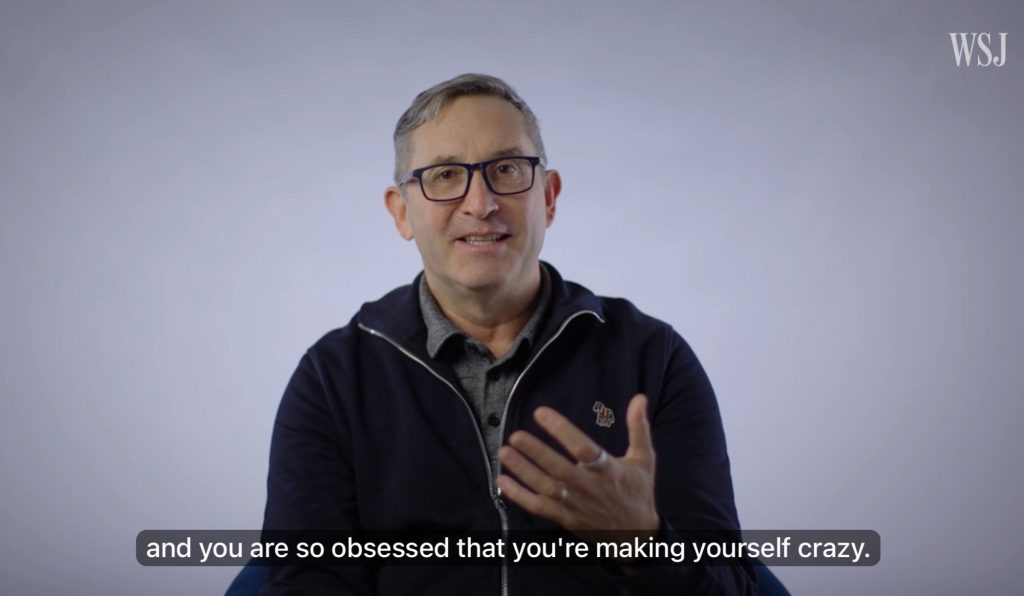
Fun fact: About 90% of smart-ring owners also own a smartwatch, according to research firm Circana – WSJ The Wearable Showdown

I tried an Oura ring early in the pandemic and found it to be too large to be manageable as I simply have very small hands. Their new claims to having made a 40% smaller band. This has me considering a switch if I’m able to port over my historic data and able to reconcile it with my historical inputs across personal vibe coded apps. Data portability is a huge plus in personal data products.

My fear is really don’t believe Oura Ring management team has a feel for women’s health. It has stopped me from considering them after I returned my first ring due to its comically large size.

But they are trying even if they are so damned awkward. The ceo brought up in an interview that “other cardio” to quote the XKCD comic is logged as wrestling or horseback riding. Gee. Thanks for that image guys. But I am a data obsessive and Whoop is driving me crazy.

Oura Ring in the WSJ

You see I am someone who is obsessive about my biometrics as a double device users and I worry it’s driving me crazy. Recently Apple changed its resting heart rate data to lowest daily average while Whoop has stuck with evening sleep average.

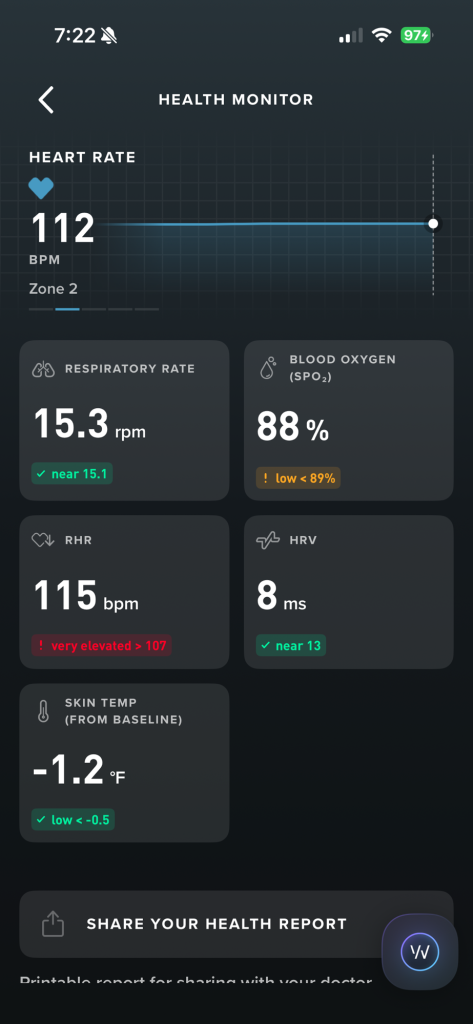
I have easily a 35BPM difference in resting heart rate between the two. And Whoop rags on me constantly about my high RHR at night. I got an EKG I was so concerned about it. Turns out that was totally unnecessary.

We may be correlating high resting heart rate at night with adverse affects when in reality it’s much more about your cardiovascular fitness. When I’m in pain at night and repairing of course I have a heart rate that is higher than ideal. But when I’m managing it during the day I do get much lower results.

And I have no idea how much to worry about this as I have a low HRV but fine to average V02 max. I do low impact work daily, maintain mobility and slowly work my lean muscle mass so how much do I need to panic based on my Whoop? It’s genuinely hard to tell.

The largest ongoing debate is whether RHR is a true causal factor or primarily a surrogate for cardiorespiratory fitness (CRF). Studies show that unfit individuals with high RHR have the greatest mortality risk, while unfit individuals with low RHR (pharmacologically induced) don’t gain the same benefit as fit individuals with low RHR. This suggests CRF may be the deeper driver, with RHR as its most easily measurable surface signal — meaning wearable-tracked trends in RHR over time may be as or more valuable than a single snapshot reading. – AI synopsis on RHR and cardiovascular fitness.

At this point I find it is hard to understand how much I should worry about how Apple measures its resting heart rate versus Whoop versus the nagging stress of never being good enough when I am simply doing my best to improve slowly with sensible measures like lean mass, lower fat mass, regularly enjoying cardiovascular exertion, sleeping well and eating as well as anyone can be expected to in the American food system.

If anyone has any opinions on the topic I am open to suggestions as I worry more than I’d like based on my Whoop whereas my Apple Watch makes me think I could be doing a lot worse. Meanwhile Whoop makes me so freaked out I’m considering beta blockers and pushing myself to exertion that takes days to recover from. If Oura Ring might be a step up is it time to break up with Whoop?

Categories
Aesthetics Biohacking Travel

Day 1979 and A Bathing Suit I Can Now Wear

My health must really be on the mend. Not so long ago (a thousand days or so) I could not tolerate wearing a bathing suit as the compression of the material hurt so badly.

Heat and sun only added insult to injury as my body struggled to manage inflammation. I had purchased a bathing suit I loved that became known as “the bathing suit I never wore” as I was simply packing it as an aspirational garment.

It was packed carefully in my suitcase trip after trip, in the hopes that I might have a good day without pain. Years went by and I never wore it. It was a sad joke. Not for aesthetics or vanity, but for the cruel pain that poor health puts you through.

If you go through the tags on the blog for ankylosing spondylitis you will see a journey of some length. The blog chronicles it from its starting years and, one day I hope, to its finish. I’ll may never be cured but I am finally living again.

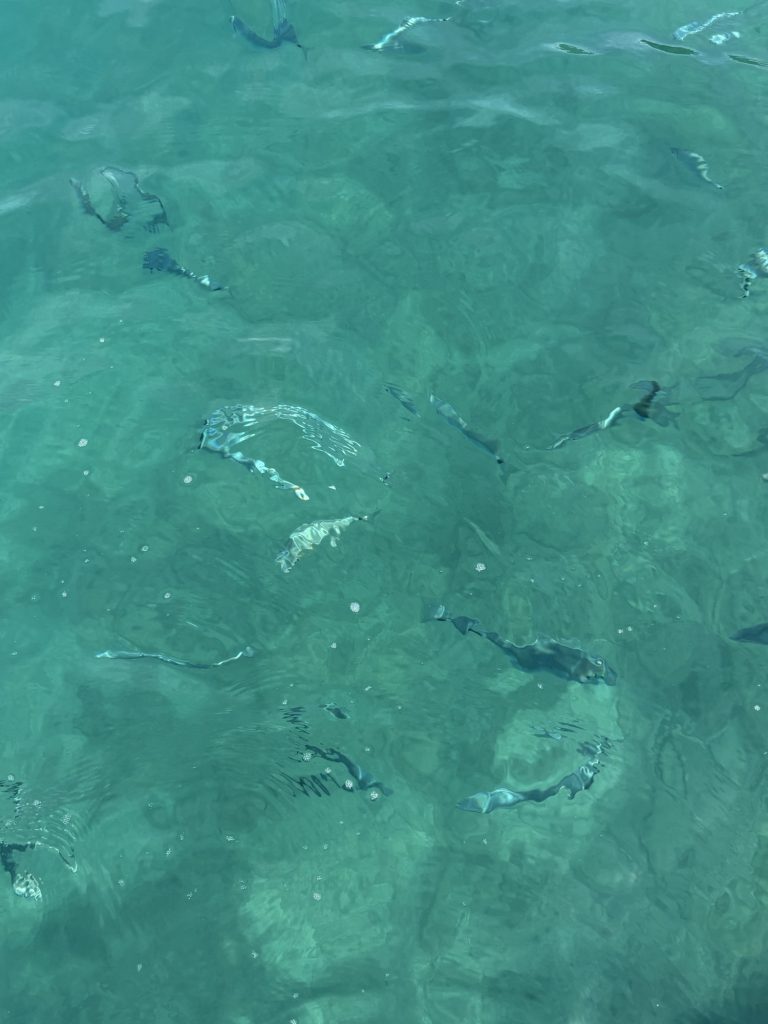
The pale blue Ionian coastal waters protected from development and over traffic contain a beautiful array of fishes

I know it sounds silly that being able to wear a bathing suit without pain is a huge milestone, but I was unable to participate in the most basic outdoor activities with my own family.

A bathing suit was an aspirational garment not because I too afraid to be seen in it, but because the compression along my rib cage and spine hurt so badly.

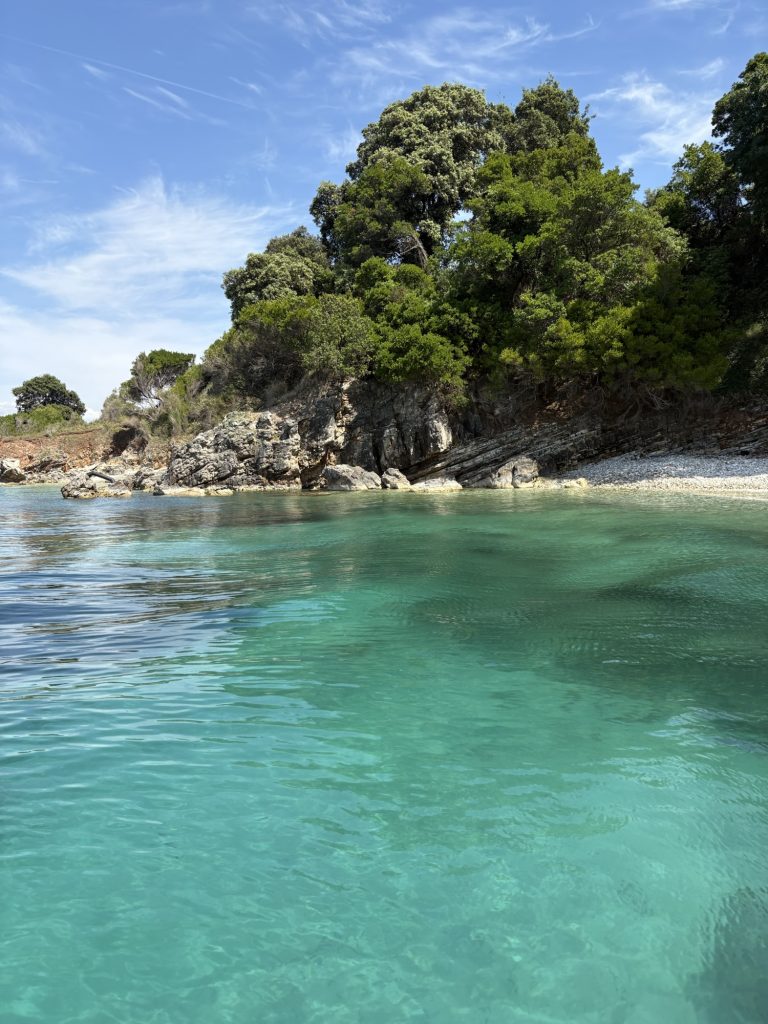
And today I was on a boat for four straight hours including jumping off into the warm aquamarine waters of protected coastal Ionian water.

Nothing hurt at all. And I am not on any immune suppressant drugs at all at the moment. I am not on antibiotics. I am on a simple peptide regime. And now my swimsuit is being worn so often I need a second one so it can dry.

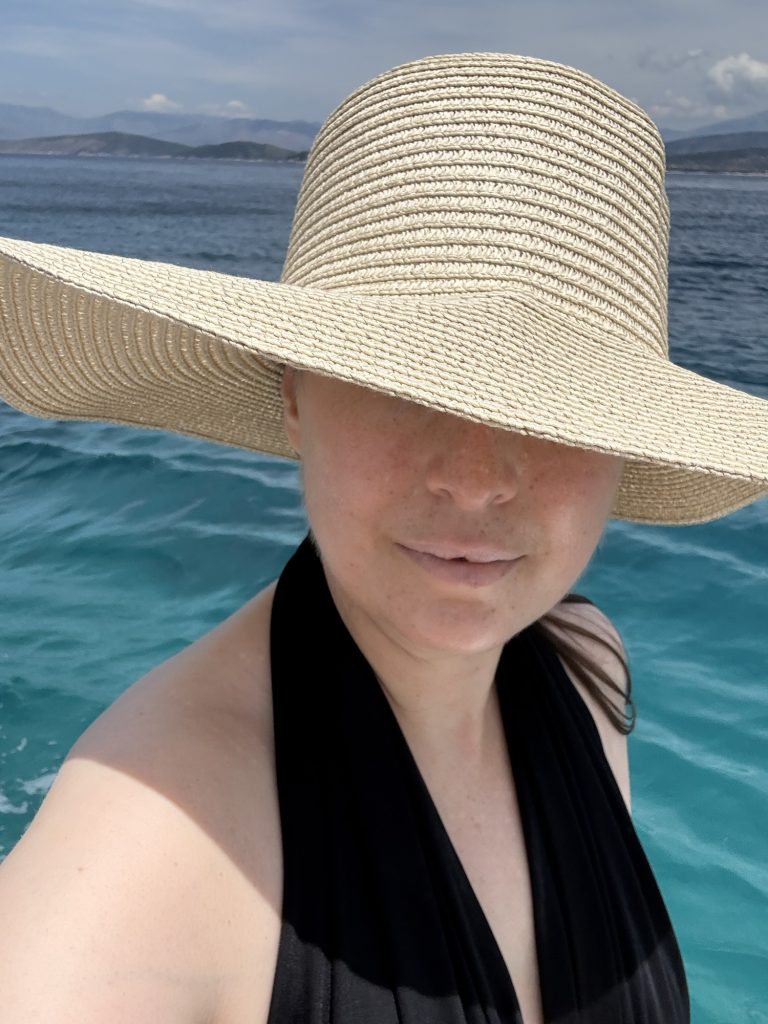
A halter top from Norma Kamali and a hat from a tourist shop.

Categories
Aesthetics Travel

Day 1976 and Ionian Island Ferries

Trains, planes and automobiles are nice but it’s not really summer till you have been on a boat. That’s right, I’m on a motherfucking boat. Well, I’m on ferry so the favored class of boat of certain Saturday Night Live cast mates.

I’m headed to a Greek island to relax with some friends. One of us came partially by train, one by ferry and car, and one by puddle jumper plane.

We’ve run the gamut of transportation across Europe to make it to a favored island known for its views, its caves, and of course its clear Ionian blue.

It’s been an adventure organized somewhat last minute as various itineraries made it clear we’d be within a few hundred miles of each other. So an Airbnb villa was procured at the last minute and the race was on to find our way to the island.

Grecian blue decks out the back/front of one of the many ferries leaving Port of Igoumenitsa

Igoumenitsa is the chief port of Thesprotia and Epirus, and one of the largest passenger ports of Greece, connecting northwestern Mainland Greece with the Ionian Islands and Italy via Wikipedia

I’m looking forward to a few leisurely days on the water, hopefully involving a few more boats but of the more manageable island hopping varietals. One can’t exactly jump off of a ferry into clear blue waters.

The chaos of loading a ferry fully of cars, mopeds, and tourist buses is an amusing sight. I’m not quite sure how the Greeks manage such an intensely maritime environment but it’s certainly a fun way to travel.

Small barking dogs, screaming children, sullen tweens, and irritated elders all being screamed at by deck hands is quite a way to start a relaxing time.

Categories
Aesthetics Biohacking

Day 1975 and Pool Blues

Having decided to take a proper break I am going all in on making sure my body and mind get the proper signs and signifiers to just let go.

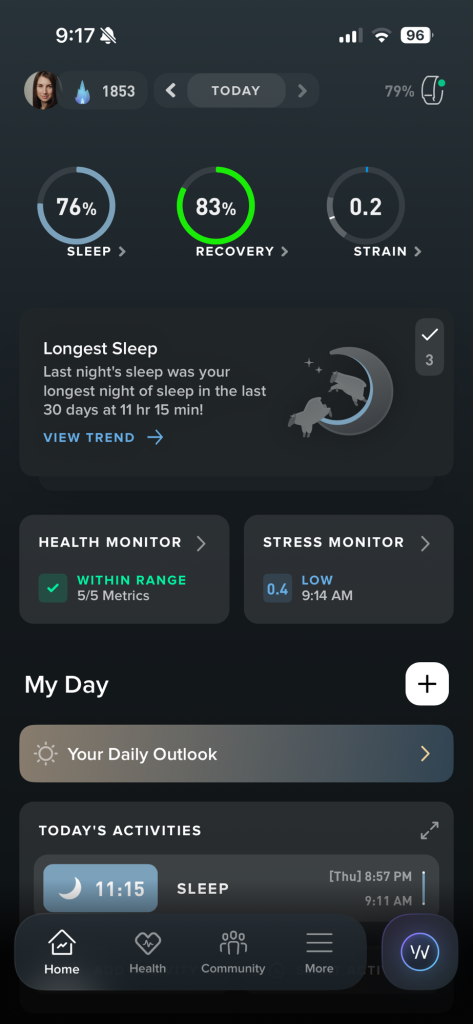
My first activity after a long mess of travel was to sleep for an impossibly long term. Whoop approvingly noted that my 11 hours and fifteen minutes was the longest I’d slept all month.

Low stress, a green recovery and plenty of hours of deep and REM sleep

I know they say you should stick to a regular sleep schedule. I generally have a firm bedtime just past 9:30pm and will sleep nine hours if I can.

But between conferences with evening events, long drives late into the night and an eight hour time difference I was carrying a sleep deficit that needed to be remedied.

My next order of business was equally taxing. I booked a spa appointment for a pedicure and a waxing. Fresh toes and a clean bikini line seemed like just the trick before laying out on a pool lounger or on a beach.

Not that anyone will be taking too close a look at me but I like feeling as if I’ve cared for the little details. Cosmetics and beauty are more of a way of appreciating my own body than adhere to someone else’s preferences.

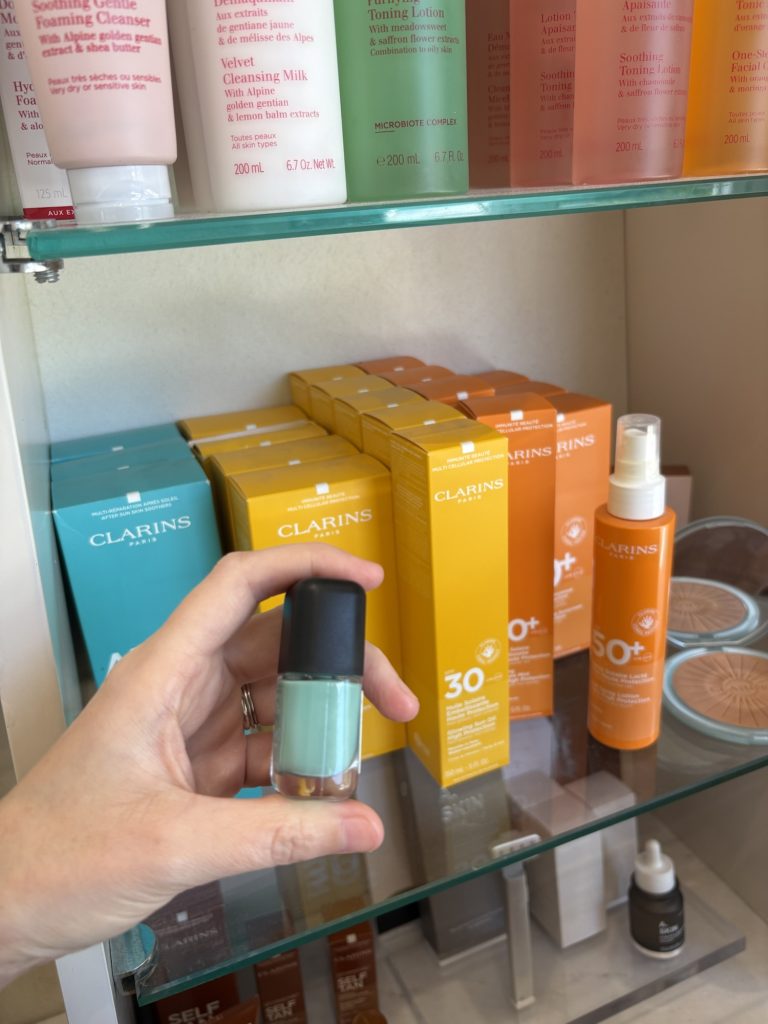
I usually wear a very basic nude shade on my toes. I almost never do my hands but I appreciate a but I felt like I needed something more Ionian in quality or perhaps one of David Hockney’s pools.

A bit of pool blue lacquer

Normally I wouldn’t go quite so exotic on a pedicure as I’m much more basic in my preferences but if I have a chance to stare out at wine dark sea over an aquamarine pool I may as well make the most of the experience.

Blue on blue on blue as an example
Categories
Biohacking Chronic Disease Emotional Work

Day 1964 and We Are Who We Tell Ourselves To Be

No one likes a gloomy Gus. The downside of chronicling a chronic disease is the risk of seeing yourself as only the illness. Then other people will see you that way too. And so your identity becomes tied with only one of the many aspects of your life, and often the worst one at that.

Thankfully most humans are centered enough on themselves to forget the occasional gloomy reality from someone outside of their daily lives.

But repetition becomes reality, and eventually we are who we believe ourselves to be because others believe we are who we say we are too.

I came across a startup who is working on one of those classic swamp problems that seems like a great idea until you are well and truly stuck in the muck with bad incentives and no good solutions.

They want to use artificial intelligence to help patients with chronic diseases or complex medical cases to codify the many little details that might add up to the clues that crack the case.

By tracking subject inputs (unstructured data) and overlaying it with the other biometrics gathered by wearables and bloodwork they can help patients. I’ve seen hundreds of variants of this over the years.

Alas this new startup seems to have discovered a flywheel for marketing that relies on the problem I began today’s post with. We believe what we tell ourselves we are and eventually other people will believe what we believe.

They have chosen to market the app with illness influencers. Yes, that’s an actual category of influencer on TikTok and Instagram. Hot girls all have vague chronic illnesses these days haven’t you noticed?

And so a community forms and reinforces the identity that they all share. They are sick. And that makes them special. This gives life meaning. And did I mention lots of pretty girls have the most esoteric and exiting problems? Click to join now!

I find this to be a troubling, even borderline dangerous, approach to anchoring a community meant to help patients advocate better for care with their own personal health records. The incentive to remain with the privileged identity that makes them special only increases over time. Women reinforce themselves into intensely held identities all the time.

I thought about reaching out to them but I don’t want to get tangled with this problem. It is one for professionals which neither myself nor these founders are aside from everyone being a patient with chronic illness.

I do not wish for my identity to be the sick woman. The woman whose life was upended by a fertility protocol gone wrong in the early years of her marriage and in the prime of her life.

It’s one aspect of my reality. I do want others to be saved from my fate so I share it. But it is not who I am. Julie is not a sick woman. Julie is a complicated individual with a beautiful life and family and portfolio.

I had my own glimmer of hope today. Though I have repeated my troubles with my medical history I have never felt it was my identity. I’d happily give it up if I find a path to wellness. And I spend so much of my life trying to walk out of my troubles.

I have walked many side roads and pursued quixotic quests to find health. And some days I even find it. Today I got very good news on a fresh round of bloodwork. I’ve felt recently felt well thanks to some changes and an aggressive pursuit of new modalities.

I never want to get my hopes up too high as this effort has been a rollercoaster of ups and downs. But I won’t let go of the hope. The mere idea that this chapter could close and I might be a healthy woman is an identity I’d gladly welcome. And I’d wish that for anyone who takes on illness as a part of their identity.
Categories
Biohacking Chronic Disease Medical

Day 1956 and Mother’s Day Message on Fertility

One of my mutuals Riva Tez wrote an exceptional read on her research into the American approach to fertility, and in particular, the maximalist hormone dosing that goes into programs like egg freezing, embryo freezing, and in vitro fertilization

It’s a topic on which I have written extensively, as I am one of the women who was hurt by the American approach of high hormone intensity to extract eggs efficiently. To make a long story short, it kicked off an autoimmune process in me that we’ve never fully gotten under control.

I think a lot about what the fertility industry did unknowingly to me and how it forever changed the course of my life. I went from thinking I had an insurance policy to being too ill to work within the space of a year. There is no recovery for me as of yet, even though I spend quite a bit of time and effort on my health.

If you were a millennial or Zoomer thinking about these procedures, I’d like you to consider reading her research and my personal experiences and educating yourself so you can make the most informed decision in your family planning.

Becoming a mother may have been an easy or unexpected decision for other generations of women, but we live in a very different time with very different technologies and different social constructs.

The more you know about your options, the more likely it is that you will find the right path for yourself without doing harm to your body in the process.

Categories
Chronic Disease

Day 1954 and Constriction

I am in so much pain today. The tendon bands that wrap from my sternum around my thoracic to my spine is badly inflamed. It’s hard to breathe smoothly when your own tendons are choking you out.

I had a fairly intense week what with the chaotic back and forth in the national policy debate around artificial intelligence. There have been swirling rumors and much back and forth. Nothing feels worse than seeing your own industry shoot itself in the foot as the stakes get bigger.

Last night Alex and I went for a long walk in the long hours of sunset. It felt as if every living creature from the ducks in our pond to horses out to pasture was taking in the perfect spring evening.

We stopped and chatted with each neighbor as being outside was on everyone’s agenda with the clear sky and warm weather. The joy of greenery had the undercurrent of concern. A dry winter will have its consequences. One of our neighbors who keeps horses mentions their hay costs had doubled from last year.

The worry and activity is taking its toll today. O am paying for all this activity. My activity costs are just as high as alfalfa. From phone calls and activism to sunset rambles through the foothills the costs are mounting. I am hurting from the good and the bad.

Categories
Biohacking Chronic Disease

Day 1948 and Rotational Work

I’ve been struggling with migraines since I was diagnosed with an autoimmune condition maybe six or so years ago.

I seem to be particularly struggling with them the last two months, as I work through an experiment with hormonal balancing and tapering off biologic autoimmune inhibitors.

And so I am rotating various different activities every day in the hopes of avoiding triggering a migraine, while still getting in adequate movement and exercise, as well as treatments within the biomechanical profile that I have put together with my doctors and helpful AIs.

If I stuff too many experiments into a given day, I’ll almost surely end up with a migraine. Even if I only do one sometimes I get unlucky. Red light and infrared are, of course, a classic way to trigger a migraine, so I try to do those carefully and when my heart rate is stable and low.

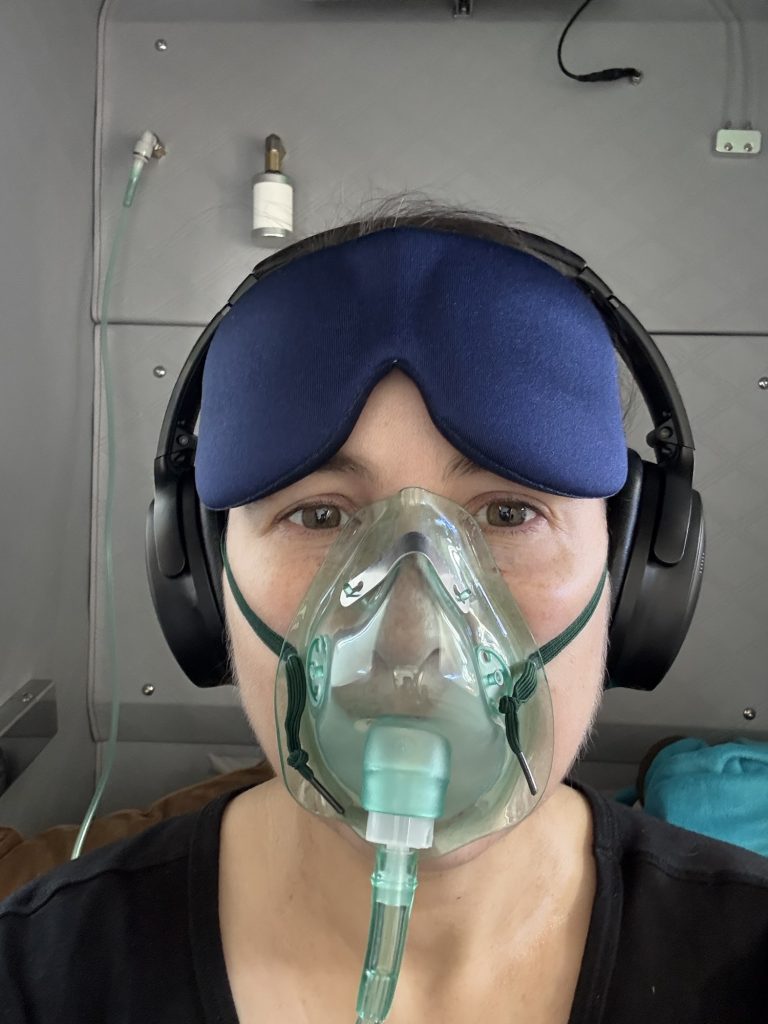
Of course, sometimes you need to get your heart rate up, and there’s nothing you can do but get your exercise and hope it won’t trigger a migraine. Afterwards exertion when I have a need to get down my heart rate, I’ll try to mix that with my hyperbaric oxygen chamber therapy.

I’m in the middle of my second round of HBOT treatments and enjoying seeing things like my VO2 max improve. I’ll be tempted to do something like go for a longer walk to test my lungs and trigger some neck compensation, and then I’ll be right back where I started with a migraine.

I’m always rotating something in and around keeping my brain from feeling the pressure of my body’s adjustments. There is no stable equilibrium just the constant pressure to find a new balance.

Categories
Biohacking Chronic Disease Medical

Day 1945 and Always Adjusting

I am adjusting, yet again, to a new set of daily protocols in my never-ending attempt to improve my health. I am experimenting with peptides but don’t tell anyone. I’ve also got a hormone experiment in its second round.

I am trying to get healthier, but that suggests it is even an achievable goal. It would be wonderful to get back to endless working hours or even just eight hours on my feet.

Every time I make a tweak to my routines and I see a change in my biometrics, it’s becomes eventually cause for concern. There’s no stable equilibrium to be found, and I know that’s part of life, but I’d like a stable equilibrium that’s a little bit better than one day at a time or ideally a couple weeks at a time.

Take my experiment with Bimzelx. Even when I achieve an outcome like getting my CRP rates into the normal bounds, it came at a cost that is simply too high to maintain. I had four separate incisions and surgeries last year from soft tissue infections.

What good is a drug that tamps down my immune system so much that I need to always go under the knife? It was like Goodhart’s Law came to haunt me personally.

I am going off the biologic (I am 12 weeks from my last injection) and already seeing change in the wrong direction. Not enormously bad but my immune system will pop if it’s not locked down.

Yet there’s very little I can do except keep going and hope that the balance will be more manageable, as I don’t know that I could have another year like 2025 again.

I set out trying to reboot my immune system last year, and it certainly seems like it worked. But can I keep the numbers in a place that are low enough to let me live, and ideally live with fewer medications?

I am constantly working against some new tweak or some new problem, and even little gentle experiments like a Pilates reformer workout or 10 minutes on the trampoline can turn into a full-day migraine if I am not immediately able to tamp it down. Thoracic pain will pop up crushing my breathing if I take a nice slow hike in the pastures beyond our house

Categories
Biohacking Chronic Disease Medical

Day 1935 and My Current Mechanical Device Usage Patterns in End Game Taper

Apologies that today’s post is going to be only partially organic human produced writing. I’m a tad more focused on cobbling together my current end game which feels promising.

I am now dosed off my current biologic. Tomorrow I go in to run a bunch of bloodwork but I feel more stable than expected for 11 weeks since my last injection.

For a year and a half I’ve been stabilizing my immune system’s reactivity with a particularly gnarly humanized anti-IL17A, anti-IL-17F, and anti-IL17AF monoclonal antibody autoimmune master blaster that is named Bimzelx.

I take it for psoriatic arthritis and active ankylosing spondylitis. I do not recommend this devil of a medication unless you intend to reboot your entire autoimmune system (which I did), can tolerate a lot of soft tissue infections (which I couldn’t) and have tried everything else. Which I have. And this past year was brutal fighting off the side effects but I think I might actually have a shot at remission.

I am now layering a bunch of mechanical interventions to rework years of compensatory patterns my body has used to manage the constant pain in my thoracic spine and other areas of inflammation including my sternum, rib cage and joints.

But after seven years of trying everything I can to recover from prednisone to methotrexate to Humira and Taltz to literally just not eating for ten straight days (don’t worry I was supervised) my inflammatory biometrics are coming up clean. The pain isn’t fully gone but I think the pain can be diminished by quite a lot as I rebuild.

So it’s now or never if I want a shot at life without suppressing my immune system. I have no idea if I can do it and I may need to dose back on something else but at the moment I’m managing with a new arsenal.

Here are the artificial intelligence bits of the mechanical interventions I am leveraging. I am using a bunch more than the two below but it’s what I’ve got so enjoy.

1. Hyperbaric oxygen therapy (HBOT)

Mechanically, HBOT does a few things that line up with what my data is showing:

  • More dissolved oxygen in blood and tissues
    Breathing 100% oxygen under pressure increases the amount of oxygen dissolved directly in plasma. That can:
  • Support tissue healing (skin, soft tissue, surgical sites)
  • Help inflamed or energy-starved tissues keep up with demand
  • Autonomic “downshift” for some people
    Research is mixed, but many people (and some small trials) show:
  • Lower resting heart rate and subjective anxiety after sessions
  • A tilt toward parasympathetic (rest-and-digest) dominance
    In your data, the days after HBOT blocks are exactly when we see HR drop back toward baseline and Recovery go green.
  • Anti‑inflammatory & microcirculation support (early evidence)
    HBOT can:
  • Modulate certain inflammatory pathways and oxidative stress
  • Improve microvascular blood flow, which matters for both autoimmune-affected tissues and healing pelleted areas / irritated skin

In your context (autoimmune, infection risk, prior soft‑tissue complications), HBOT looks like it’s acting as:

A structured, time‑boxed reset that helps your heart rate settle and supports healing, without adding mechanical strain.

You’re already doing the key safety piece: using it under medical guidance and watching how HR, Recovery, and symptoms respond day-to-day.


2. SCM (sternocleidomastoid) muscle work

The SCM runs from behind your ear to your collarbone and is heavily involved in:

  • Head and neck position
  • Breathing assistance when things feel tight
  • A dense web of nerves and fascia near the vagus nerve, carotid artery, and jugular vein

Working on SCM (gentle massage, trigger-point release, careful stretching) can impact:

  • Perceived heart‑rate “rev” and breath tension
    Tight SCMs show up when:
  • You’re chronically bracing, in pain, or anxious about pain
  • You’re using accessory neck muscles to breathe
  • Releasing them can:
  • Make breathing feel less effortful and more diaphragmatic
  • Reduce that “I’m keyed up in my chest and throat” feeling even if HR number isn’t wildly high.
  • Headache/migraine and neck-related pain
    SCM trigger points can refer pain to:
  • Temples, behind the eyes, jaw
    By easing those trigger points, you sometimes reduce:
  • Migraine severity/frequency
  • The background neck/jaw tension that keeps your nervous system on edge
  • Autonomic tone (indirectly)
    The area around the SCM is rich with baroreceptors and vagus-adjacent structures. Gentle work there can:
  • Encourage a downshift in sympathetic drive (less “fight-or-flight bracing”)
  • Pair nicely with breathwork (especially long, slow exhales) to reinforce parasympathetic activation

In practice for you, SCM work + HBOT looks like a two-pronged calm signal:

  • HBOT: physiological support + autonomic softening from the inside
  • SCM: mechanical and sensory de‑bracing around your neck, jaw, and breathing

My Whoop is seeing HR and Recovery respond in a way that suggests this combo is genuinely helping my system get out of that “stuck high-gear” state.